
A New Level of Performance
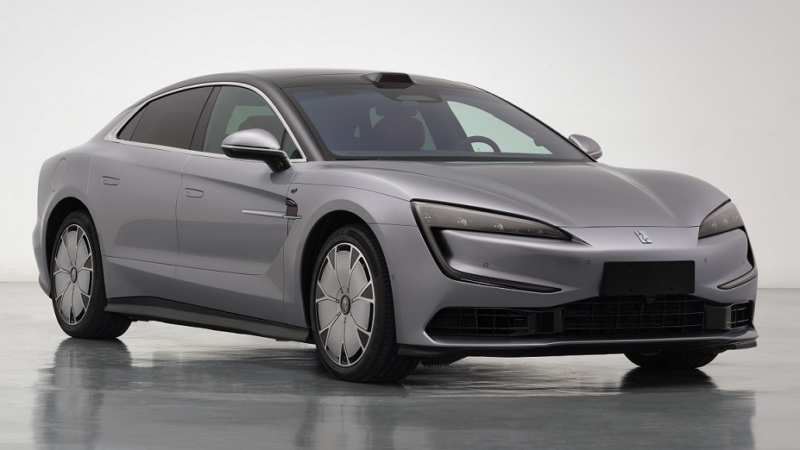
Just when you thought BYD’s luxury sedan couldn’t get any more extreme, the company decided to turn up the dial. New regulatory filings in China reveal that the Yangwang U7, BYD’s flagship electric sedan, is getting a power boost. The update pushes its already massive output from 1,287 hp to a staggering 1,341 hp (1,000 kW). It’s a clear signal that BYD isn’t just trying to compete in the luxury space, it’s aiming for total domination.
Quick Specs & Metrics
| Metric | Value | Unit | Notes |
|---|---|---|---|
| Peak power | 1,000 (1,341) | kW (hp) | Combined output from four electric motors |
| Curb weight | 3,223 | kg | Unchanged from the previous variant |
| Dimensions (L/W/H) | 5,360 / 2,000 / 1,515 | mm | A large executive sedan footprint |
| Wheelbase | 3,200 | mm | Contributes to significant interior space |
| Starting price (local market) | ¥628,000 | CNY | Approximately 87,150 USD |
| Battery supplier / chemistry | Findreams / LFP | — | Battery cells and pack produced by BYD subsidiaries |
More Power, Same Package
So, where does this extra grunt come from? The U7 keeps its 2.0-liter range-extender engine, but the magic happens in the electric motors. The updated filings, which are a common way for automakers in China to register upcoming models, show a reconfigured quad-motor setup. The car now features four permanent magnet synchronous motors, with two rated at 260 kW and two at 240 kW. It’s this tweaked configuration that unlocks the new power figure, all while keeping the car’s hefty 3,223 kg weight and expansive dimensions the same.
Powering this beast is a lithium iron phosphate (LFP) battery. In a classic display of its supply chain dominance, BYD handles the battery production entirely in house. The cells come from its Guangxi Findreams subsidiary, and the final battery pack is assembled by Changsha Findreams.
Not Just Straight-Line Speed
The Yangwang U7 isn’t just about raw power. It’s the world’s first “four-electric” flagship sedan, but its most groundbreaking feature might be the DiSus-Z suspension. This isn’t your average air suspension. Instead, it’s a fully electronic system that uses electromagnetic principles, technology previously seen in maglev trains and aircraft carrier catapults.
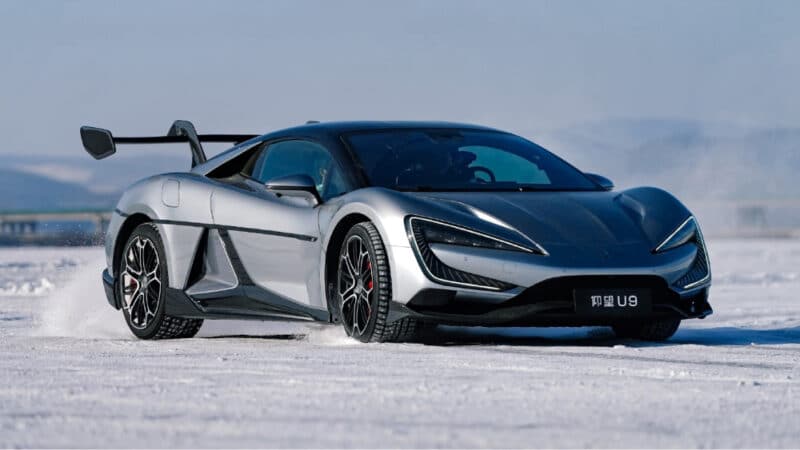
What does that mean for the driver? The system uses lidar and cameras to read the road surface half a second ahead. It then instantly adjusts the height and stiffness of the suspension at each wheel to soak up bumps before you even feel them. This gives the U7 both the plush, cloud-like ride expected of a luxury sedan and the flat, controlled handling needed to manage 1341 horsepower. This is the same family of technology that lets the insane Yangwang U9 supercar drive on three wheels.
Taking Aim at the Titans
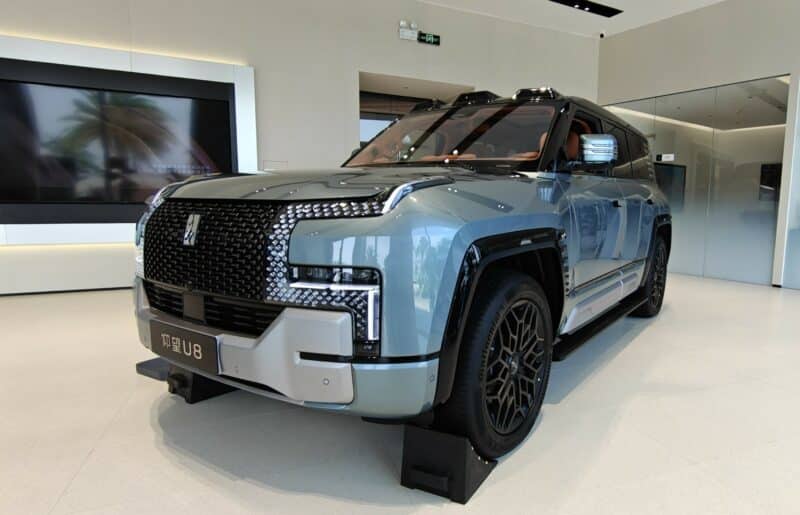
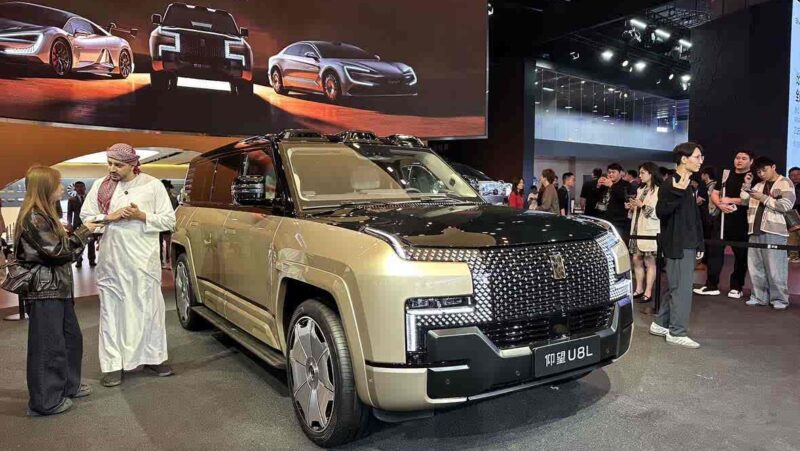
The U7 is the third car from BYD’s high end Yangwang brand, following the wildly capable Yangwang U8 SUV and the U9 supercar. With a starting price of around 87,150 USD in China, the U7 is priced aggressively to undercut established luxury brands like the Mercedes-Benz S-Class, BMW 7 Series, and Audi A8L.
While those German sedans have decades of history, BYD is betting that overwhelming power, futuristic maglev-style suspension, and a more accessible price point can persuade buyers to try something new. It represents a confident step from the Chinese automaker, proving it can build not just practical EVs, but also world-beating luxury and performance machines.