
A Stunning Market Debut
Huawei’s venture into the automotive world is making serious waves. On September 5th, the Harmony Intelligent Mobility Alliance (HIMA), Huawei’s car brand, launched pre-orders for its all-new Aito M7, and the response was nothing short of explosive. Within just ten minutes, orders blew past 20,000 units. In the first hour, that number skyrocketed to over 100,000. It’s a staggering figure that signals just how much brand power Huawei wields in China.
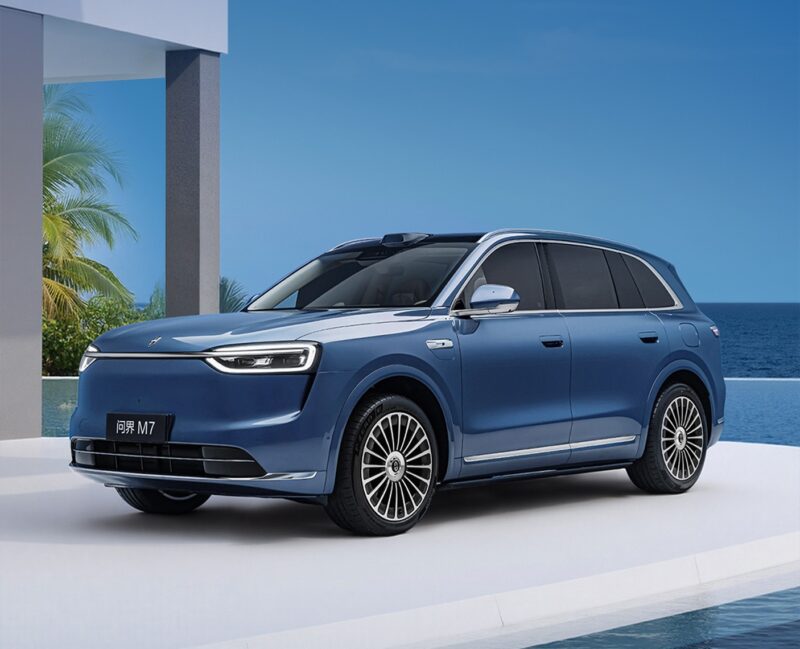
Starting at 288,000 yuan (about 40,300 USD), the new M7 is a significant step up from the current model, which starts at a lower 249,800 yuan (35,000 USD). But this isn’t just a minor facelift. The all-new Aito M7 is a ground-up redesign, boasting a sharper look, a more luxurious interior, and a serious injection of Huawei’s latest technology. The official launch is set for September 23, and the market is clearly holding its breath.
| Metric | Value | Unit | Notes |
|---|---|---|---|
| BEV Peak Power (RWD / AWD) | 227 / 387 | kW | AWD adds a 160 kW front motor |
| EREV Peak Power (RWD / AWD) | 227 / 392 | kW | AWD adds a 165 kW front motor |
| BEV Range (CLTC) | 660 – 710 | km | With 100 kWh battery pack |
| EREV Comprehensive Range (CLTC) | 1,465 – 1,625 | km | With 37 kWh or 53 kWh battery options |
| Battery Capacity (BEV) | 100 | kWh | Standard for all pure electric models |
| Battery Capacity (EREV) | 37 / 53 | kWh | Paired with a 1.5L range-extender engine |
| Dimensions (L/W/H) | 5080/1999/1780 | mm | Significantly longer than the previous model |
| Wheelbase | 3030 | mm | 210 mm longer for more interior space |
| Starting Price | 288,000 | CNY | Equivalent to approx. 40,300 USD |
Tech-Forward Design
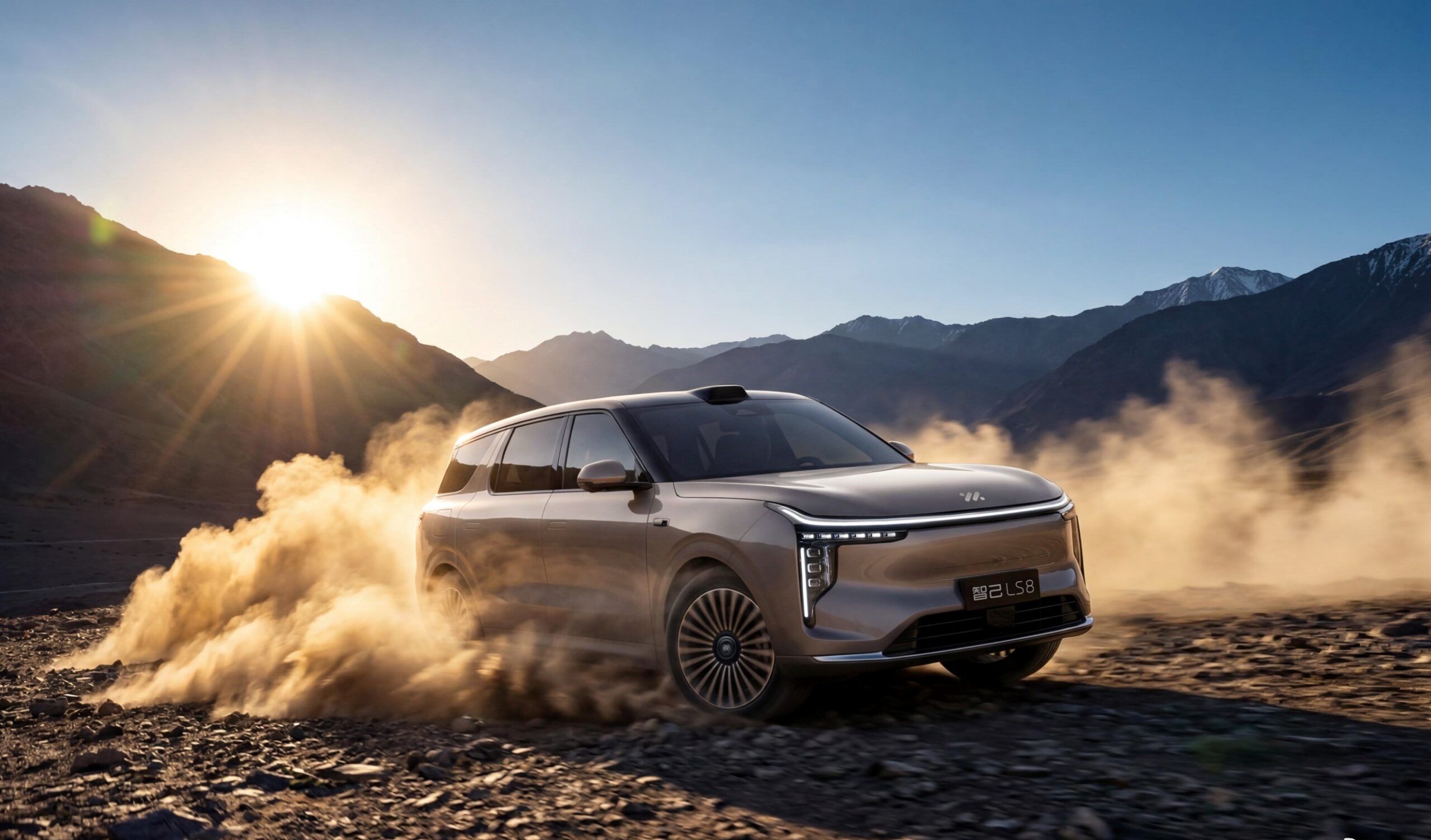
The M7’s new face borrows cues from its bigger sibling, the Aito M8, featuring a slick through-type light strip that connects the headlights for a modern, high-tech look. The Aito logo now sits confidently above the light bar, a small but assertive touch. But the real story is the sensor suite. Every single Aito M7 comes standard with Huawei’s Qiankun ADS 4.0, the company’s most advanced driving assistance system.
This isn’t just for show. High-end trims are bristling with sensors, including a roof-mounted 192-line lidar, a rear-facing solid-state lidar, and five 4D millimeter-wave radars. In simple terms, the car builds an incredibly detailed, 360-degree map of its surroundings, allowing for smarter and safer autonomous driving features. It’s a similar philosophy seen in other tech-heavy vehicles like the Avatr 12, proving that advanced sensor suites are becoming the new battleground in China’s premium EV space.
Powerhouse with Options
Under the skin, buyers get a choice between a pure-electric (BEV) setup and a range-extender (EREV). The BEV model is no slouch, with a 227 kW (304 hp) motor driving the rear wheels. If you need more grip, the all-wheel-drive version adds a 160 kW (215 hp) motor to the front. A hefty 100 kWh battery provides a very usable CLTC range of up to 710 km.
For those who aren’t ready to go fully electric, the EREV version offers the best of both worlds. It uses a quiet and efficient 1.5L engine not to power the wheels, but to act as a generator for the battery. This setup eliminates range anxiety completely, offering a massive comprehensive range of up to 1,625 km. It’s a brilliant solution for a country as vast as China and a major reason why range-extenders are so popular.
A Cabin Built for Comfort
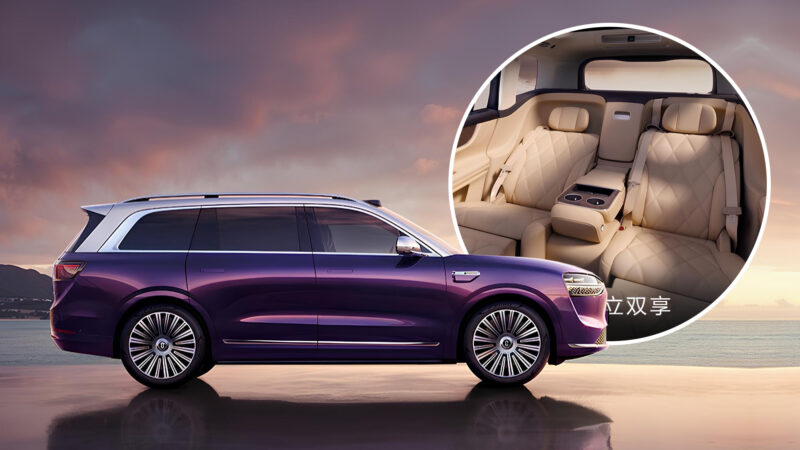
The new M7 isn’t just about performance and tech, it’s also a seriously comfortable place to be. It’s grown in every direction, now measuring 5080 mm long with a generous 3030 mm wheelbase. That extra space translates directly into a roomier cabin, which retains its practical 5- and 6-seater options. Inside, the driver gets a clean digital instrument panel, while a massive 16.1-inch central screen and a dedicated co-pilot entertainment screen handle infotainment. Details like new wood trim on the doors and console elevate the ambiance.
For a family hauler, it’s the little things that count. Huawei added a ceiling-mounted rear entertainment screen to keep backseat passengers happy on long trips. And for the ultimate in daily convenience and luxury, there’s an onboard 7.3L refrigerator and a zero-gravity driver’s seat. It’s touches like these that show a deep understanding of what Chinese consumers want in a premium family vehicle, blending cutting-edge tech with practical, everyday luxury.