
A Partnership Deepens
In a move that signals a major shift in its China strategy, Volkswagen is set to license Xpeng’s advanced autonomous driving system, XNGP, for its electric vehicles launching in China in 2026. This isn’t just a simple software deal; it’s a deep collaboration that speaks volumes about the changing landscape of the global auto industry.
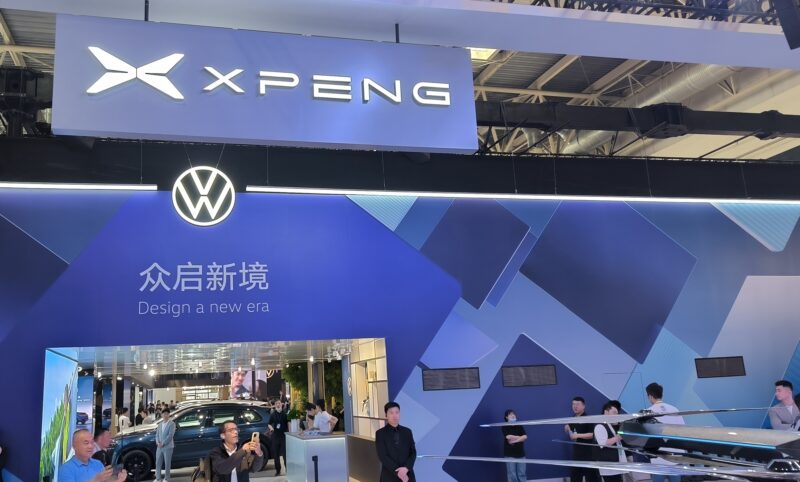
The first model to get this tech upgrade will be a mid-size SUV, one of two vehicles being jointly developed with Xpeng. This collaboration started to take shape in July 2023, when Volkswagen invested a hefty 700 million EUR for a nearly 5% stake in the Guangzhou-based EV maker. It was a clear sign that VW was serious about localizing its tech to compete in the world’s most aggressive EV market.
The “Brain and Nervous System” Gets a Chinese Upgrade
At the heart of this partnership is a new EV platform called the China Electronic Architecture (CEA). Think of an E/E architecture as a car’s central brain and nervous system. It’s what connects and controls everything from the infotainment screen and battery management to the advanced driver-assistance systems (ADAS). The CEA is essentially a tweaked version of the platform Xpeng already uses in its own cars, giving VW a massive head start.
Initially, the plan was to use this platform just for the two co-developed SUVs. But the strategy has expanded. Last year, VW announced that all its electric models in China will be built on this architecture starting in 2026. Ralf Brandstätter, a key VW board member for China, confirmed, “From 2026, all electric vehicles of the Volkswagen brand in China will be equipped with this very powerful and efficient architecture.”
This is the core of VW’s new “in China for China” strategy. By using a proven local platform, the German giant can dramatically shorten development times, cut costs, and build EVs that are finely tuned to the tastes and expectations of Chinese buyers, who crave cutting-edge tech.
From In-House to Integration
The plot twist in this story involves Volkswagen’s own software division, Cariad. Originally, Cariad China was tasked with developing the autonomous driving systems. However, in a strategic pivot, VW CEO Oliver Blume recently announced that Cariad will no longer handle its own software development from the ground up. Instead, it will act as an integrator, coordinating with external partners like Xpeng and America’s Rivian. This is a humble but smart admission that in the fast-paced world of EV software, sometimes it’s better to partner with the experts than to try and reinvent the wheel.
Adding another layer to the collaboration, Xpeng’s chairman, He Xiaopeng, confirmed that his company will also supply its in-house Turing AI ADAS chips to Volkswagen. Anonymous sources even claim that VW is already testing the full XNGP system on the first 2026 EV.
Official Statements and Market Realities
When asked for comment, Volkswagen China offered a nuanced response. They denied that any existing projects were stopped, stating, “We are continuing to develop our ADAS stack for China under Carizon (a joint venture between Cariad China and Horizon Robotics), which is scheduled to be used in a first vehicle at the beginning of next year.”
However, they immediately followed up by confirming the core of the partnership: “In parallel, to quickly serve our Chinese customers’ demands and ramp up our product portfolio, Volkswagen will launch two fully electric models in 2026 that will use XPENG’s E/E architecture and ADAS stack.”
So while VW is finishing up its current in-house projects, the future clearly lies in deep integration with Xpeng. The branding for the licensed XNGP system in VW vehicles is still being worked out, but the technology itself is a proven powerhouse. XNGP is a vision-based, HD-map-free autonomous driving solution that is widely considered one of the main rivals to Tesla’s Full Self-Driving (FSD). For Volkswagen, this isn’t just a shortcut; it’s a lifeline to relevance and a chance to build China-only EV concepts that can genuinely compete on tech and user experience.