
China’s electric vehicle exports really kicked into overdrive in the first five months of 2025, jumping a solid 19% year-on-year. This comes from fresh data dropped on June 9 by the General Administration of Customs. It’s part of a bigger picture where equipment manufacturing products shot up 9.2% from last year, hitting 6.22 trillion yuan, about 858 billion USD. That’s a massive slice of the country’s total exports, accounting for 58.3%. EVs were definitely a driving force, alongside construction machinery (up 10.7%), ships (up 18.9%), and industrial robots (soaring 55.4%).
Top Performers in the Export Race
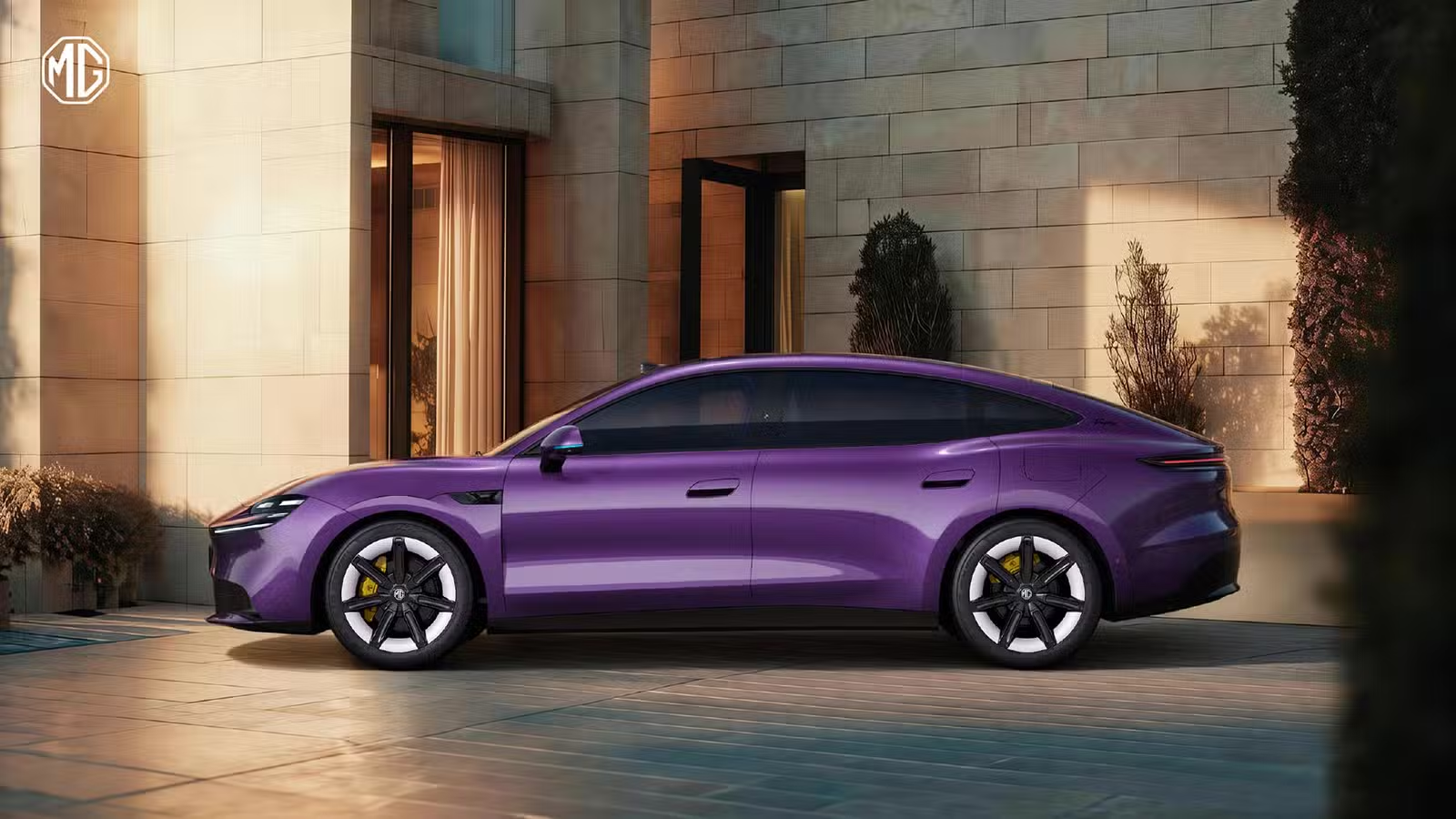
Chery is absolutely crushing it on the export front, sending out 250,800 units in these first five months. Right behind them is MG, owned by SAIC, with a strong 168,700 units. Then there’s Geely, which saw a remarkable 103.3% year-on-year increase, exporting 160,900 vehicles. A good chunk of those, 70,600 units, made their way to Europe.
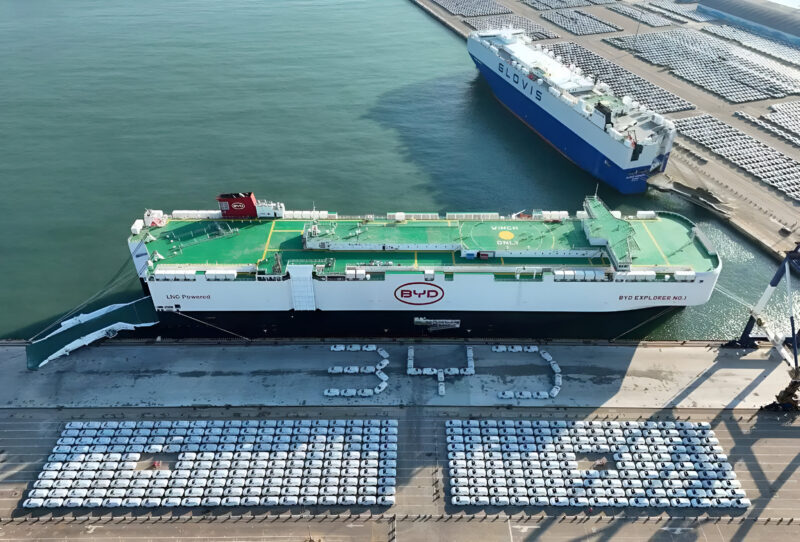
BYD landed in fourth place with 159,300 units shipped. Interestingly, only about 61% of those were pure electric vehicles, with the rest being plug-in hybrids. This suggests that overseas buyers might not be quite as hot on pure EVs as folks back home. Haval followed with 90,700 units, but it’s worth noting that a whopping 95.35% of their exports were traditional fuel vehicles, though they still managed an impressive 80% plus year-on-year growth.
Changan, typically a strong player, exported 82,100 vehicles. However, they saw a pretty sharp decline of 29.1% compared to last year, making them the only top-tier Chinese automaker to hit a snag this period. Other notable brands in the top ten included Roewe (48,700 units), Jetour (41,500 units), GAC’s Trumpchi (30,800 units, rocketing up 253.04%), and JAC (27,200 units), who are making their mark as a newcomer to the global scene.
Looking at the bigger picture for these top ten exporters, they fall into three distinct tiers: four brands pushed out over 150,000 units, two were in the 50,000 to 100,000 unit range, and the remaining four each exported fewer than 50,000 units.
China’s Broader Trade Picture Remains Strong
Zooming out a bit, China’s total goods trade for January to May, which includes both imports and exports, reached 17.94 trillion yuan (around 2.47 trillion USD), a solid 2.5% increase year-on-year. Even with two fewer working days than the previous year, exports in May alone climbed 6.3% to 2.28 trillion yuan (roughly 314 billion USD).
Trade with key international partners continues to thrive. Exports to ASEAN saw a 16.9% increase, to the EU a 13.7% bump, to Africa a significant 35.3% jump, and to Central Asia’s five countries an 8.8% rise. Trade with African nations specifically hit an all-time high for this period, totaling 963.2 billion yuan (about 133 billion USD), with exports making up 599.6 billion yuan (around 83 billion USD), up 20.2%.
Foreign-funded businesses are still crucial to this growth, with their trade volume hitting 5.21 trillion yuan (approximately 719 billion USD), a 2.3% increase. These companies were responsible for 29% of China’s total foreign trade, adding 0.7 percentage points to the overall trade growth. The number of foreign-invested companies involved in trade also reached a five-year high, exceeding 73,000. Regionally, China’s central provinces are leading the charge in trade growth, reporting a trade volume of 1.5 trillion yuan (about 207 billion USD), an 11.1% increase, with exports growing by 16.9%.
Analysts believe this sustained export momentum, especially in equipment manufacturing and electric vehicles, really highlights the strength of China’s trade sector even with global uncertainties lurking. As leading automakers continue to expand their global reach, it looks like China is set to remain a dominant player in the international EV market for the foreseeable future. The competition is fierce, and China’s EV sales race promises more exciting developments ahead.