
Huawei and Seres are cranking up the excitement for the 2025 Chengdu Auto Show with an early peek at the new Aito M7 crossover interior. This isn’t just another family hauler, it is a proper tech-fest, boasting three central console monitors, plush zero-gravity front seats, and enough real wood trim to make a luxury yacht blush. Mark your calendars, because this beauty hits the Chinese market on September 23.
Now, let’s chat about its predecessor. The original Aito M7, a joint effort between Seres and Huawei that debuted in 2022, was a range-extended SUV using the bones of Dongfeng’s Fengon ix7. It really hit its stride in 2024, moving a staggering 193,342 units. But even with that success, 2025 saw a dip, with only 35,146 cars delivered from January to July.
But don’t count Aito out yet! Huawei and Seres are clearly not resting on their laurels, ready to launch this all-new M7. We’ve already seen glimpses of its sleek exterior, and now, thanks to Huawei’s HIMA (Harmony Intelligent Mobility Alliance), we’re getting the full scoop on the cabin.
Inside the M7: A Digital Cocoon
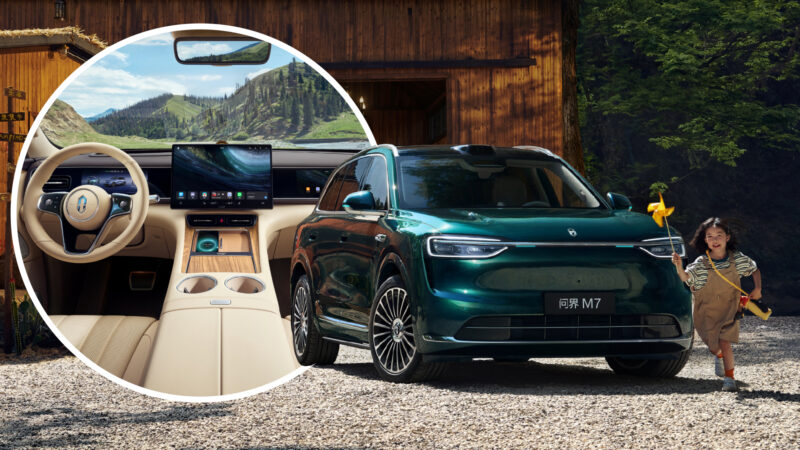
Step inside the new Aito M7 and prepare for a digital embrace. The redesigned center console is dominated by no less than three screens. The main touchscreen alone measures a generous 16.1 inches, and your front passenger even gets their own dedicated display. It’s all powered by Huawei’s Harmony OS, ensuring a smooth and responsive user experience. And just for good measure, they’ve thrown in a head-up display, keeping essential information right in your line of sight. The gear shifter has made a smart move to the steering column, freeing up the center tunnel for practical touches like two wireless charging pads, a pair of cup holders, and a surprisingly roomy storage compartment. Talk about thoughtful design!
Physical buttons are almost a relic of the past here. Like many modern Chinese cars, the M7 leans heavily on intuitive voice interaction and those expansive monitors. The cabin is also equipped with a rear-view mirror camera and boasts substantial wooden trim, giving it a premium feel. The three-spoke steering wheel is a nice touch, and you’ll find buttons cleverly integrated into the door cards, replacing traditional handles. Enhanced ambient lighting and Huawei Sound speakers round out the luxurious atmosphere. Oh, and those front seats? They both recline into a blissful zero-gravity mode. Perfect for those long hauls or just chilling after a busy day.
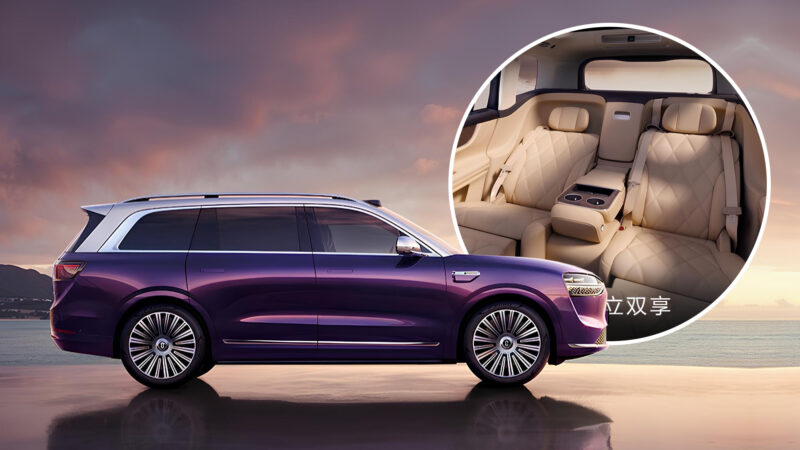
While the official images showed a five-seat version, the rear passengers are not forgotten. They get folding tables, a refrigerator, and a ceiling-mounted folding screen. Interestingly, other Aito models opted for a projector, but a dedicated screen here still delivers a fantastic experience.
Power, Performance, and Chinese EV Ingenuity
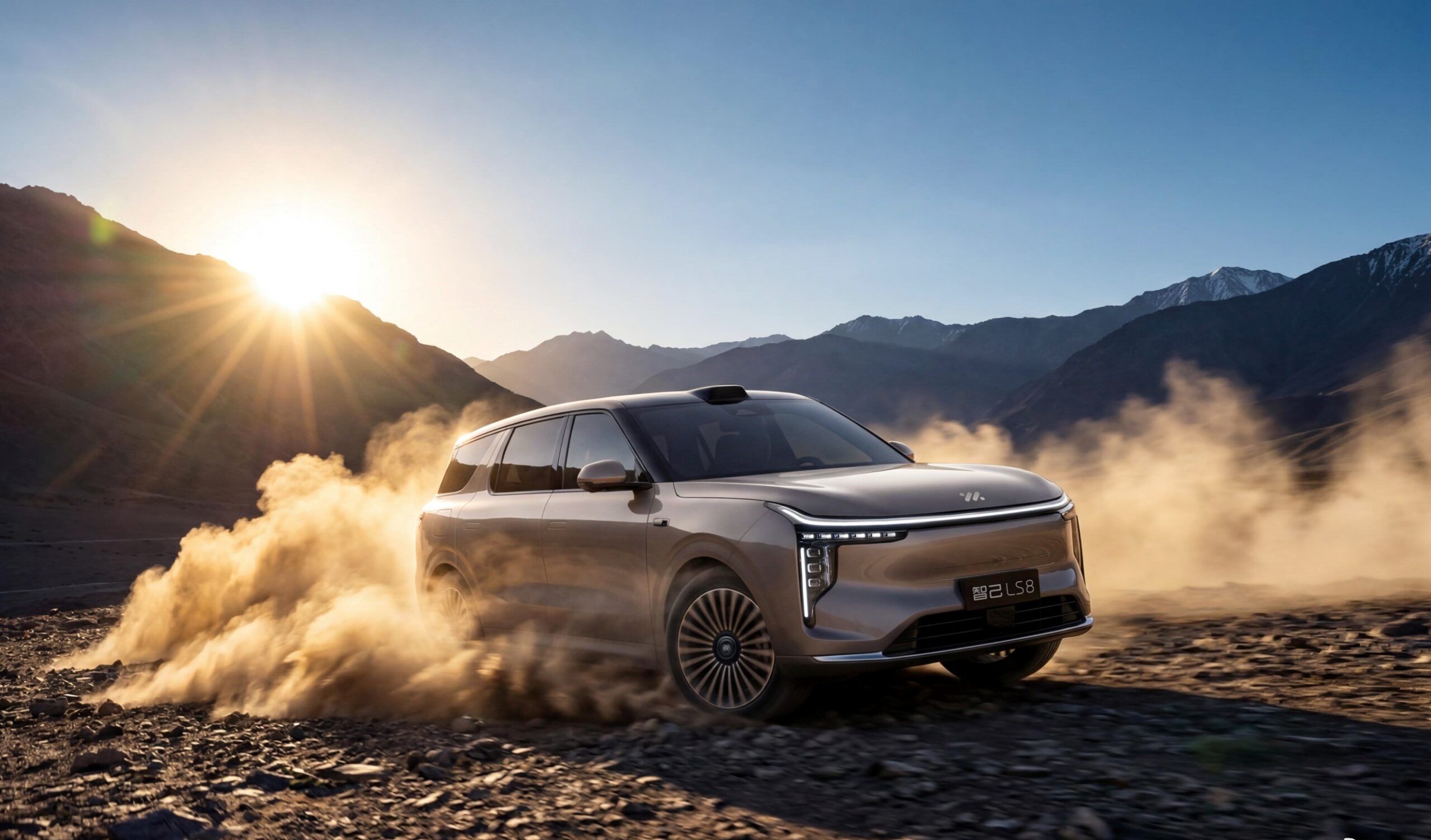
Size-wise, the Aito M7 is a substantial SUV, measuring 5080 mm long, 1999 mm wide, and 1780 mm tall, with a generous 3,030 mm wheelbase. You’ll be able to grab it in either a five-seat or six-seat configuration. Its styling also aligns with the sharp new design language we saw with the M8 crossover. Huawei’s Aito M7 also recently got a stylish facelift to match the flagship M9.
Under the hood, the EREV (Extended Range Electric Vehicle) variant packs a 1.5-liter engine churning out a respectable 118 kW (158 hp). If you’re looking for more oomph, the entry-level M7 delivers a solid 227 kW (304 hp), while the 4WD model really flexes its muscles with a robust 392 kW (526 hp). The battery electric vehicle (BEV) variant offers the same impressive electric motor performance. The Aito M8 EREV, another hybrid SUV from China, previously smashed pre-sale records with its impressive range.
And in true Huawei fashion, the M7 is getting smart with the ADS 4 intelligent driving system. This is a crucial area where Chinese automakers are rapidly innovating. We’ve seen how Volkswagen is even teaming up with Xpeng for autonomous driving brains, highlighting the expertise within the Chinese market. The competition is fierce, with companies like Xpeng and Leapmotor also leading the charge in China’s EV sales race, always pushing the boundaries of what’s possible in electrification and smart tech. While some might worry about all this tech, it’s important to remember that Chinese EVs have actually proven safer than gas cars in electromagnetic radiation tests, dispelling a common misconception.
This new Aito M7 isn’t just a car, it’s a statement. It reflects the rapid evolution of the Chinese automotive industry, blending performance, cutting-edge technology, and a keen understanding of what modern families really need. It will be exciting to see how it performs in the market.