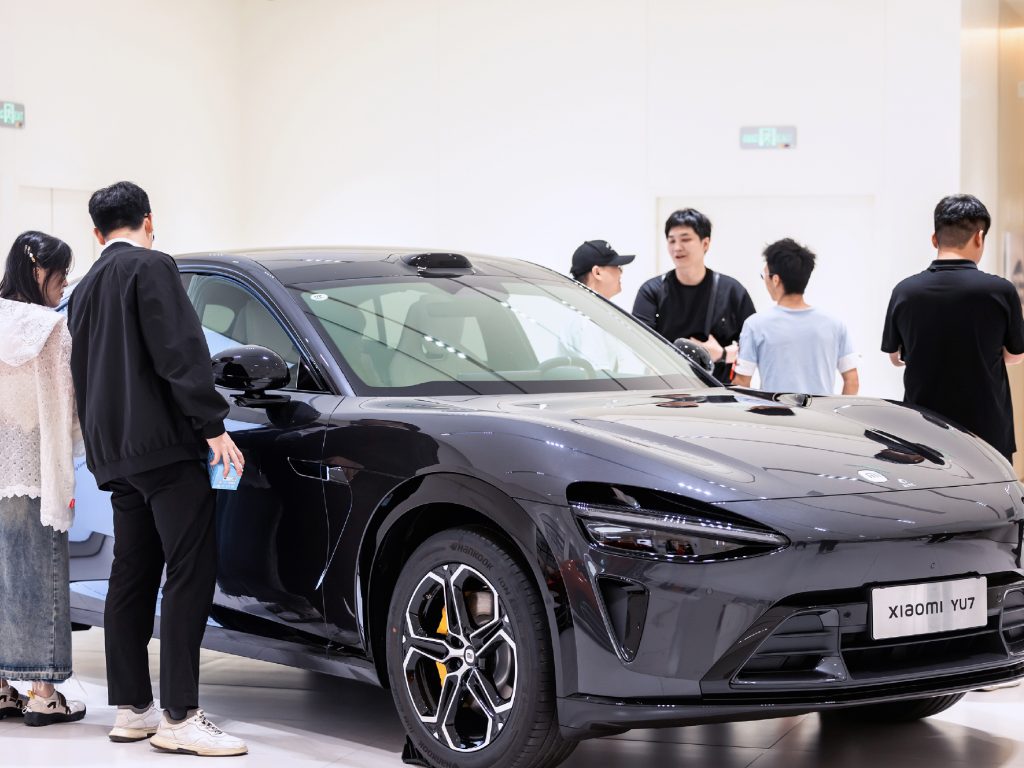


A recent autonomous parking mishap saw a Xiaomi SU7’s front bumper dipping into a pond, sparking discussions about advanced driver-assistance systems and their limitations. It’s a stark reminder that even with cutting-edge tech, a driver’s keen eye remains crucial.
Close Call at the Pond
Imagine this: you step out of your shiny new EV, activate its self-parking feature, and watch it gracefully glide—right towards a body of water. That is precisely what happened with a Xiaomi SU7 when its autonomous parking system guided it a little too close for comfort to a pond. The front bumper made contact with the water before the system thankfully brought the car to a halt. Luckily, no serious damage occurred, but the incident quickly went viral, raising eyebrows about autonomous tech around watery hazards. This happened shortly after Xiaomi rolled out its Hyper OS 1.11.0 winter OTA update, which included several optimizations for parking assistance features.
The Human Element and System Limitations
Netizens and automotive specialists alike have weighed in, with many questioning the driver’s decision to use autonomous parking near a pond in the first place. You see, while these systems are smart, they are still assistive technology. Experts point out that environments outside typical parking lots, like a lake or uneven terrain, can throw these systems for a loop. The car’s sensors might interpret a large body of water as an open, unoccupied space, leading to unexpected maneuvers. The fact that the car stopped upon sensing the water suggests its safety protocols kicked in, preventing a full-on splashdown. It is a good thing too, as water intrusion could certainly spell trouble for the battery pack.
More Parking Puzzles for Xiaomi SU7 Owners
This pondside adventure isn’t an isolated event for Xiaomi. There are other accounts of autonomous parking quirks. For instance, a user in Hangzhou reported their SU7 Max, a vehicle that fetches over 300,000 yuan (around 42,500 USD), rolled down a slope in valet parking mode at a campsite and bumped into a pavilion. That escapade led to a 6,000 yuan (about 850 USD) repair bill and an explanation from after-sales staff about deviations from recommended procedures and blind spots.
Other SU7 owners have also voiced concerns about the system’s consistency, struggling with tight spaces or experiencing unexpected interruptions during valet routines. Xiaomi has addressed past software issues with updates and warranty coverage, but these recent incidents underscore a clear message: autonomous parking, while incredibly convenient, still needs a human touch, especially in less-than-ideal conditions. Until higher levels of automation are fully ironed out across all sorts of real-world scenarios, keeping an eye on your car during self-parking remains the best policy.
This situation highlights the ongoing challenges and refinements in the world of autonomous driving, especially as Chinese EV makers push the boundaries of technology. For more insights into the evolving landscape of electric vehicles and their advanced features, keep an eye on developments from brands like Xpeng and Leapmotor, who are also innovating in this space. The race to perfect autonomous systems is on, but it is clear there are still some ripples to smooth over. Xiaomi itself has seen rapid growth, delivering half a million EVs in 19 months, showing their strong presence in the market. As these technologies mature, we hope to see fewer unplanned swims and more seamless parking experiences. This event about Xiaomi’s self-parking feature will certainly be a learning experience as they aim for even greater sophistication in their vehicles. And if you’re wondering about other innovations, Xiaomi’s hybrid ambitions even hint at broader diversification beyond pure EVs, suggesting they are thinking big about future mobility solutions.