
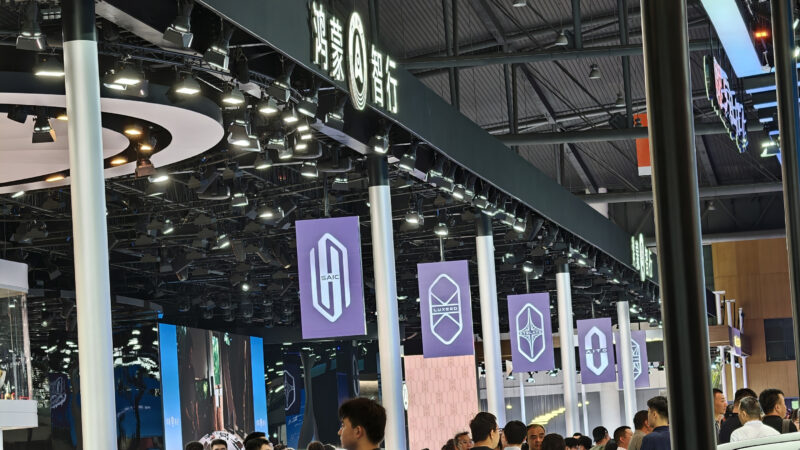
Five Huawei-backed car brands are joining forces, ushering in a new era of collaboration in China’s dynamic EV market. Aito, Luxeed, Stelato, Maextro, and Saic are deepening their strategic cooperation, a move poised to standardize core technologies, enhance after-sales networks, and streamline marketing efforts. This isn’t just about sharing a badge. It’s a comprehensive push for synergy and heightened competitiveness as the market evolves.
The Power of Alliance: HIMA’s Strategic Play
These five brands are more than just partners. They are joint ventures between Huawei and established Chinese automakers like Seres, Chery, BAIC, JAC, and SAIC. Their vehicles are proudly sold through Harmony Intelligent Mobility Alliance (HIMA) stores, showcasing Huawei’s cutting-edge ADAS and smart cabin technologies. Think of it as a tech ecosystem on wheels, where innovation is shared and refined.
The alliance is already showing its muscle. In November 2025, HIMA hit a record 81,864 sales units. And from January through November, they delivered an impressive 494,375 vehicles, marking a 24.7% year-over-year surge. These numbers highlight a powerful momentum. However, the road ahead isn’t entirely smooth. The Chinese government plans to phase out new energy vehicle subsidies, which will undoubtedly shake up the market and drive further consolidation among manufacturers.
Standardization, Service, and Charging Ahead
The strategic deepening of this cooperation focuses on several key areas. First, HIMA brands will standardize core technologies and components. This includes the Harmony OS cockpit, advanced driver assistance systems, and cloud services, ensuring a consistent high-tech experience across the board. They will also unify quality control, which is a big win for consumers.
Next, the alliance plans a cross-brand after-sales service center network. This means smoother pre-sales, delivery, and post-sales processes for everyone, a crucial element for customer satisfaction and brand loyalty. Imagine getting consistent, top-tier service, no matter which HIMA brand you drive.
But it doesn’t stop there. These five brands are also jointly investing in Huawei’s charging stations, with an ambitious goal of building a countrywide network. This initiative will offer a unified account system and an interactive charging map, making the EV ownership experience much more seamless. Convenience is king, after all, and a robust charging infrastructure is absolutely essential for mass EV adoption. You can read more about China’s EV charging network here.
Furthermore, the establishment of the HIMA innovation center shows a forward-thinking approach. This center will be a hub for developing new vehicle technologies, ensuring the alliance stays at the forefront of the industry.
Finally, integrating marketing and service operations at the alliance level will create powerful brand synergy, maximize resource allocation, and sharpen market competitiveness. It is a smart move in a market as competitive as China’s.
The HIMA Lineup: A Portfolio of Innovation
The HIMA model line is already quite extensive, featuring ten models that cater to various tastes and needs. This includes the Aito M5, Aito M7, Aito M8, and Aito M9, alongside the Luxeed S7 and Luxeed R7. Not to be forgotten are the Stelato S9 and Stelato S9T, plus the Maextro S800, and the Saic H5.
As the Chinese EV market continues its rapid evolution, driven by innovation and increasingly by self-reliance, collaborations like HIMA’s are proving to be a potent force. With government subsidies winding down, the emphasis shifts even more towards efficiency, technology, and a seamless ownership experience. This alliance is primed to tackle those challenges head-on, delivering exciting vehicles with robust support and advanced features. You can delve deeper into Huawei-backed car brands boosting collaboration in China’s EV market.
The Bigger Picture: China’s EV Landscape
This intensified cooperation among Huawei-backed brands comes at a crucial time for the Chinese automotive industry. With a projected increase in EV sales, the market is becoming even more competitive. Major players are constantly innovating, and the focus is increasingly on advanced driver assistance systems and smart cabin technologies, many of which are developed in-house or through strategic partnerships like HIMA. Companies are also looking for ways to cut costs and boost efficiency, as seen in the recent trends in EV battery costs.