
In a bold move that challenges conventional wisdom in the EV market, Shen Fei, Senior Vice President of Nio and CEO of its Onvo brand, recently declared that large-capacity batteries in Extended Range Electric Vehicles (EREVs) are wasteful. His comments arrive as charging infrastructure rapidly matures, making colossal battery packs increasingly unnecessary.
The Resource Drain of Oversized EREV Batteries
Shen Fei argues that these hefty battery systems gobble up valuable cabin space and tack on an extra 15,000 yuan (about 2,100 USD) to the vehicle’s cost. He believes this is a clear financial burden for both the automakers and, ultimately, the consumers. It is a sentiment that resonates deeply within the Chinese market, where efficiency and value are king.
Onvo’s Ambitious Battery Swap Expansion
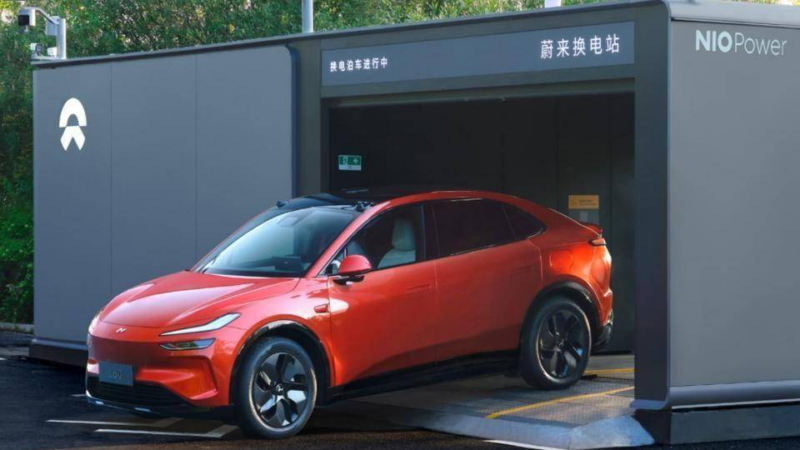
Onvo isn’t just talking the talk; they are walking the walk. The company just unveiled plans to more than double its battery swap network by mid-January 2026, adding over 8,000 new battery packs to its existing 7,000 across 2,300 stations. This massive expansion is a testament to Nio’s unwavering commitment to its innovative Battery-as-a-Service (BaaS) model.
The Economic Genius of Battery Swapping
When pressed on the financial sense of such a huge investment for Nio, especially as they push for a break-even point in Q4, Shen Fei laid out a compelling economic strategy. He explained that by capitalizing on peak-valley electricity price differences, each battery in their swap stations can fetch about 1.2 yuan (0.17 USD) per kilowatt-hour in profit. With an average usable capacity of 50 kWh per battery, this translates to roughly 60 yuan (8.4 USD) daily, or a staggering 20,000 yuan (2,800 USD) annually per battery in regions like Zhejiang. Nationally, the average profit is between 12,000 to 13,000 yuan (1,680 to 1,820 USD), making the investment highly profitable over a battery’s lifecycle.
Consumer Behavior Shifts Towards Smaller Batteries
Perhaps the most eye-opening revelation from Shen Fei was that almost 40% of Onvo L90 owners, who get an 85 kWh battery as standard, are voluntarily opting for a 60 kWh battery under the BaaS program. This move saves customers 3,600 yuan (504 USD) in annual rental fees and signals a significant reduction in “range anxiety,” thanks to the ever-improving charging infrastructure. This trend flies in the face of the industry’s relentless pursuit of larger batteries for EREVs.
Systemic vs. Incremental Innovation
Shen Fei didn’t mince words when he called out the industry’s focus on bigger batteries and fuel tanks as merely “incremental innovation.” He firmly believes that battery swapping represents systemic innovation, demanding comprehensive solutions that look beyond single technological advancements. It is about rethinking the entire ecosystem of EV ownership.
Currently, Onvo has about 120,000 vehicles sharing 2,300 swap stations, a 60:1 vehicle-to-station ratio that already surpasses industry benchmarks. However, Shen Fei envisions an ideal scenario where each station houses 4 to 7 battery packs, ensuring optimal service for diverse range needs.
The Hybrid Dilemma and the Rise of Battery Swapping
A popular slogan at Nio’s battery swap stations captures the essence of their philosophy: “Hybrids culminate in pure electric vehicles, and pure electric vehicles culminate in battery swapping.” The truth is, from a user experience standpoint, range extenders often fall short of pure electric motors due to power delivery and noise. Moreover because electricity prices in China are considerably lower than gasoline prices, many hybrid and range-extended vehicle owners are reluctant to use their internal combustion engines. This often leads to frequent charging cycles for their smaller batteries, detracting from the overall user experience.
In response, automakers have started stuffing increasingly larger batteries into their hybrid vehicles. Take the upcoming Leapmotor D19 range-extended model, for example, which boasts an 80 kWh battery. This is a massive capacity, even dwarfing many pure electric vehicles. Ironically, the pure electric Onvo L90 comes with an 85 kWh battery, yet 40% of its owners choose to downsize to a 60 kWh option. This just goes to show you how quickly consumer needs and technological solutions are evolving in China’s fast-paced EV market.