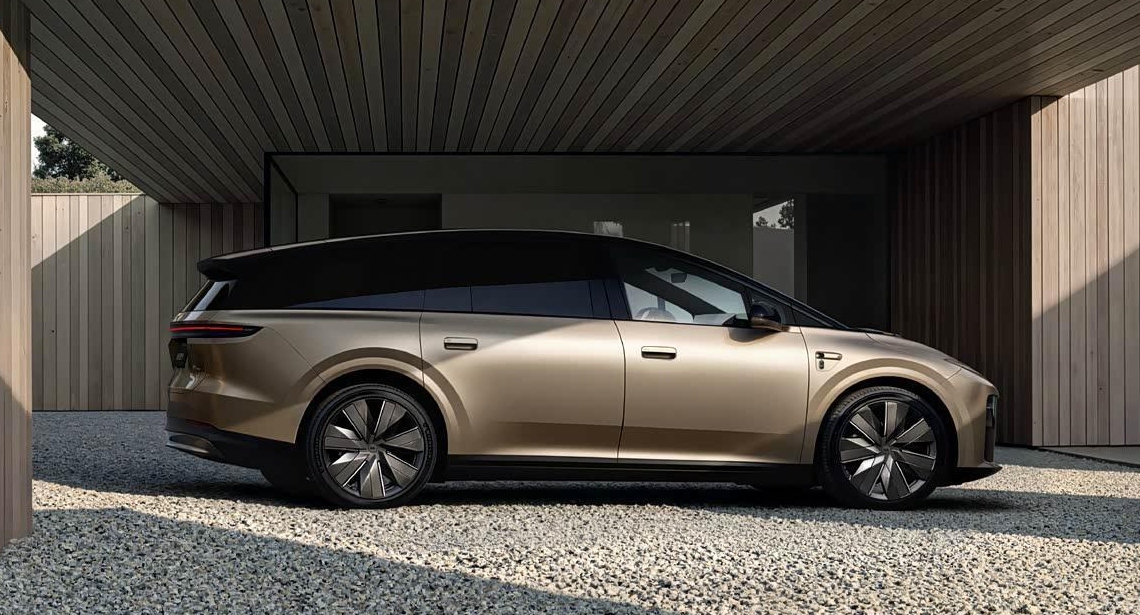

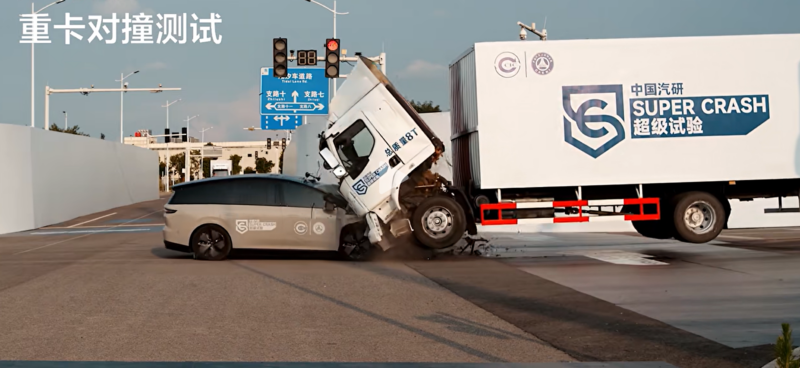
Li Auto’s latest electric vehicle, the i8, has found itself embroiled in controversy following a crash test video that seemingly defied physics. Unveiled on July 29, the BEV i8’s launch event took an unexpected turn when footage went public depicting a head-on collision with an 8-ton truck. The video, showing the truck’s wheels lifting completely off the ground and its cabin sustaining severe damage, immediately sparked debate and raised questions about the validity of the test.
Li Auto was quick to highlight the i8’s supposed resilience. They claimed the i8’s A, B, and C pillars, along with door beams, remained intact. All nine airbags deployed flawlessly, with no reported battery leaks or fires – impressive safety features for any vehicle, let alone an EV. Furthermore, the doors automatically unlocked, and the handles popped open, suggesting a well-engineered escape system. CEO Li Xiang emphasized the truck’s substantial weight, clarifying it was 8 tons unladen, to underline the i8’s superior passive safety.
The Dongfeng Truck and the Social Media Storm
The truck involved was identified as a Dongfeng Liuzhou Motors vehicle. After the video circulated online, it quickly became a hot topic, leading to a flurry of mixed reactions. Some social media users criticized the crash test, while others defended it. Dongfeng Liuzhou Motors responded with skepticism, hinting at misleading circumstances and stating that “smart people can see through the deception.” In a move that suggested an acknowledgment of the growing backlash, Li Auto later blurred the logo on the truck’s steering wheel in the video.
Accusations and Rebuttals
By July 31, the situation escalated into a full-blown disagreement. Dongfeng Liuzhou Motors accused Li Auto of infringement, asserting the video was released without their permission and that the test conditions weren’t representative of real-world accidents. They argued this undermined fair competition and manipulated consumers. Li Auto, however, stood by its test, calling it a legitimate simulation of traffic encounters and confirming it was conducted by a reputable third-party agency. They maintained that the testing environment and equipment were provided by the agency, absolving Li Auto of any influence.
The China Automotive Engineering Research Institute, the testing agency, corroborated Li Auto’s stance. They confirmed that the entire testing process adhered to regulations and standards, denying any client-driven adjustments. While they stated the test truck was brand new, further details about its origin remained unconfirmed.
Editor’s Take
This whole incident with Li Auto shines a spotlight on the “over-marketing” trend prevalent among some Chinese automakers. We have seen this before in the autonomous driving sector, which resulted in a nationwide ban on excessive marketing after a fatal incident involving a Xiaomi SU7 earlier this year. The bizarre crash test, showing the Li Auto i8 lifting an 8-ton truck, challenges basic intuition. Typically, a heavier vehicle causes more damage in a collision, so the idea of a 2.6-ton i8 lifting an 8-ton truck off the ground seems far-fetched to many.
This controversy has seriously impacted Li Auto’s credibility. Many consumers, even existing owners, harbor deep skepticism, suspecting foul play. The situation has even become a meme across Chinese social media, with people jokingly comparing the i8 to nuclear weapons. While some suggested another crash test with CEOs in the vehicles – an obviously impractical idea – public disbelief in Li Auto’s claims remains widespread. This incident serves as a stark reminder that in the automotive world, especially with EVs, transparency and realistic demonstrations are crucial for maintaining consumer trust.