
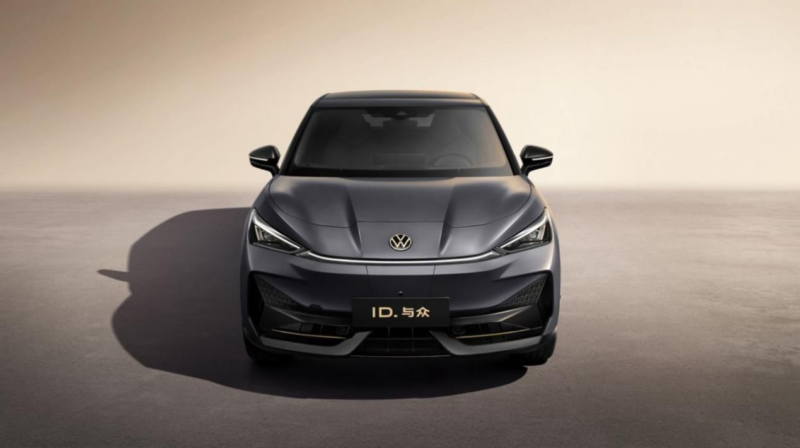
Volkswagen is on the verge of a significant shift in its China strategy, with the ID.Unyx 07, the first vehicle built on the China Electrical Architecture (CEA), set to begin production on December 31 at its Anhui plant. This isn’t just another electric vehicle it is a testament to Chinese engineering prowess, having been developed primarily by a Chinese team in a remarkable 18 months. European development cycles often stretch much longer, highlighting the incredible efficiency and speed of this collaboration.
A Roadmap for the Future of EV Architecture
Han Sanchu, Executive Vice President of Volkswagen Group China and CEO of Cariad China, recently outlined an ambitious roadmap for the CEA architecture. Version 1.0 launches this year, setting the stage for CEA 2.0 in 2027, which will support multiple powertrain types. Looking further ahead, version 3.0 is planned for 2029 and promises even deeper SOC chip development capabilities, establishing a rapid two-year upgrade cycle. This aggressive timeline showcases Volkswagen’s commitment to staying at the forefront of automotive technology in China.
Xpeng and Volkswagen: A Powerful Partnership
This groundbreaking collaboration began in July 2023 when Volkswagen invested a substantial 700 million USD for a 4.99% stake in Xpeng. The partnership quickly evolved, expanding beyond the China-focused Compact Main Platform (CMP) to embrace Volkswagen’s global Modular Electric Drive Matrix (MEB). In April 2024, both companies formally agreed to jointly develop the CEA architecture, with agreements signed in July. This advanced architecture utilizes a regional control and quasi-central computing design, leading to a 30% reduction in in-vehicle controllers, optimized system costs, and enabling seamless over-the-air (OTA) updates for autonomous driving and smart cockpit features.
A Multifaceted Strategy for the Chinese Market
Volkswagen is embracing a diverse strategy in China, continuing its longstanding relationships with partners like SAIC, FAW, and JAC, while also forging new alliances with technology powerhouses such as Xpeng and Horizon Robotics. At Xpeng’s Technology Day in November, Xpeng CEO He Xiaopeng confirmed that Xpeng’s self-developed Turing AI chip has been officially selected for use by Volkswagen.
The collaboration with Horizon Robotics is also moving forward rapidly. On December 8 at the 2025 Horizon Technology Ecosystem Conference, Han Hongming, CEO of the Volkswagen-Horizon joint venture Carizon, revealed that Volkswagen’s own chip will integrate Horizon’s latest BPU architecture. This will deliver an impressive 500-700 TOPs of computing power, ready to support advanced vision systems and large language models. Crucially, this chip will be fully compatible with the CEA architecture developed with Xpeng, enabling L2+ advanced driver assistance and L3/L4 autonomous driving capabilities.
Reshaping Volkswagen’s R&D Landscape
Over the past three years, Volkswagen has significantly revamped its business model and research and development framework. The Volkswagen China Technology Company (VCTC) in Hefei, which became fully operational in January 2024, now stands as the group’s largest R&D center outside Germany. This strategic move underscores Volkswagen’s dedication to developing China-specific solutions and accelerating its EV offensive.
The ambitious plan targets the delivery of the first vehicles with the CEA architecture and advanced driver assistance functions starting in 2026. By 2027, Volkswagen aims to launch more than 20 electrified intelligent models, with the pure electric intelligent vehicle portfolio set to expand to approximately 30 models by 2030, covering a wide array of market segments. This comprehensive approach positions Volkswagen to be a dominant force in China’s rapidly evolving EV landscape, driven by innovative partnerships and localized development.