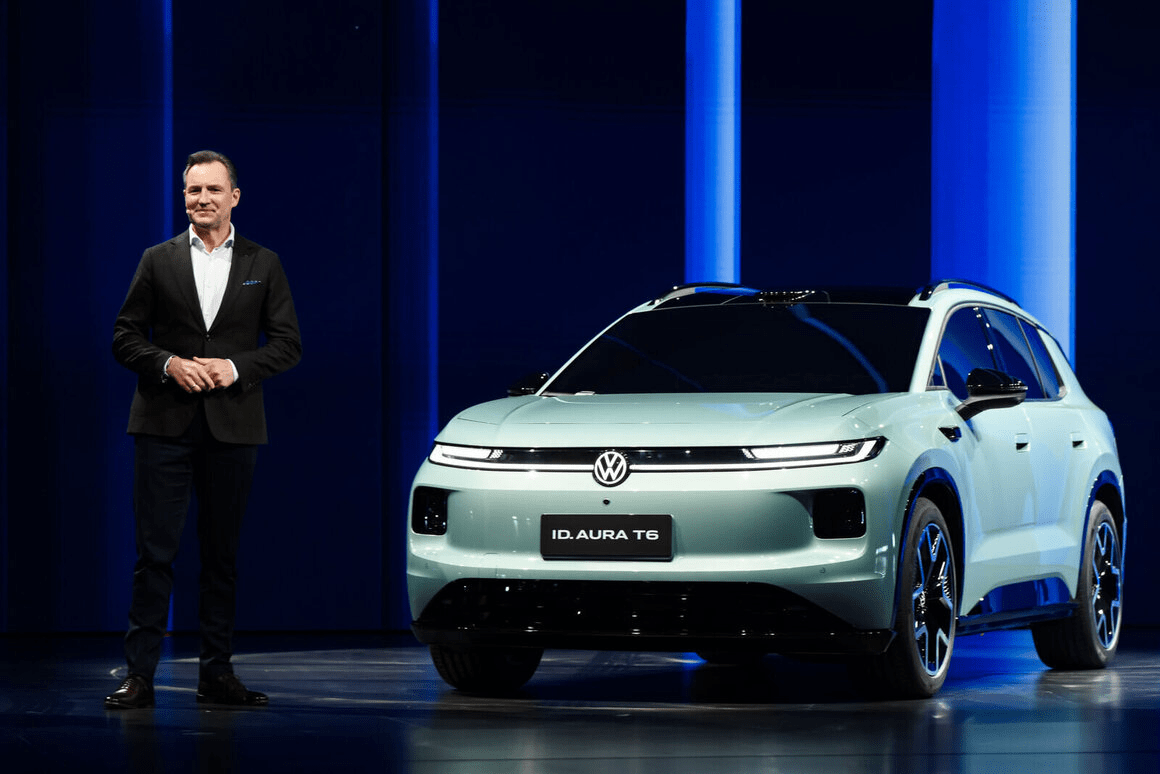

Volkswagen is doubling down on its “In China, For China” strategy, pouring over $200 million into the independent design and development of System-on-Chip (SoC) technology right in China. This isn’t just a minor investment; it’s a bold declaration of intent from the global automotive giant, aiming to bake its own intelligent driving brains into future vehicles.
Forging the Future: Carizon Leads the Charge
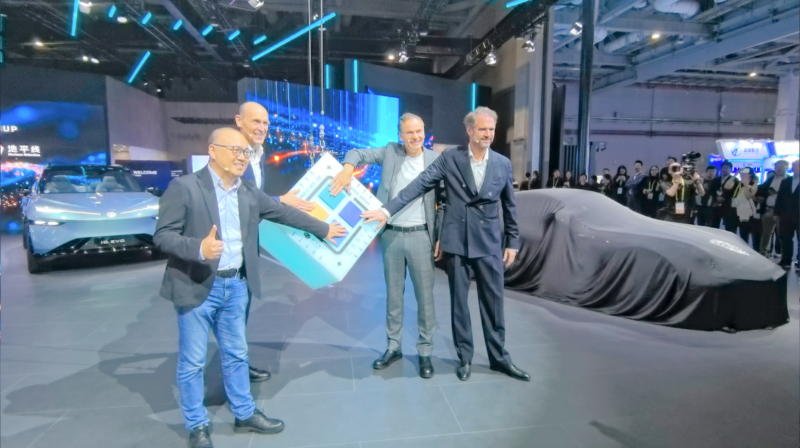
At the heart of this ambitious endeavor is Carizon, a joint venture that brings together Cariad, Volkswagen’s specialized software arm, and the Chinese intelligent driving technology powerhouse, Horizon Robotics. Han Sanchu, CEO of Cariad China, highlighted the significance of this move, emphasizing Volkswagen’s drive to create a fully integrated software and hardware ecosystem. Imagine everything from the complex algorithms that guide a car to the very electronic and electrical architectures and the SoC itself, all developed in-house. It’s a complete vertical integration, a strategic play to control the core nervous system of their future EVs.
High-Power Chips on the Horizon
The first of these homegrown SoCs is set to hit mass production within the next three to five years. And get this: we’re talking serious computing power, with projections of 500 to 700 TOPS (Tera Operations Per Second) per chip. To put that into perspective, that’s enough computational muscle to significantly boost real-time decision-making, ramp up safety redundancy, and ensure rock-solid stability for intelligent driving systems, especially when they are working hard. This kind of raw processing power is critical as we move towards more advanced autonomous capabilities.
This move marks a clear “Phase Two” for Volkswagen in China’s intelligent driving R&D. Carizon’s initial advanced driver-assistance system is already on track for mass production in 2025, wrapping up the first phase. But with the self-developed SoC, Volkswagen is shifting gears, accelerating its full-stack local intelligent driving R&D capabilities and pushing for scaled mass production and real-world deployment. Think about it: a car’s brain, custom-made for its precise functions, that’s a game-changer.
Localizing for L3+ Autonomous Driving
Initially, these cutting-edge chips will find their home in Volkswagen Group’s Chinese models, specifically those equipped for L3 and higher levels of autonomous driving. This strategy allows Volkswagen to deeply localize core technologies, essentially creating a seamless vertical integration of software and hardware, from the algorithms that predict traffic to the very silicon that executes those predictions. It’s all about tailoring the tech to the market and ensuring peak performance.
This massive investment isn’t a standalone move. It builds on Volkswagen Group (China)’s existing commitment of over 100 billion yuan (14 billion USD) announced in 2020. That earlier investment aimed to embed Volkswagen even deeper into China’s vibrant intelligent electric vehicle industry ecosystem. The establishment of the Volkswagen China Technology Company (VCTC), Volkswagen’s largest R&D hub outside of Germany, has already shown impressive results, slashing product launch cycles by over 30% and trimming costs by a significant 40%. Talk about efficiency! This also builds upon Volkswagen’s ongoing collaborations, like their growing partnership with XPeng Motors for autonomous driving technology.
Volkswagen’s Strategic Investments in China
Volkswagen’s strategic investments in China paint a clear picture of its commitment to the market. From equity investments in battery technology with Gotion High-Tech in 2020 to expanding complete vehicle production with JAC Group, and a hefty 2.4 billion EUR joint venture with Horizon Robotics for autonomous driving in 2022, they’ve been busy.
Subsequent investments include undisclosed amounts for connected car and infotainment systems with ThunderSoft, a billion EUR for a brand-new R&D center, and significant capital for manufacturing and R&D bases in Anhui. Most recently, another 2.5 billion EUR was injected into the Volkswagen Anhui new production and R&D base for capacity expansion, demonstrating a sustained long-term vision. Volkswagen is also planning on developing exclusive EVs for the Chinese market, with vehicles like the ID.Unyx 07 being developed at lightning speed.
Looking ahead, Carizon China is gearing up for mass production and delivery of the new CEA electronic and electrical architecture, essentially the “brain and central nervous system” for Volkswagen’s next-generation vehicles in China, by 2025. Starting in 2026, Chinese customers can expect the first models sporting this advanced CEA architecture and Carizon-developed driver-assistance functions. By 2027, Volkswagen plans to roll out over 20 electrified models, with aims for approximately 30 pure electric models by 2030, marking an aggressive transition into the intelligent connected vehicle era. The brand is clearly committed to delivering cutting-edge technology and a diverse range of EVs to the Chinese market and beyond.