
Solid-state batteries (SSBs) are often touted as the “holy grail” of EV power, promising unprecedented safety and energy density. Yet, within China’s fiercely competitive EV landscape, experts are pushing back against the idea of “absolute safety,” urging a dose of reality amid aggressive market hype. It seems that while these next-gen batteries hold immense potential for the future of EVs, some critical challenges still need addressing before they can truly revolutionize the market.
The Allure of Solid-State
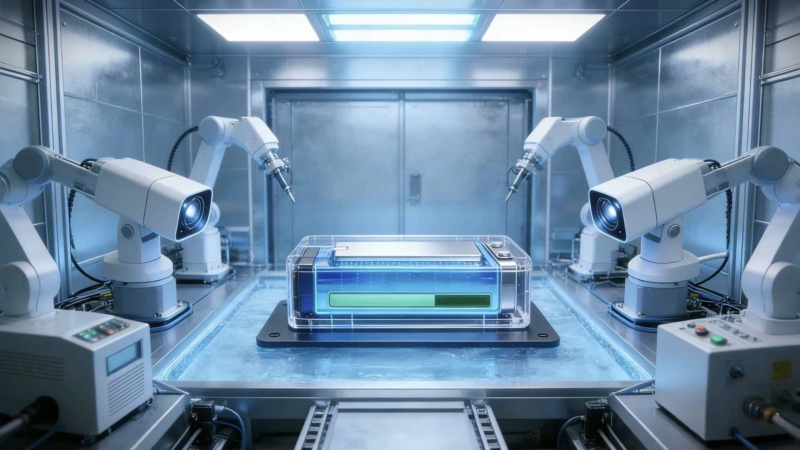
Traditionally, lithium-ion batteries use liquid electrolytes, which can be a fire risk, particularly under extreme conditions. Solid-state technology aims to mitigate this by swapping out the liquid for a solid material, theoretically offering a much wider thermal operating window and greater energy density. This promise has fueled massive investment and excitement, especially with China’s upcoming 2026 national safety standard for power batteries. This new regulation, effective July 1, will require batteries to survive abuse tests for at least five minutes without self-combusting or exploding. However, experts are quick to point out that this standard applies to all batteries, not just SSBs, and doesn’t magically erase the inherent risks associated with high-energy lithium systems.
Unpacking the Safety Concerns
Despite the buzz, solid-state batteries are far from immune to potential hazards. Academics at the 2025 World Power Battery Conference highlighted that SSBs, being incredibly energy-dense, still carry a thermal runaway risk. Lithium metal, a common component in many SSB designs, remains highly reactive. Imagine a scenario where lithium metal reacts with cathode materials in an oxygen-free environment, potentially triggering aluminothermic reactions that can soar to an incredible 2,500 °C, even in a fully discharged battery. That’s a chilling thought, putting the “absolute safety” claims firmly in question.
Then there’s the issue of lithium dendrites. This is a known troublemaker in conventional lithium-ion batteries, where lithium forms needle-like structures that can pierce through the electrolyte, leading to internal short circuits. While solid electrolytes are supposed to suppress these dendrites, real-world materials might have tiny gaps or grain boundaries that let these destructive dendrites sneak through. Moreover, many SSB prototypes are chasing higher energy density by using high-nickel cathodes and silicon-based anodes. The catch is that these materials are notorious for their thermal instability, adding another layer of complexity to the safety equation.
China’s Auto Industry: Pushing Boundaries but Cautiously
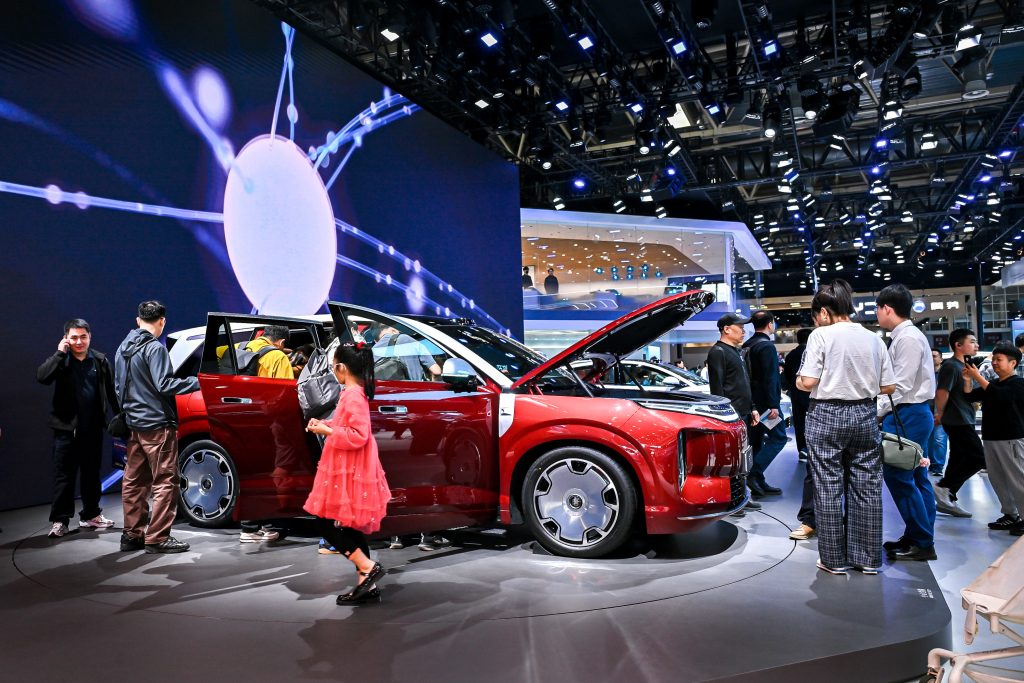
Despite these challenges, Chinese automakers are diving headfirst into SSB development, recognizing the need for stringent safety assessments. For instance, FAW Group has plans to integrate solid-state batteries into its Hongqi vehicles by 2027. GAC Group is already doing trial production at a pilot facility to test all-solid-state batteries in small batches of vehicles. Dongfeng Motor has its sights set on mass production by late 2026, aiming for batteries with energy densities around 350 Wh/kg, which could unlock EV ranges exceeding an impressive 1,000 km. Meanwhile, SAIC Motor and Chery Automobile are also making strides with their prototype and pilot programs, targeting 2027 for integration. These ambitious timelines underscore why experts are calling for rigorous safety validation to go hand in hand with commercial deployment. The push for innovation is palpable, but so is the underlying need for meticulous testing and verification.
Coexistence, Not Replacement
Chinese analysts are quick to caution against framing SSBs as a guaranteed fix for battery fires. That line of thinking, they argue, risks twisting the technical reality. Conventional liquid lithium-ion batteries continue to evolve, with ongoing improvements like flame-retardant electrolytes, protective electrode surface coatings, and cell designs that can handle high temperatures. These advancements keep them highly relevant, especially in applications like stationary energy storage.
The emerging consensus in the industry isn’t about SSBs completely replacing liquid lithium-ion batteries, but rather a future of coexistence. SSBs will likely find their niche in higher-end applications where top-tier energy density and uncompromising safety margins are paramount. Think premium EVs where every kilometer of range and every ounce of safety counts. On the flip side, liquid lithium-ion batteries will probably continue to dominate in scenarios where cost-effectiveness and maturity are key considerations. Both technologies have their place, ultimately offering diverse solutions for an evolving electric future.