
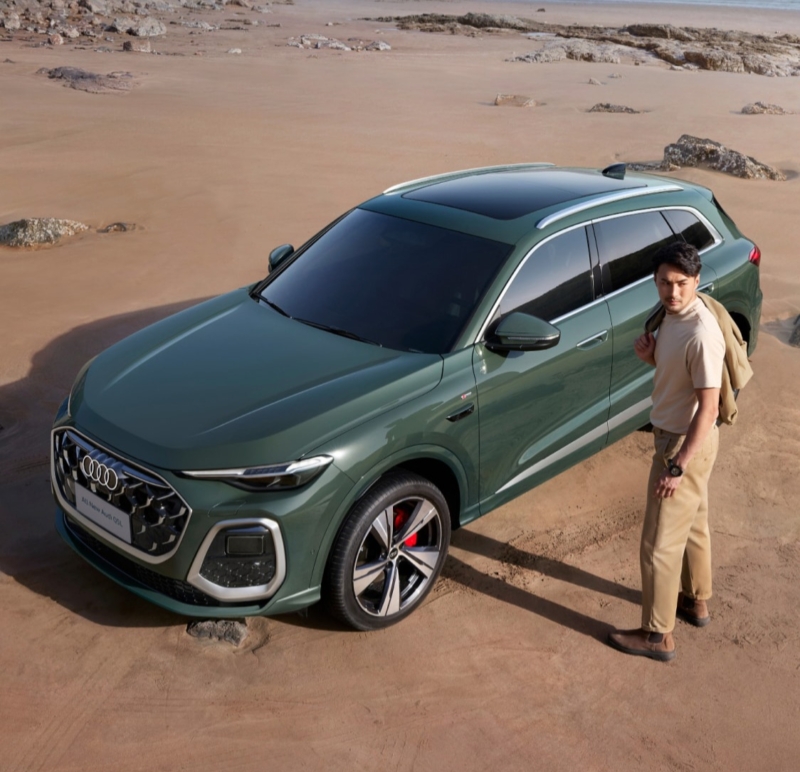
The wraps are off the latest iteration of Audi’s popular Q5L in China, and it’s packing some serious tech. This third-generation long-wheelbase SUV, a product of the FAW–Audi joint venture, is now available for pre-order, with prices kicking off at a compelling 313,000 yuan (about 44,500 USD) and topping out at 385,000 yuan (54,700 USD). Automotive enthusiasts, mark your calendars: the official launch is set for early 2026.
Under the Hood and on the Road
Built on Audi’s cutting-edge PPC (Premium Platform Combustion) architecture, the new Q5L promises a refined driving experience. But the real game-changer here, especially in the higher trims, is the integration of Huawei’s Qiankun ADS technology. This advanced driver-assistance system leverages dual lidars to deliver impressive map-free Level 2 autonomous driving capabilities. It’s a bold step, and one that highlights the evolving landscape of automotive technology in China, where partnerships like these are becoming increasingly common.
Powering the Q5L is the familiar EA888 Evo5 2.0TFSI engine, seen in stablemates like the Audi A5L. Drivers will have a choice of two outputs: a high-power 200 kW version or a slightly tamer 150 kW option. A snappy 7-speed DCT handles shifting duties, sending power to all four wheels via Audi’s renowned quattro all-wheel-drive system. The ride quality should be excellent, thanks to a five-link independent suspension setup at both the front and rear axles, ready to soak up whatever the road throws at it.
A Glimpse at the Evolution of the Q5L
For those who appreciate automotive history, the Audi Q5 first arrived on the scene in 2008, making its way to Chinese manufacturing lines by March 2010. The second generation, introduced globally in 2016, specifically embraced the “Q5L” long-wheelbase moniker for the Chinese market in 2018. A mid-cycle refresh kept it fresh in 2021, and now, we’re looking at the most advanced version yet.
Sleek Design and a Tech-Rich Cabin
Dimensionally, the new Q5L stretches out at 4842 mm long, 1900 mm wide, and 1660 mm high, with a generous 2945 mm wheelbase. That’s a noticeable increase in length by 72 mm and width by 7 mm, while shaving off 7 mm in height compared to the outgoing model. The wheelbase also grew by 38 mm, promising even more interior space and a more commanding road presence.
Little touches go a long way in Chinese market cars, and the Q5L delivers. For the first time, it sports sleek, semi-hidden door handles, a modern design choice that many manufacturers are adopting, even though there’s an ongoing debate in China about their safety implications. Buyers can choose from a palette of black, green, white, silver, and brown exterior paints. A unique projection-type high-mounted brake light, exclusive to the Chinese market, adds another distinctive touch.
Step inside and you’re greeted with a cockpit layout inherited from the overseas model, but with its own flair. A triple-screen setup dominates the dash, featuring an 11.9-inch LCD instrument cluster and a generous 14.5-inch central touchscreen. Your co-pilot even gets their own 10.9-inch entertainment screen, a thoughtful addition often seen in the Chinese market. For those who want even more tech, a 13.1-inch HUD system is an optional extra. Of course, modern essentials like Apple CarPlay and wireless charging are standard, ensuring you stay connected on the go.
Market Performance and the Road Ahead
The Audi Q5L has been a strong performer in China, with cumulative sales of 119,600 units in the first 11 months of this year. That puts it ahead of rivals like the Mercedes-Benz GLC, which sold 117,200 units, and the BMW X3, which came in at 69,500 units. The strong sales figures underscore the importance of the Chinese market for premium brands like Audi.
As the automotive landscape continues to evolve, the new Q5L with its Huawei ADAS and sophisticated design is set to make a significant impact. We’re seeing more and more traditional automakers partner with Chinese tech giants to integrate advanced features. It’s a trend that will only accelerate as brands strive to meet the demands of tech-savvy consumers. The focus on localizing features, like the exclusive brake light and the dedicated passenger screen, also highlights Audi’s commitment to the Chinese market, a strategy that seems to be paying off handsomely.