
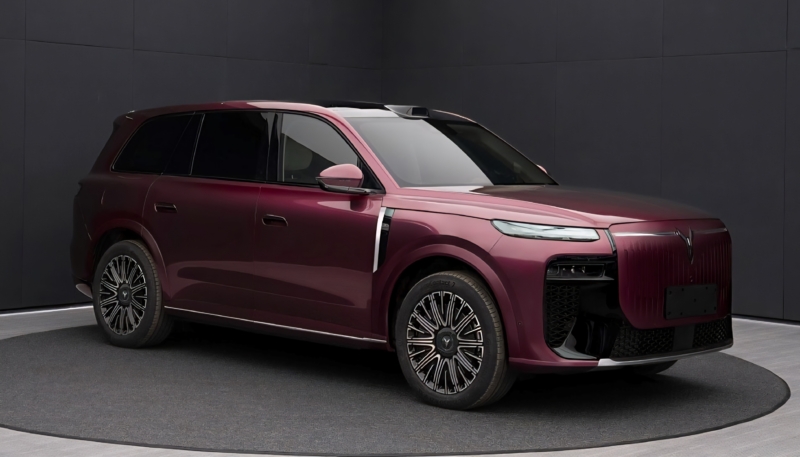
Just when you thought Voyah had shown its hand with its enormous flagship SUV, the brand is already doubling down. New filings from China’s MIIT have pulled the curtain back on its next act: the Taishan 8. This five-seater PHEV SUV packs a dual-motor punch and a 200 km/h top speed, signaling that Voyah isn’t just building luxury cruisers. It’s building them with serious performance chops.
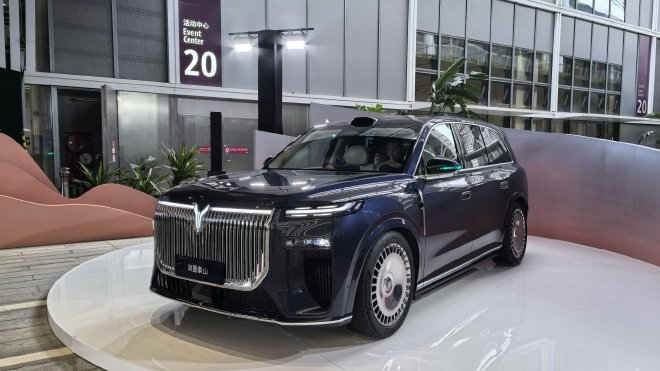
Voyah, the premium EV arm of legacy giant Dongfeng, is clearly on a roll. This reveal comes only a month after the launch of its first Taishan model, a six-seat flagship that made waves as the first Chinese vehicle with a three-chamber air suspension and a wild 16° of rear-wheel steering. That flagship, priced from about 53,200 to 65,000 USD, came loaded with premium hardware. We’re talking about advanced driving assistance from Huawei, a HarmonyOS cockpit, super-fast 5C charging, and seats so adjustable they call them “zero-gravity.”
It seems the new Taishan 8 will likely inherit some of that premium DNA, bringing high-end features to a slightly more compact package. The reliance on tech from Huawei, a company that also powers the popular Aito (Huawei) brand, shows how deeply integrated China’s tech and auto sectors have become. It’s a strategy that helps domestic automakers compete directly with global luxury brands.
Sizing It Up
The Taishan 8 is a big vehicle, but it’s trimmed down slightly from its larger sibling. It measures 5200 mm long with a 3090 mm wheelbase, compared to the flagship’s 5230 mm length and 3120 mm wheelbase. The design language is consistent, with Voyah’s signature waterfall grille dominating the front. A lidar unit perched on the roof signals serious semi-autonomous driving capabilities are on board, while the semi-hidden door handles keep the profile clean and modern. Around back, the “VOYAH” branding is confidently spaced out across the tailgate, nestled within the taillight assembly.
Buyers will get a few ways to customize their ride, with optional electric side steps for easier entry, side-mounted radar units, and a choice of different wheel designs and door handles.
Two Tiers of Power
Under the hood, things get interesting. The Taishan 8 is a plug-in hybrid, but it’s not your average grocery-getter. It pairs a 1.5-liter engine (rated at 110 kW or 148 hp) with two electric motors. The engine mainly acts as a generator, feeding power to the motors and battery rather than driving the wheels directly. This setup is common in the Chinese market, with brands like Li Auto finding huge success with similar range-extender technology.
Voyah offers two distinct powertrain configurations:
- A low-power version combines 150 kW and 215 kW electric motors, drawing from a lithium iron phosphate (LFP) battery pack made by Xinwangda. LFP is known for its durability and lower cost, making this a practical choice for daily driving.
- A high-power version steps things up with 150 kW and 230 kW motors, pushing a combined output toward a staggering 657 horsepower. This variant uses a high-performance ternary lithium battery from a joint venture between CATL and FAW. CATL is a name you see everywhere in the industry, supplying a huge portion of the market, a fact reflected in the monthly EV registrations.
Weight varies with configuration. The more powerful version weighs between 2,790 kg and 2,815 kg, depending on whether you choose the 21-inch or 22-inch wheels. Official fuel consumption is listed as low as 0.34 L/100km on the WLTC cycle, but this figure assumes you’re starting with a full battery. The real-world efficiency will depend heavily on your charging habits. Unfortunately, Voyah hasn’t released the battery capacity or electric-only range yet, which are the missing pieces of the puzzle.
With the Taishan 8, Voyah is clearly targeting buyers who want space, luxury, and a dose of high-tech performance without the range anxiety of a pure EV. It’s an aggressive move that further cements Voyah’s position as a serious contender in China’s premium new energy vehicle market.