
Mid-Year Reality Check
The first half of 2025 is in the books, and China’s new energy vehicle (NEV) startups are rolling out their sales numbers. While year-over-year growth looks impressive for many, a peek at their progress toward annual sales targets paints a much grittier picture. It’s a story of ambition meeting reality, where only one brand, Xpeng, has managed to cross the halfway point to its goal, leaving most rivals trailing below the 40% mark.
The 200,000-Unit Club: A Mixed Bag of Victories
Xpeng, Leapmotor, Li Auto, and HIMA all blasted past 200,000 sales in the first half, cementing themselves as serious players in China’s NEV scene. But their success stories vary wildly, mostly because they started the year with very different definitions of success.
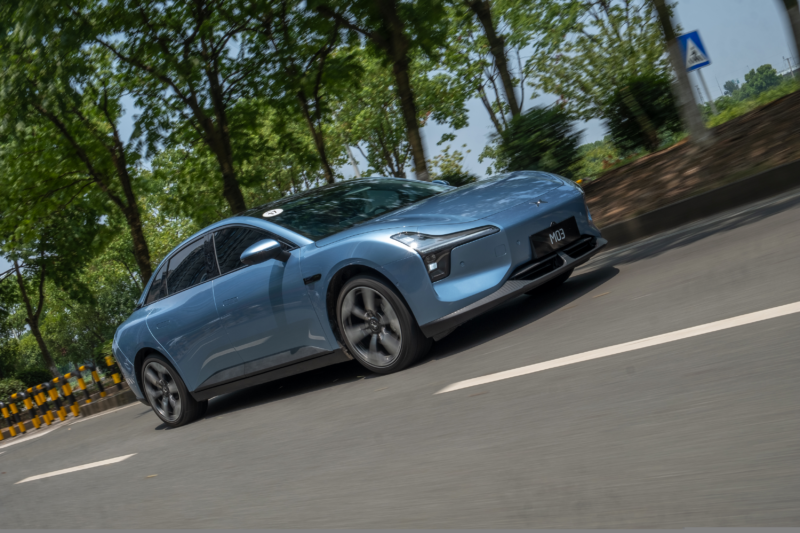
Xpeng is the star pupil, hitting 51.89% of its 380,000-unit target. That goal, while 100,000 units higher than last year’s, seems almost conservative now. Models like the Mona M03 and P7+ are selling so well that H1 sales have already outstripped all of 2024. If this momentum continues, Xpeng might even have to revise its target upward. Still, its lineup is heavy on sedans, and the upcoming G7 SUV will be critical for maintaining that growth.
Leading the pack in raw sales numbers is Leapmotor, which built its volume on the back of its popular, value-focused C-series family cars. It’s a strategy that clearly works. Now, Leapmotor is gearing up to launch the B01 electric sedan to take on Xpeng’s Mona M03. Looking ahead, the brand plans to enter a higher price bracket with its D-series, priced around 300,000 yuan (42,000 USD), which will demand some slick marketing to shift its budget-friendly image.
Meanwhile, HIMA’s one-million-unit target is looking less like confidence and more like a source of anxiety. While its key partner Seres has a more achievable goal of 550,000-600,000 units, HIMA’s fortunes are heavily tied to Aito’s success. To hit that million-unit mark, the brand would need to sell over 130,000 cars per month in the second half, a huge jump from its current 40,000-50,000 monthly average.
Xiaomi Auto is the envy of the industry. Without even hitting 200,000 units, it’s already at nearly 45% of its annual target with just one model, the SU7, and its first factory. With the new Xiaomi YU7 and a second factory online, hitting its 350,000-unit goal in the second half seems entirely possible.
Struggling to Keep Pace: What’s Behind the Low Numbers?
For the brands falling short, the reasons are a mix of sky-high ambitions and products that just aren’t connecting with buyers.
Both Deepal and Nio cleared 100,000 sales but are lagging on their targets. Deepal, perhaps a bit cocky after hitting 87% of its target last year, aimed for 400,000 units in 2025. Right now, only the Deepal S05 and S07 are pulling their weight, while its other models struggle to gain traction. Even the promising new S09 needs to prove it can maintain its early pre-order buzz.
Nio’s ambitious 440,000-unit target is reportedly tied to its goal of hitting profitability in the fourth quarter. While sales are up over 30% year-over-year, it’s not enough. The new sub-brand Onvo and its L60 SUV are meant to drive volume, but the car is in a tough fight against the Tesla Model Y and other domestic rivals. Onvo is still building its identity and leaning heavily on the Nio brand for credibility.
For Voyah and IM Motors, the problem isn’t necessarily overly ambitious targets, but a failure to create blockbuster models. A lack of brand awareness and fuzzy product positioning are holding them back. However, Voyah is showing renewed promise through its deeper collaboration with Huawei. The tech giant’s influence is helping the Voyah Dreamer MPV find its audience, proving that a powerful partnership can sometimes be the key to unlocking a brand’s potential.