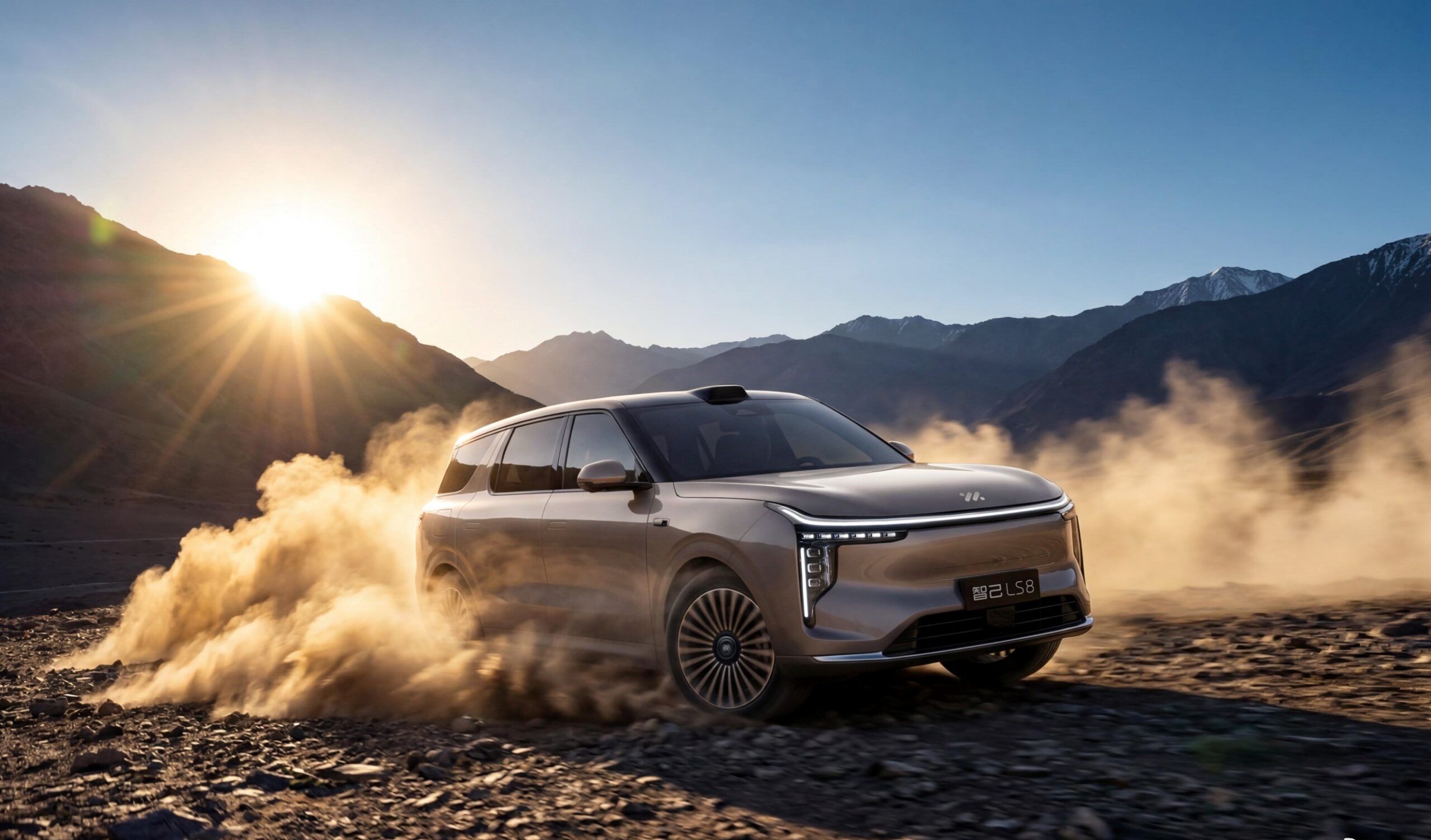

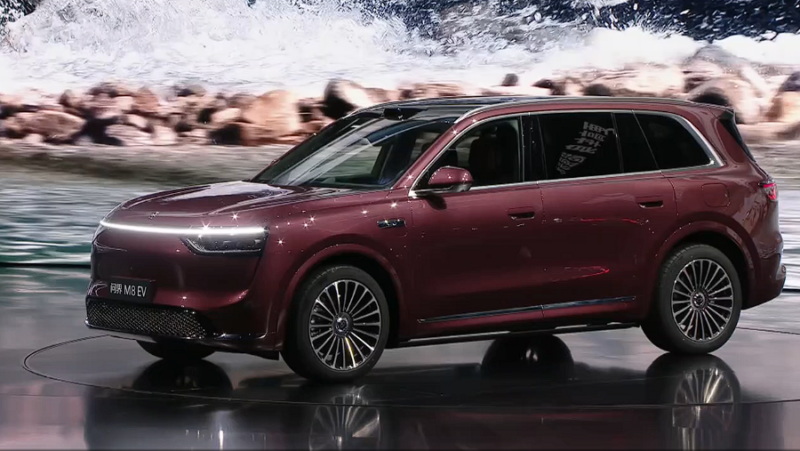
Huawei’s collaboration with Seres is heating up the EV market again, this time with the official launch of the Aito M8. Debuting at the HarmonyOS Smart Mobility event, this all-electric SUV is a clear statement of intent, blending serious performance with the tech giant’s hardware and software expertise. With prices kicking off at 359,800 yuan ($50,000) and a feature list as long as its wheelbase, the M8 isn’t just another EV, it’s a rolling showcase of what Huawei can do on four wheels.
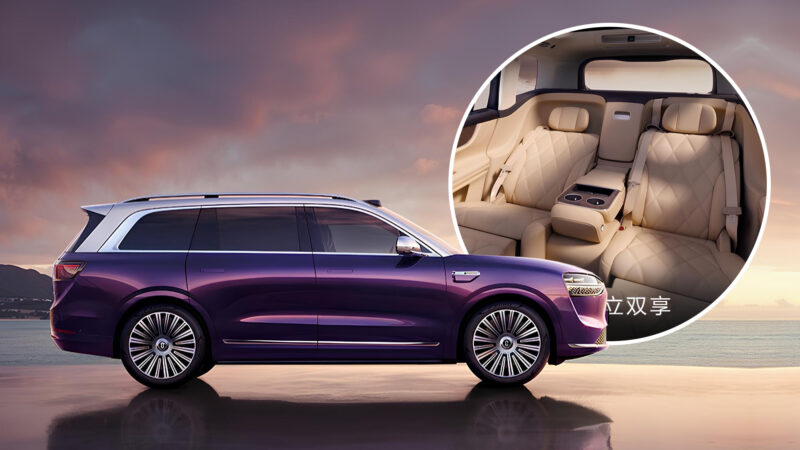
The M8 is built to impress right from the spec sheet. It’s a large SUV that promises practicality for families, offering both five and six-seat configurations across its model range. For a vehicle stretching nearly 5.2 meters, its sleek design and an aerodynamic drag coefficient of 0.255 are genuinely impressive.
| Metric | Value | Unit | Notes |
|---|---|---|---|
| Peak power (RWD / AWD) | 227 / 387 | kW | Equivalent to 304 / 519 hp |
| Peak torque | 4000 | Nm | At the electric drive unit |
| Range (CLTC) | 705 (RWD) / 655 (AWD) | km | Real-world range will likely be lower |
| Battery capacity | 100 | kWh | NMC chemistry, standard on all models |
| Battery supplier / cell type | CATL / NMC | — | From one of China’s top battery makers. GWM also uses them in models like the GWM Tank 300 Hi4-T. |
| Dimensions (L/W/H) | 5190 / 1999 / 1795 | mm | A large SUV footprint |
| Wheelbase | 3105 | mm | Contributes to significant interior space |
| Starting price (local market) | ¥359,800 | CNY | Equivalent to approximately $50,000 USD |
Power and Performance
Under the skin, the M8 is powered by Huawei’s new DriveONE 7-in-1 electric drive. It’s an in-house developed system that’s more compact and efficient than its predecessors. The entry-level model is a rear-wheel-drive setup with a punchy 227 kW (304 hp) motor. Paired with the standard 100 kWh ternary NMC battery from CATL, it delivers an impressive 705 km of range on the CLTC cycle.
If you need more grunt, the all-wheel-drive variant combines motors for a total output of 387 kW (519 hp). That’s serious power that puts it in contention with many performance-oriented SUVs. The AWD version’s range is slightly lower at 655 km, a reasonable trade-off for the added traction and acceleration. Huawei is also making a big deal about the system’s quietness, claiming the cabin noise is just 60.8 dBA at 120 km/h, which suggests a serene highway ride. This is part of a broader trend where even non-luxury brands are focusing on refinement, something seen in the refreshed Aito M7 as well.
Tech-Forward Interior and Hardware
This wouldn’t be a Huawei-backed vehicle without a heavy dose of tech. The M8 is loaded with advanced hardware for its intelligent driving systems. The setup includes a 192-line LiDAR, a rear solid-state LiDAR, and five 4D millimeter-wave radars. This extensive sensor suite is crucial for enabling higher levels of assisted driving, a key battleground in the current Chinese auto market. While many competitors are adding sensors, some are pushing the envelope even further, like the Avatr 12 with its four-LiDAR system.
Inside, the cabin is dominated by a triple-screen setup, creating a high-tech command center for the driver and passengers. But it’s not all about screens. Aito has included practical touches that families will appreciate, like a compressor-equipped car refrigerator and 26 different storage compartments. It’s clear they designed this for daily life, not just for showing off at a tech conference. This dual focus on tech and usability is a hallmark of many Huawei-powered cars.
Our Take
The Aito M8 is a compelling package. It combines a powerful and efficient electric drivetrain with a large, comfortable, and tech-filled cabin. The standard 100 kWh CATL battery provides a generous range, while the choice of RWD and AWD caters to different consumer needs.
Starting at $50,000, it’s priced competitively against other premium electric SUVs in China. Huawei isn’t just lending its name here, it’s providing the core technology that makes the M8 tick. From the DriveONE powertrain to the advanced LiDAR array, this SUV feels like a direct extension of Huawei’s engineering prowess. It’s a strong contender that should have rivals paying close attention.