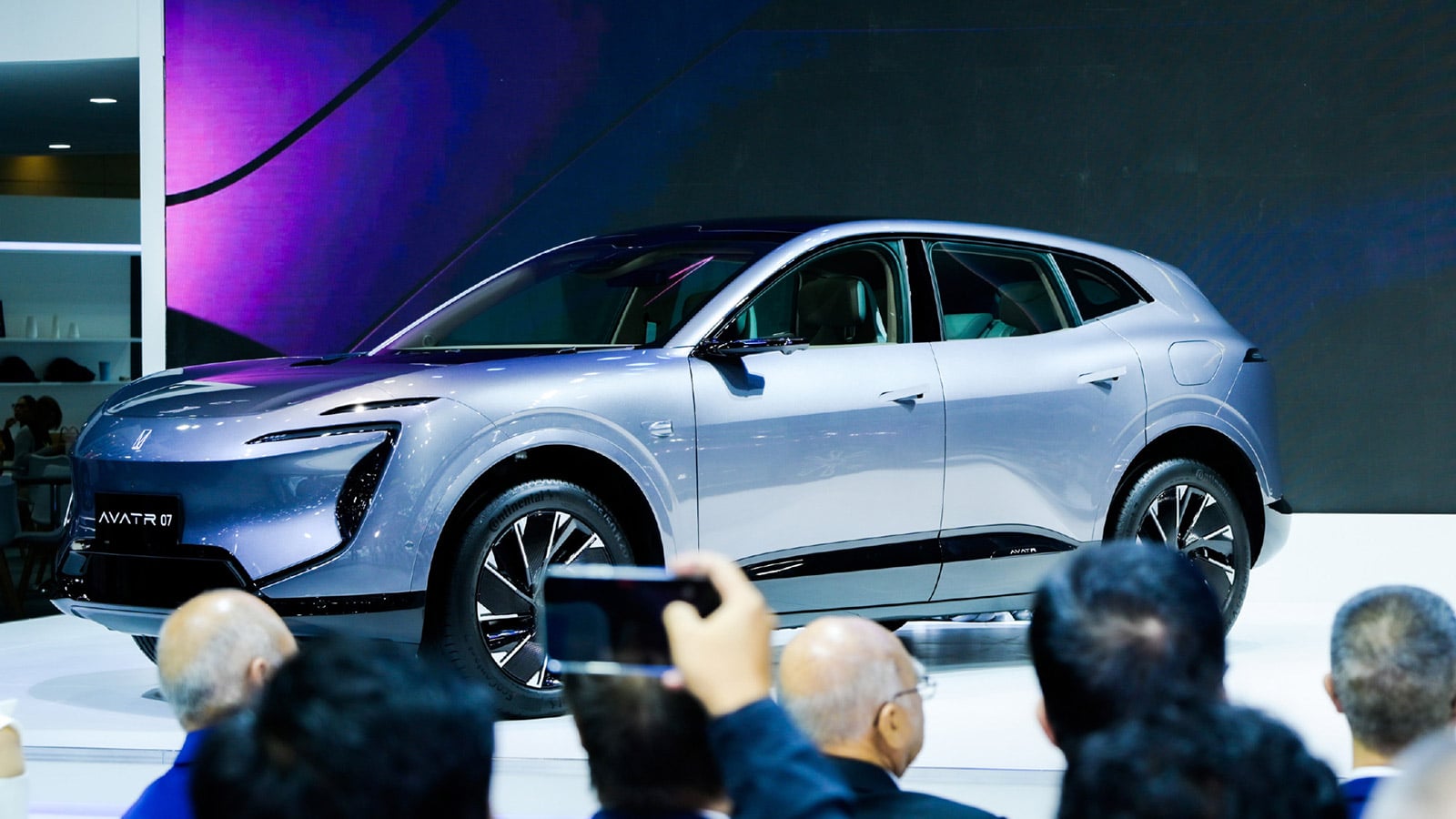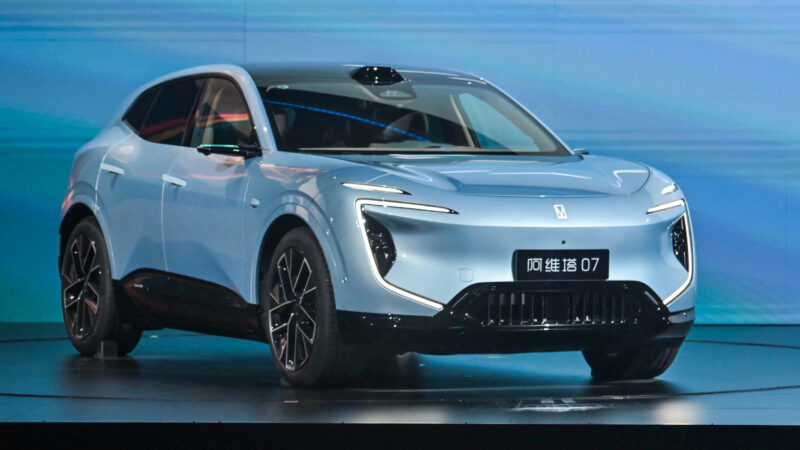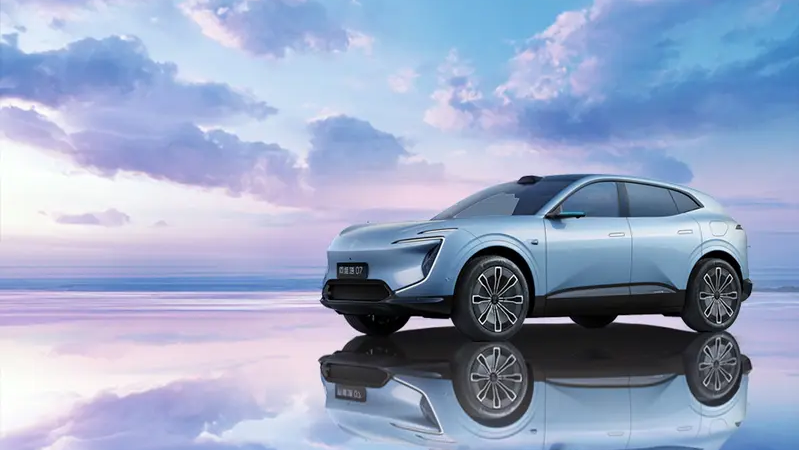

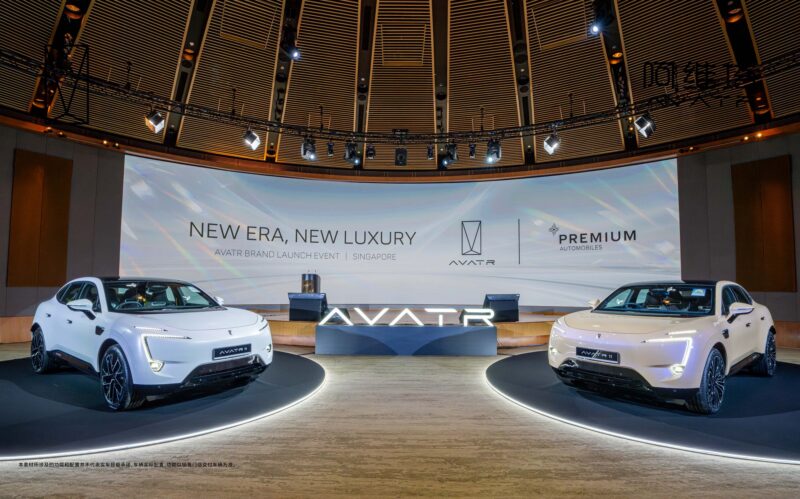
Imagine walking into a dealership and seeing a sticker price of over 217,000 USD for an electric SUV. Now imagine finding out that the same vehicle sells for the equivalent of just 40,500 USD in its home country. That’s exactly the situation with the Avatr 11, which just made its debut in Singapore, highlighting the wild world of global car pricing.
On July 25, Avatr officially launched its sleek, Huawei-backed EV in the Singaporean market. The price immediately turned heads. The standard range model comes in at 278,999 Singapore dollars (about 217,700 USD), while the long-range version asks for 303,999 Singapore dollars (roughly 235,000 USD). Compared to its starting price of 289,900 yuan (40,500 USD) in China, it’s a staggering five-fold increase.
So, what gives? The massive price hike isn’t just a simple markup. Singapore’s unique auto market policies are the main driver. To even put a car on the road, a buyer needs a Certificate of Entitlement (COE), which itself can cost around 100,000 Singapore dollars. On top of that, a hefty Additional Registration Fee gets tacked on, sending the final price into the stratosphere.
Avatr 11: Quick Specs & Metrics
| Metric | Avatr 11 (Singapore – SR) | Avatr 11 (Singapore – LR) | Avatr 11 (China – EREV) | Avatr 11 (China – BEV AWD) |
|---|---|---|---|---|
| 0–100 km/h | 6.6 s | 6.9 s | 6.9 s | 3.9 s |
| Peak Power | 230 kW (308 hp) | 230 kW (308 hp) | 231 kW (310 hp) | 402 kW (539 hp) |
| Battery Capacity | 90 kWh | 116 kWh | 39.05 kWh | 116.79 kWh |
| Range | 475 km (WLTP) | 600 km (WLTP) | 1,065 km (CLTC, comprehensive) | 760 km (CLTC) |
| Fast Charge (30-80%) | 15 min | 25 min | 15 min | ~20 min (est.) |
| Starting Price (USD) | $217,700 | $235,000 | ~$40,500 | ~$50,000 |
What Singapore Gets
For now, Singaporean buyers get two rear-wheel-drive (RWD) battery-electric versions of the Avatr 11. Both trims share a motor that produces a respectable 230 kW (308 hp) and 350 Nm of torque, pushing the SUV to a top speed of 200 km/h.
The standard-range model uses a 90 kWh pack for 475 km of WLTP range and hits 100 km/h in a brisk 6.6 seconds. The long-range variant packs a larger 116 kWh battery, stretching the WLTP range to 600 km, though its 0-100 km/h time is slightly slower at 6.9 seconds due to the extra weight. Both offer quick charging, but the smaller battery is faster, juicing up from 30% to 80% in just 15 minutes.
As a medium-to-large SUV, the Avatr 11 has a commanding presence with dimensions of 4895/1970/1601 mm and a long 2975 mm wheelbase. The standard trim rides on 21-inch wheels, while the long-range gets larger 22-inch rims paired with Brembo brakes for extra stopping power.
A Glimpse of the Chinese Market
Back in China, Avatr offers a much wider playbook. Buyers can choose from an all-wheel-drive (AWD) BEV or even a range-extender (EREV) model. The EREV is particularly interesting, as it pairs a 1.5T engine with a rear electric motor and a 39.05 kWh battery. This setup delivers 225 km of pure electric range and a massive 1,065 km of total range, making it a versatile family hauler.
The Chinese BEV versions are also more potent. The RWD model gets a slight power bump, while the dual-motor AWD version is a true sleeper. It combines the rear motor with a 165 kW front motor, unleashing a total of 539 hp and getting this family SUV from 0 to 100 km/h in a blistering 3.9 seconds. All this tech is built on Huawei’s DriveOne 800V silicon carbide platform, showcasing the rapid pace of EV development in China.
The Huawei Brain
One of the Avatr 11’s biggest selling points is its advanced driving assistance system (ADAS), the Huawei ADS 3.0. It’s what you might call the car’s brain. Using a sensor suite of three lidars, three millimeter-wave radars, 11 cameras, and 12 ultrasonic radars, the system enables functions like automated highway driving, urban cruise control, and advanced parking assistance. This level of tech is a signature of Huawei‘s growing influence in the auto industry, providing the intelligence for many cutting-edge Chinese EVs.
While Avatr, a venture backed by auto giant Changan, is growing, with over 10,000 vehicles sold in June, the Avatr 11 itself only accounted for 153 of those sales. The brand is clearly focusing on its newer models like the Avatr 07 and 12. Launching in a high-stakes market like Singapore seems to be less about volume and more about making a bold statement about where Chinese EVs stand on the global stage. It’s a test of brand strength, technological prowess, and whether buyers are willing to pay a premium for a new name in luxury EVs.