
The automotive world is buzzing with the newly spied interior of the Baojun Xiangjing, a large sedan poised to launch in the first half of 2025. Baojun, a brand born from the SAIC GM Wuling (Wuling) joint venture, traditionally focused on smaller, budget-friendly cars. However, the Xiangjing marks a significant shift, representing the largest vehicle the brand has produced to date.
SAIC’s increasing reliance on the Wuling JV for sales, especially in the growing New Energy Vehicle (NEV) sector, highlights a strategic move. While popular models like the Mini EV and Bingo series have been volume drivers, they typically fall into the lower-value segment. The Xiangjing aims to not only boost Baojun’s sales, which have seen a decline until recently, but also to enhance profit margins.
Interior Design: A Blend of Modern Tech and Pragmatic Features
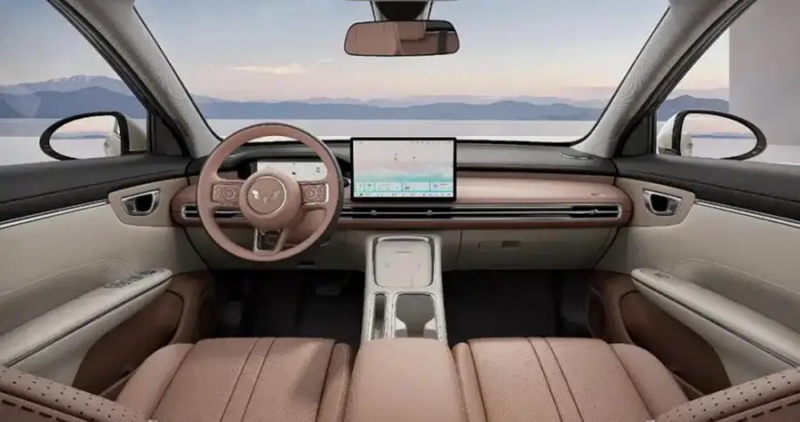
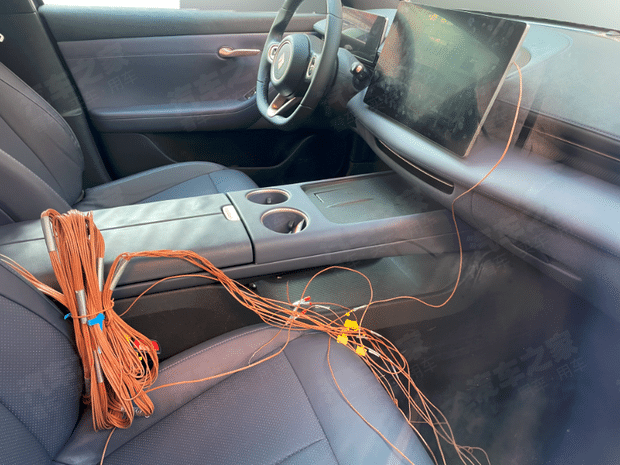
Inside, the Xiangjing showcases an interior that aligns with current NEV trends in the Chinese market. It features a prominent, floating central infotainment screen neatly integrated into the dashboard’s lower section. A digital LCD instrument panel keeps the driver informed, complemented by a sporty three-spoke, flat-bottomed steering wheel. One intriguing detail catching the eye is the gold-colored door handles. This stands out as many modern NEVs opt for button-activated door releases, making traditional handles a curious choice.
The center console is designed for contemporary convenience, offering dual wireless mobile phone charging pads and two drink holders. Behind these sits a split-opening storage compartment, with additional open storage space conveniently located beneath the charging pads and drink holders. The interior boasts a compelling purple and dark gray color scheme, adding a touch of sophistication.
Performance and Powertrain Options
The Xiangjing will be available with both all-electric (BEV) and plug-in hybrid (PHEV) powertrains, catering to diverse preferences in the dynamic Chinese market. While the PHEV variant stands slightly taller at 1505 mm, the BEV is a mere 1490 mm in height. Other dimensions remain consistent across both versions: a substantial 5005 mm in length and 1900 mm in width, with a wheelbase of 2900 mm. Interestingly, the wheelbase is relatively compact for a car of its overall length.
Originally named the Baojun Yunguang in MIIT listings, the sedan was later rebranded as the Xiangjing. Visually, the PHEV and all-electric versions present distinct front fascias. The PHEV notably features through-lights and a larger air vent at the bottom of the fender.
For those leaning towards the hybrid experience, the PHEV variant comes equipped with a 1.5T engine, delivering a maximum power of 105 kW (141 hp) and reaching a top speed of 190 km/h. It utilizes a lithium iron phosphate battery pack, providing a respectable 101 km CLTC (China Light-Duty Vehicle Test Cycle) of pure electric range. Further details regarding the electric motor and battery pack specifications for the PHEV are still anticipated. Meanwhile, the all-electric version packs a punch with an 186 kW TZ210XS2J6 electric motor, though its top speed is slightly lower at 170 km/h, a common characteristic in the world of Chinese NEV production. This commitment to both powertrains showcases the brand’s strategy to appeal to a wider audience, echoing how other Chinese manufacturers are expanding their EV offerings for broader appeal.
Baojun’s Strategic Play in a Competitive Market
The launch of the Xiangjing signifies Baojun’s ambition to move beyond its traditional small-car segment and make a stronger impact in the increasingly competitive Chinese EV market. By offering a larger sedan with both BEV and PHEV options, Baojun aims to capture a new bracket of buyers looking for more substantial vehicles. With Chinese automakers rapidly innovating and expanding their lineups, the success of the Xiangjing could prove crucial for Baojun’s continued growth and profitability in the coming years. This move is consistent with the broader trend of Chinese brands focusing on accelerating their EV adoption and production.)