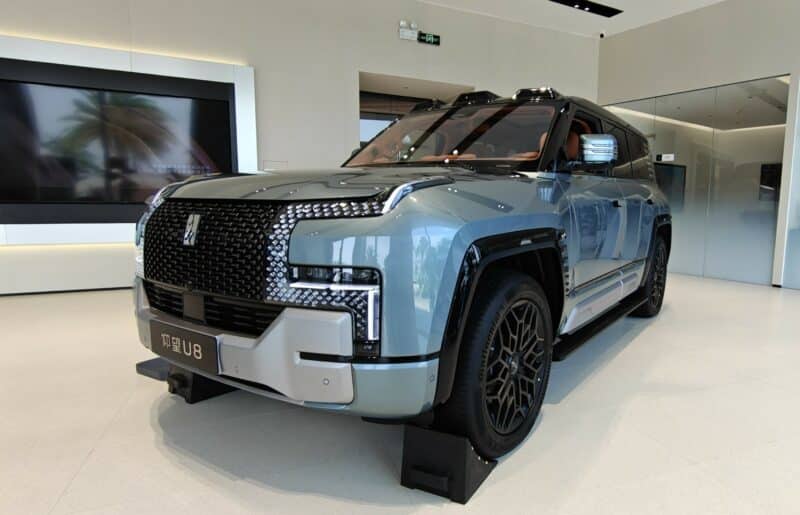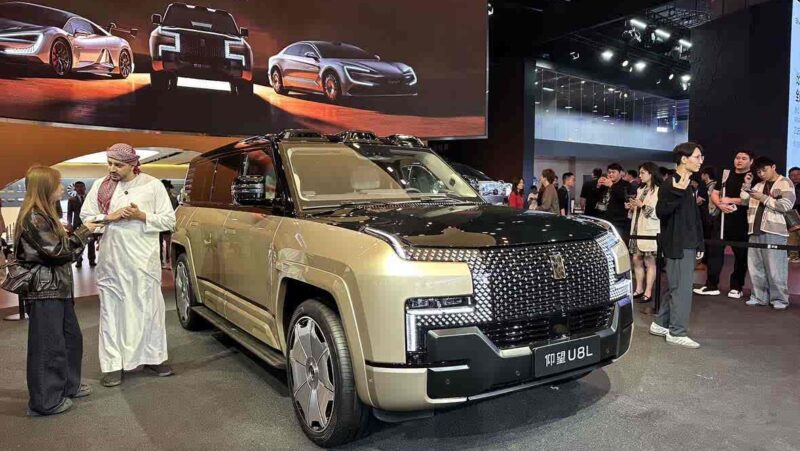

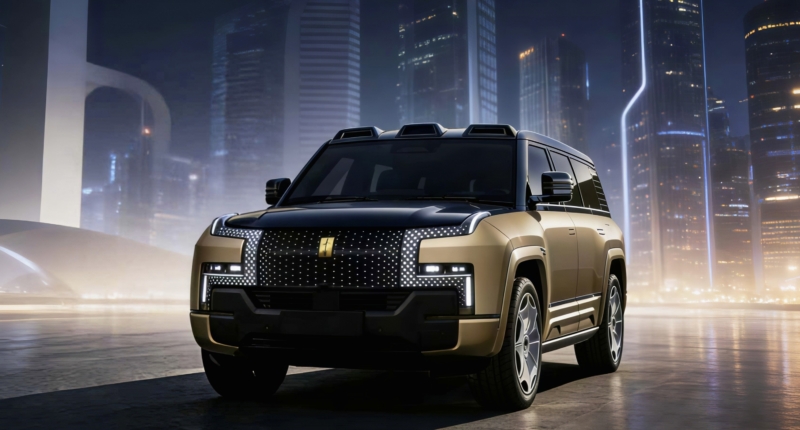
BYD’s luxury brand, Yangwang, has just pulled back the curtain on something truly impressive, the U8L electric SUV, which features the world’s first one-piece, low-pressure-cast all-aluminum large-vehicle frame. This isn’t just some minor tweak either, this is a game-changer for how cars are built, especially for those wanting next-level rigidity and safety.
Developed by Hubei Hantek Equipment Manufacturing Co., Ltd. (Hantek), the innovative frame made its public debut on December 2, 2025, at the Yangtze River Industry and Technology Innovation Conference in Hubei. The frame itself is a marvel of engineering, boasting a projected area of 4.2 square meters and wall thickness that varies from 4 millimeters to an impressive 50 millimeters, achieving a ratio greater than 12:1. Hantek proudly states that no other project globally has managed to cast a frame with such extreme thickness variations in a single piece. This is a big deal because traditional all-aluminum frames typically involve complex and costly assembly processes, like welding and riveting, which can create structural weak points.
Breaking Barriers in Manufacturing
Hantek’s breakthrough comes after years of dedicated research, overcoming significant technical hurdles in low-pressure casting for ultra-large, thin-walled structures. The challenges included precisely controlling molten metal flow and achieving gradient solidification needed for sections with varying thickness. The result of their tireless efforts is a single, integrated aluminum frame that completely replaces cumbersome multi-part assemblies. This innovative approach promises a future where vehicles are not only lighter but also inherently stronger and safer.
This integrated frame design is a huge win for overall body rigidity and torsional stiffness. It also means optimized force distribution throughout the structure, enhancing crash protection for everyone inside. Hantek also emphasized the superior quality of their aluminum alloy material and heat treatment, which deliver an ideal balance of high strength, toughness, and fatigue resistance. These properties are crucial for both performance and long-term durability, making the U8L a formidable contender in the luxury SUV market and putting it in the race with other powerhouses such as the Xiaomi Yu7, McLaren P47, and the Nio Onvo L90.
The Yangwang U8L: A Luxury SUV with Serious Chops
Underneath its cutting-edge frame, the BYD Yangwang U8L is every bit the luxury SUV you would expect. Launched on September 12, 2025, it commands a price tag of 1.28 million yuan, which is about 181,200 USD. This full-size SUV runs on BYD’s advanced e4 (Yisifang) platform and packs a serious punch. It features a 2.0T engine, four electric motors, and a 55.53 kWh Blade battery, collectively churning out an astounding 880 kW (1,180 hp) and 1,520 Nm of torque. Despite its colossal power, the U8L still offers a respectable 200 km electric range and an impressive total range of 1,160 km. It boasts 13 different driving modes, catering to a variety of terrains and preferences, and comes equipped with BYD’s “God’s Eye” driver-assistance system that utilizes lidar, radar, and infrared sensors for top-notch safety.
Inside, luxury abounds with a six-seat configuration that includes multiple screens and plush executive second-row seating. Audiophiles will appreciate the 32-speaker sound system, while practicality is covered with a panoramic sunroof and a refrigerator. With 14 airbags and cabin noise capped at a serene 64.6 dB at 120 km/h, comfort and safety are clearly paramount.
Impact on China’s EV Future
Officials at the Yangtze River Industry Group were quick to highlight Hantek’s low-pressure casting technology as a significant milestone for China’s manufacturing of large, complex aluminum structural components. They foresee this innovation shaping the future design and production of large-vehicle frames across the industry. Hantek, known as a leading provider of automotive lightweight chassis solutions, already works with major domestic and international automakers like BYD, Nio, Faw Hongqi, and Dongfeng Lantu. This latest achievement further solidifies its position at the forefront of automotive innovation.
This robust, integrated casting method is proving to be a critical step forward, potentially trickling down to more mainstream electric vehicles as well. The implications are clear: a future where EVs are not only more efficient but also substantially safer due to advancements in structural integrity. Considering the rapid evolution of the Chinese EV market, spearheaded by intense competition and groundbreaking technologies like this, there’s no doubt we will see even more impressive innovations in the years to come.