
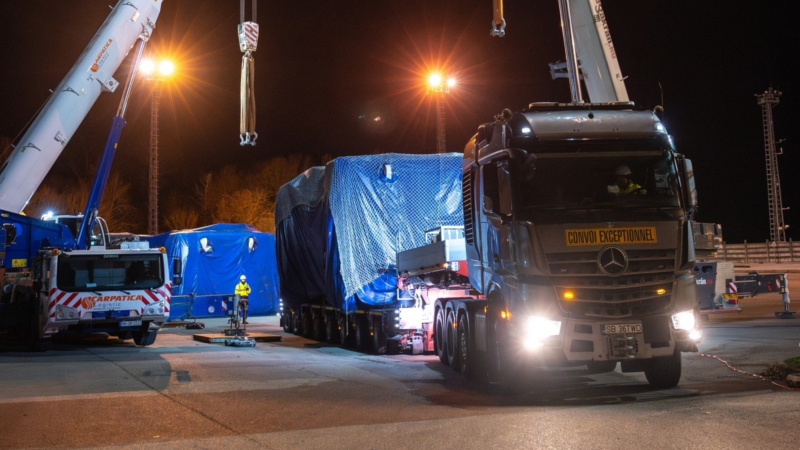
BYD’s ambitious expansion into Europe is taking a significant leap forward, as the first batch of production line equipment has officially arrived in Szeged, Hungary. This move signals a critical step for the Chinese automotive giant, paving the way for local manufacturing and a stronger foothold in the European market.
The Road to Production
On December 9, BYD confirmed the arrival of its production equipment in Szeged, igniting excitement for its upcoming European operations. The plan is to kick off trial production in early 2026, with mass production slated for the second quarter of the same year. This timeline suggests a slight delay from earlier projections, which hinted at production by late 2025. An earlier Reuters report indicated that the facility might operate below its maximum capacity for the first few years.
BYD’s journey to Hungary began in December 2023 with the announcement of its manufacturing plant plans. A land pre-purchase agreement followed swiftly in January 2024, and by September 2025, the construction was well on track. This strategic move aims to circumvent additional tariffs on electric cars, thereby boosting BYD’s competitiveness in Europe.
Models on the Horizon
Initially, the Szeged plant will assemble the Dolphin Mini, known elsewhere as the Seagull, Dolphin Surf, or Atto 1. Later, the lineup will expand to include other popular BYD models such as the Atto 3 (Yuan Plus), Dolphin, Seal, and Seal U (Sealion 6 / Song Plus). Once fully operational, the plant is expected to churn out up to 300,000 cars annually.
Navigating European Tariffs
Establishing manufacturing in Hungary is a calculated decision for BYD. The European Union currently imposes a hefty 20.7% additional tariff on Chinese-made electric vehicles, on top of an existing 10% customs duty. Local production allows BYD to bypass these significant charges, ensuring their models remain attractively priced and competitive against established European brands.
This move by BYD highlights a growing trend among Chinese EV manufacturers looking to localize production to gain market share and mitigate trade barriers. With its own European factory, BYD is poised to significantly challenge the existing automotive landscape and accelerate the adoption of electric vehicles in Europe electric vehicles in Europe.
As the world of EVs continually evolves, it’s clear that Chinese automakers are not just innovating in technology but also in global manufacturing and market strategy. The arrival of BYD’s production line in Hungary is a clear signal of this dynamic shift.