
The Casting Revolution
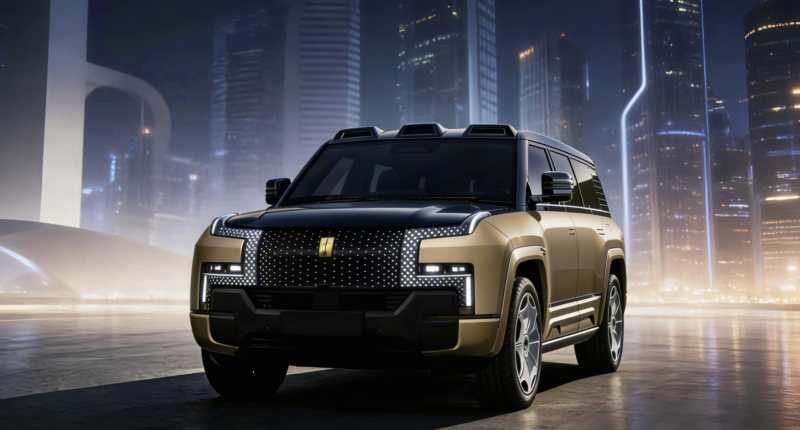
Picture this: a single piece of aluminium, flowing like liquid silver into a mold the size of a small bedroom. When it solidifies, you don’t get just any car part. You get the entire skeletal frame of a luxury SUV, with walls that range from paper-thin to thumb-thick in one continuous pour. That’s not science fiction. It’s the reality inside Hubei Hantek’s foundry, where they’ve just created the world’s first one-piece, low-pressure-cast aluminium frame for the BYD Yangwang U8L.
This isn’t just another manufacturing tweak. It’s a fundamental shift in how we build large vehicles. Traditional aluminium frames? They’re like complex 3D puzzles, with dozens of pieces welded, riveted, and bolted together. Each joint is a potential weak spot, a compromise in rigidity, a headache in production. Hantek’s breakthrough throws that whole playbook out the window.
| Metric | Value | Unit | Notes |
|---|---|---|---|
| Peak power | 880 | kW | 1,180 horsepower from quad-motor setup |
| Peak torque | 1,520 | Nm | Instant electric torque, available from 0 RPM |
| Electric range (CLTC) | 200 | km | Pure electric driving on Blade battery |
| Total range (EREV) | 1,160 | km | With 2.0T range extender engine active |
| Battery capacity | 55.53 | kWh | BYD’s proprietary Blade battery chemistry |
| Frame projected area | 4.2 | m² | Massive single-piece casting |
| Wall thickness range | 4–50 | mm | 12:1 thickness ratio, unprecedented in casting |
| Cabin noise @ 120 km/h | 64.6 | dB | Library-quiet luxury cabin |
| Speaker system | 32 | speakers | Premium audio immersion |
| Starting price | 1,280,000 | CNY | Approx. $181,200 USD |
| Airbag count | 14 | — | Comprehensive safety coverage |
| Seating capacity | 6 | — | Executive second-row seats standard |
Why This Casting Matters
Let’s break down why this manufacturing leap is such a big deal. That frame covers 4.2 square meters. To put that in perspective, that’s larger than some studio apartments in Shanghai. The wall thickness dances between 4 millimeters and 50 millimeters within the same casting. A 12:1 thickness ratio. Before Hantek cracked this, nobody in the world had successfully cast something this large with such extreme variation.
The technical challenges were monstrous. Controlling how molten aluminium fills a mold that big. Managing how it solidifies when one section needs to be thick and strong for crash protection, while another needs to be thin and light to save weight. Hantek spent years perfecting their low-pressure casting process, and the result is a frame that’s not just one piece, but optimally designed as one piece.
What does that mean for you, the driver? Imagine a chassis that feels utterly solid, like it’s carved from a single block of metal. No creaks. No flex. Just immediate, confident responses when you turn the wheel. The integrated design means force flows through the structure the way engineers intended, not the way welding seams forced it to. Crash protection improves because energy dissipates through the entire frame, not just certain sections.
The Driving Experience: 1,180 HP of Silent Fury
Now, let’s talk about what this technological marvel carries. The Yangwang U8L isn’t shy about its intentions. With 880 kilowatts (that’s 1,180 horsepower for us old-school enthusiasts) and 1,520 Newton-meters of torque, this full-size luxury SUV has supercar numbers. Four electric motors, one at each wheel, give you torque vectoring that would make a race engineer blush.
You get 13 driving modes. Thirteen. From serene electric cruising to whatever you call the setting that uses all 1,180 horses. The 2.0T range-extender engine and 55.53 kWh Blade battery work together to deliver 200 km of pure electric range, or a staggering 1,160 km total when you need to go the distance. It’s the perfect setup for China’s vast landscapes and evolving charging infrastructure.
The ride quality benefits directly from that rigid frame. With less flex in the chassis, the suspension can do its job properly. You feel connected to the road, but insulated from its imperfections. At 120 km/h, the cabin whispers at just 64.6 decibels. That’s library quiet, with only the faintest hum from the electric motors reminding you there’s serious power waiting under your right foot.
Living With Luxury
Step inside, and the U8L makes its luxury intentions clear. This is a six-seater with executive second-row seats that probably have more adjustments than your office chair. Multiple screens keep everyone informed and entertained. Thirty-two speakers wrap you in sound. There’s a panoramic sunroof, a refrigerator for your drinks, and 14 airbags watching over you.
The tech story continues with BYD’s “God’s Eye” driver-assistance system. Lidar, radar, infrared sensors. It’s watching everything, helping with everything from highway cruising to tricky parking maneuvers. In a vehicle this large and powerful, having that electronic co-pilot isn’t just convenient. It’s reassuring.
At 1.28 million yuan (about $181,200), you’re paying for more than just transportation. You’re buying into BYD’s top-tier brand, getting technology that doesn’t exist anywhere else, and owning a piece of manufacturing history. For context, this puts the U8L in direct competition with established German luxury SUVs, but with a technological edge they can’t currently match.
The Bigger Picture in China’s EV Race
This breakthrough doesn’t exist in a vacuum. It’s part of China’s aggressive push up the automotive value chain. While companies like BYD dominate volume segments, they’re also proving they can innovate at the highest levels. Hantek’s casting technology represents exactly the kind of manufacturing sophistication that global automakers have traditionally claimed as their exclusive domain.
Officials at the Yangtze River Industry Group, who showcased this technology, called it a “significant milestone” for China’s ability to produce large, complex aluminium components. They’re right. This isn’t just about building one fancy SUV frame. It’s about developing processes that could reshape how all large vehicles are designed and manufactured.
Hantek already supplies other Chinese automakers like Nio, FAW Hongqi, and Dongfeng Lantu. Once this technology proves itself on the demanding Yangwang U8L, expect to see it trickle down. Lighter, stronger, safer frames could become more common, improving vehicles across price segments.
The Verdict: More Than Just Metal
Here’s what really excites me about this development. It’s not just that someone made a big aluminium casting. It’s that Chinese manufacturers are solving problems in fundamentally new ways. While others iterate on existing methods, companies like Hantek and BYD are asking, “What if we started over?”
The Yangwang U8L with its one-piece frame represents that mindset perfectly. It takes a luxury SUV and makes it better through manufacturing innovation. The driving experience improves. Safety improves. Production efficiency improves. Everyone wins.
As someone who’s watched China’s auto industry evolve from copycat to innovator, moments like this are particularly satisfying. The Yangwang brand isn’t just competing on price or features anymore. It’s competing on engineering excellence. And with breakthroughs like this one-piece cast frame, it’s showing the world exactly what Chinese automotive innovation looks like at its best.
So the next time you see a luxury SUV gliding silently down the street, remember. Under that polished exterior might be a single piece of aluminium, poured in one perfect flow, representing not just a vehicle, but a manufacturing revolution.