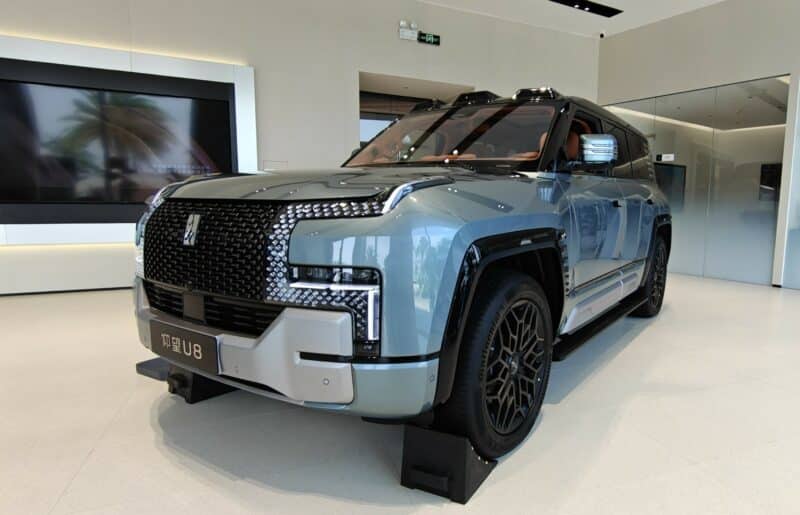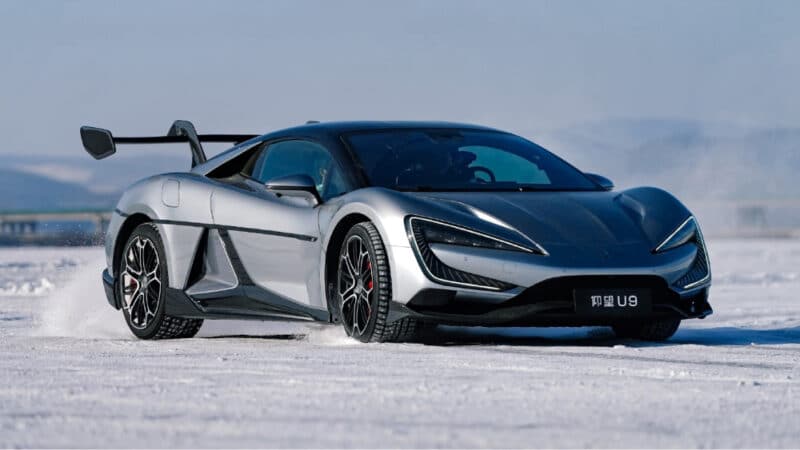

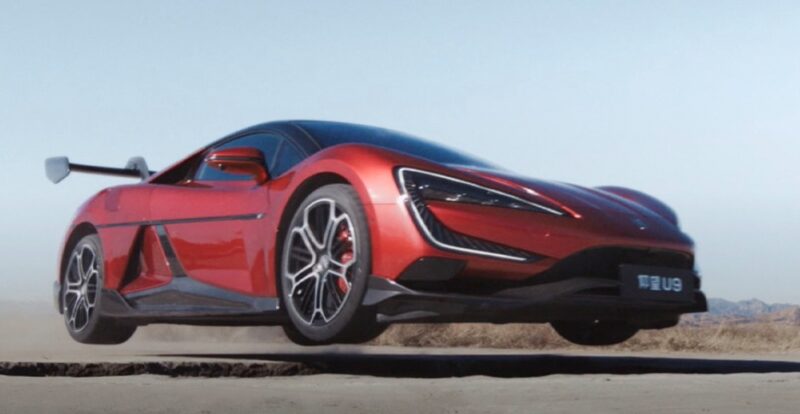
BYD just dropped a video that feels like a scene from a sci-fi movie. Its electric supercar, the Yangwang U9, is seen tearing around the Hunan Zhuzhou International Circuit, hugging apexes and blasting down straights. The wild part? There’s nobody in the driver’s seat.
This wasn’t just a gimmick. BYD was showcasing its brand-new “God’s Eye” advanced driver-assistance system (ADAS), and it’s a bold statement in the autonomous driving race. To prove the system’s robustness, BYD had the U9 pull off the same impressive feat at night, navigating the track flawlessly in the dark. It’s a clear shot at Tesla’s Autopilot, but BYD is playing the game differently.
Meet God’s Eye: Not Just for Supercars
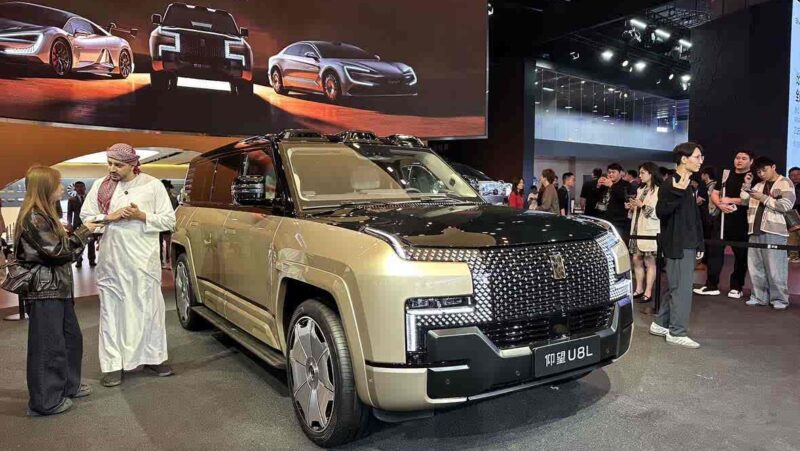
BYD launched God’s Eye in three distinct tiers, making it clear that this isn’t just technology for the wealthy. It’s a strategic move to push smart driving features into the mainstream. The company is so serious about this that it’s equipping its entire lineup, including sub-brands Denza and Yangwang, with some level of assisted driving.
Here’s a simple breakdown of the new system:
-
God’s Eye C (DiPilot 100): This is the entry-level package. It relies on cameras, millimeter-wave radars, and ultrasonic sensors instead of expensive lidar. With a computing power of 100 TOPS, it’s designed to bring essential safety and convenience features to the masses. Astonishingly, even the BYD Seagull, which costs around 9,500 USD, will come with this system. BYD calls this the “democratization of smart driving,” and it’s hard to argue with them.
-
God’s Eye B (DiPilot 300): A step up, this version adds support for a single lidar unit and boosts the computing power to 300 TOPS. This allows for more complex decision-making and a more detailed understanding of the car’s surroundings, making it a powerful mid-tier option.
-
God’s Eye A (DiPilot 600): This is the top-dog system that piloted the Yangwang U9 around the track. It’s an absolute powerhouse with up to 600 TOPS of computing muscle and support for up to three lidars. While some competitors are just adding their second or third lidar, BYD’s system compares with rivals like the Avatr 12’s four-lidar setup, showing how intense the hardware race has become.
A Game-Changing Move for the EV Market
What makes BYD’s announcement so significant isn’t just the technology itself, but the business model. All of these assisted driving features will be completely free of charge across all 21 models that will feature God’s Eye. This puts enormous pressure on competitors who often charge thousands for similar capabilities or lock them behind subscriptions.
While other automakers are still figuring out how to price their ADAS packages, BYD is making it a standard feature, fundamentally changing the value equation for car buyers. The Chinese EV market is already brutally competitive, as seen in the heated sales race, and this move injects even more fire. It’s a powerful statement that suggests advanced technology shouldn’t be a luxury option, but a core part of the modern driving experience, even in the most affordable electric cars.