
China is implementing stricter rules on the export of what are commonly known as “zero-kilometer” used cars, with new regulations taking effect January 1, 2026. This move aims to curb practices that have disrupted pricing and aftermarket services both at home and abroad.
What Exactly are “Zero-Kilometer” Used Cars?
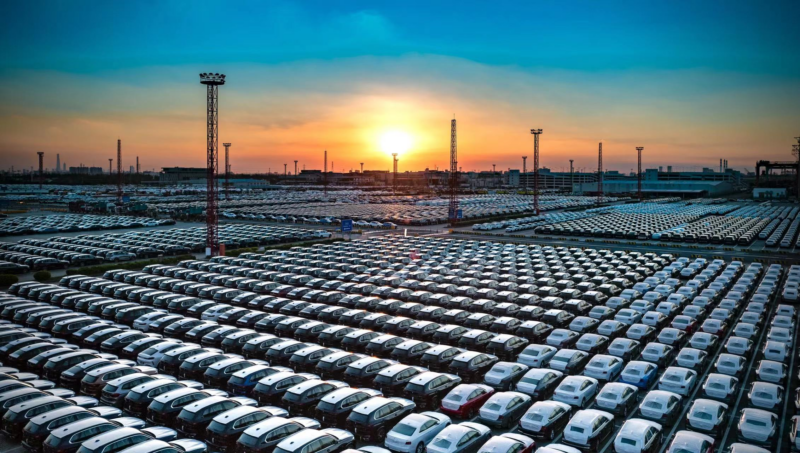
These vehicles are practically brand new, often leaving the factory with minimal to no mileage, typically less than a few hundred kilometers. Despite their pristine condition, they’re registered and then sold through used-car channels. Often, you’ll find them still wrapped in protective film with all their interior coverings intact. This practice has become a workaround for manufacturers and dealers to quickly move inventory and recover capital, especially in a market sometimes grappling with overproduction.
Reports suggest that in 2024, approximately one million zero-kilometer used cars were traded domestically, making up about 5% of China’s entire used car market. However, their impact is even more significant in the export sector.
The Export Boom and Its Challenges
Exports of used cars from China have seen a dramatic increase, jumping from just 15,000 units in 2021 to a staggering 436,000 by 2024. Experts project this number to exceed half a million units in 2025. Here’s the kicker: an estimated 70% to 80% of these exported “used” vehicles are actually the zero-kilometer variety.
This trend, while boosting export numbers, comes with considerable risks. Domestically, the influx of heavily discounted, nearly new cars through used-car channels messes with traditional dealership pricing structures, creating an uneven playing field. Internationally, many of these vehicles are exported without proper localization or official after-sales support. This leads to frustrated customers complaining about everything from maintenance and software glitches to battery service issues. Industry observers worry these problems damage the overall reputation of Chinese automotive brands, not just the individual exporters.
New Regulations on the Horizon
In response to these growing concerns, four government ministries, led by the Ministry of Commerce, have jointly introduced new export regulations for used cars. Starting January 1, 2026, any vehicle exported within 180 days of its initial registration will need a manufacturer-issued after-sales service confirmation document. This document must clearly state the export destination and vehicle details and carry the manufacturer’s official seal.
This new rule isn’t about stopping used-car exports altogether. Instead, it aims to raise compliance standards by formally linking export eligibility to the manufacturer’s commitment to after-sales responsibility. It’s a significant step toward ensuring that Chinese automotive brands maintain a strong reputation globally, guaranteeing that even “zero-kilometer” used cars come with the support customers expect. These regulations will apply nationwide from the start of 2026. China is keen on maintaining its significant role in the global EV market, and ensuring quality and service for exported vehicles is a key part of that strategy. The country has been taking significant steps to advance its automotive industry and its global presence, as evidenced by a surge of 19% in EV exports in early 2025, led by brands like Chery, MG, and Geely.
This move aligns with broader efforts to regulate the automotive sector, including discussions around vehicle safety and advanced features. For instance, there have been discussions on introducing a 5-second acceleration limit for enhanced road safety and tightening rules on features like door handles. Such measures show a comprehensive approach to managing the rapidly evolving automotive landscape in China and its global impact. Additionally, China has been at the forefront of developing innovative technologies like steer-by-wire systems, aiming for full implementation by 2026. The shift signals a mature industry ready to tackle complex challenges both locally and internationally, as seen with several Chinese brands accelerating their European expansion efforts, such as Xpeng expanding into five new markets and Nio’s Firefly brand landing in multiple European countries.