
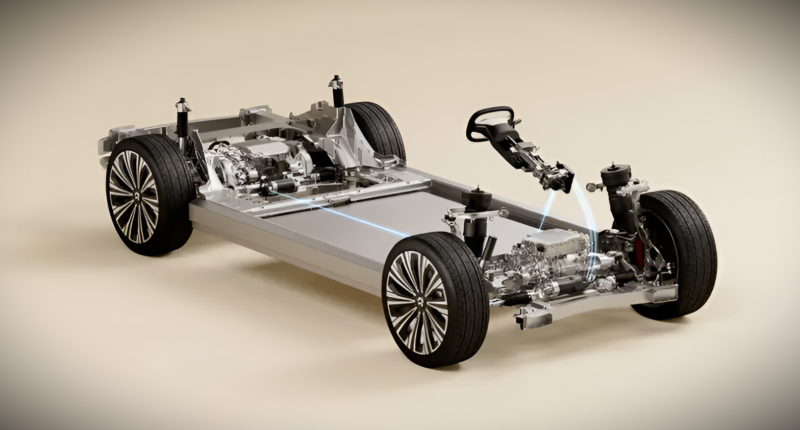
Get ready for a whole new driving experience, because China is officially ushering in the era of full steer-by-wire. A new national standard, hitting the books on July 1, 2026, scraps the old mandate for a mechanical link in steering systems. This means automakers can now go all-in on cutting-edge steer-by-wire tech.
This isn’t some rushed decision. The standard was penned with heavy hitters from the Chinese auto industry, including Nio, BAIC, Xpeng, BYD, Geely, Xiaomi, and Huawei. Even international players with a strong presence in China, like Toyota’s smart EV center and Mercedes-Benz China, had a hand in shaping it. This broad involvement ensures the standard covers all bases, from traditional setups to the most advanced electronic steering architectures.
Current Steer-by-Wire Landscape
While full steer-by-wire is a bold step, some cars already flirt with the technology. The Infiniti Q50, for instance, uses it but keeps a redundant mechanical connection, just in case. But the Nio ET9 is making waves as the first mass-produced model in China to fully embrace steer-by-wire without a mechanical backup. The new standard gives both conventional and this exciting fully electronic steering the regulatory groundwork they need.
Safety and Technical Deep Dive
Safety is paramount, and the new standard reflects that. It aligns with the latest UN R79 amendments, demanding electronic steering systems meet rigorous ISO 26262 safety levels. We’re talking serious redundancy here, with clear guidelines for how the system should perform even if power supply, control transmission, or energy management glitches happen. Expect sophisticated alarm systems too, specifically designed to flag anything from battery aging to performance hiccups, all while continuously monitoring energy management.
The revisions also fine-tune test procedures for steering system failures and specify how steering effort should be measured when things go wrong. Functional safety validation protocols are also getting an update. Automakers will need to back up their electronic steering system safety claims with solid documentation, which will be subject to thorough review and random verification. Plus, the standard is cleaning up terminology and reporting requirements for crystal-clear implementation across the board.
The Road Ahead
This isn’t just a piece of paper. This update creates the critical regulatory framework needed for vehicles rocking electronic steering technologies. By ditching the old mechanical linkage rules and laying out precise functional and safety requirements, China is throwing its full weight behind the development, testing, and deployment of electronic and electric power-assisted steering systems. This applies to every car on the road, whether it’s built domestically or imported. It’s a move that promises more innovative, responsive, and potentially safer steering for drivers in China and beyond.