
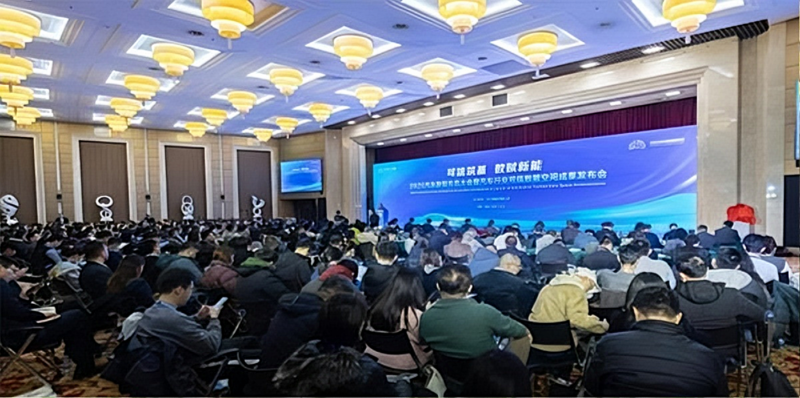
China’s automotive and battery industries are taking major steps to standardize digital data for electric vehicles and energy storage products, especially as these move onto the global stage. At the 2025 Automotive Intelligent Data Ecosystem Conference in Tianjin, key players like Geely, Great Wall Motor, Chery, and Nio, along with battery giants including CATL, FinDreams Battery, and CALB, showcased their progress on the Battery ID digital ecosystem initiative. This groundbreaking project aims to create a unified, reliable framework for battery data. The conference also shone a spotlight on broader advancements in the auto industry’s trusted data space, covering everything from batteries and insurance to communications and charging infrastructure.
The Battery ID Initiative: A Deep Dive
The China Automotive Data Company leads this ambitious initiative. They developed the Battery ID program building on earlier efforts to track the entire lifecycle of power batteries. The main focus is to help manufacturers and suppliers manage secure and consistent battery information while also meeting various regulatory requirements across different markets. As Chinese EV exports continue to surge, companies really need robust data systems that can verify production details, compliance information, and technical specifications.
According to Wang Pan, director of the company’s power battery division, the heart of this solution is the China Battery ID platform. It integrates a comprehensive indicator system, featuring the Battery ID management system, the Data Interaction Connector, and the Battery ID service platform. These components work together to ensure standardized data collection, seamless system integration, and the generation of unique battery identifiers. Back in 2024, the platform successfully integrated data acquisition, integration, and ID generation into a single, complete workflow, allowing the first participating companies to step into the Battery ID trusted data space.
Expanding Horizons: Energy Storage and Global Reach
For 2025, the program’s scope has expanded to include energy storage batteries, a critical move as China becomes a dominant force in this sector too. The China Automotive Data Company teamed up with TUV South to introduce the first Battery ID certification rules, which cover data accuracy, integration processes, and transmission security. Thirteen companies formed seven joint working teams to rigorously test connectivity and authentication in real-world operational scenarios. During the conference, four automakers and three battery manufacturers successfully issued eleven Battery IDs for power batteries and two for energy storage batteries. These IDs were generated after deploying the Data Interaction Connector and completing certification, proving that cross-company data exchange requirements were met. It’s an exciting step for the future of battery production.
Beyond just Battery ID developments, the conference also officially launched the “Automotive Industry Trusted Data Space Platform.” This platform is designed to explore national automotive data infrastructure and public service capabilities. Gong Jinfeng, vice general manager of the China Automotive Technology & Research Centre, explained that the center is busy building national-level infrastructure and data spaces. The goal? To promote secure, interoperable data flows across multiple industry sectors. A technical committee has also been set up to guide the platform’s standards, ensuring alignment with national data infrastructure requirements, interoperability, and robust security management.
A Glimpse into Cross-Border Data Flow
In a pioneering move, the China Automotive Data Company kicked off a cross-border data circulation pilot program with the Tianjin Dongjiang Free Trade Zone, Geely Auto, and CATL. This pilot will establish clear classification standards, build a dedicated data circulation service center, and simulate end-to-end cross-border data flows. This is all to support the compliant and secure transmission of verified battery information to international markets. With China’s EV exports on the rise, initiatives like this are crucial for maintaining trust and ensuring smooth global operations. It also speaks to the broader push for data standardization in an increasingly connected automotive world, much like how specialized tech is driving advancements in individual vehicles, such as magnetic ride suspension finding its way into more accessible EVs.