
You’ve probably heard the buzz about electric vehicles, but what about invisible forces like electromagnetic radiation? If you’re picturing a scene from a sci-fi movie, you can relax. Turns out, Chinese EVs are practically serene when it comes to electromagnetic emissions, often putting out even less than your old petrol burner.
EVs: Quieter on the Electromagnetic Front
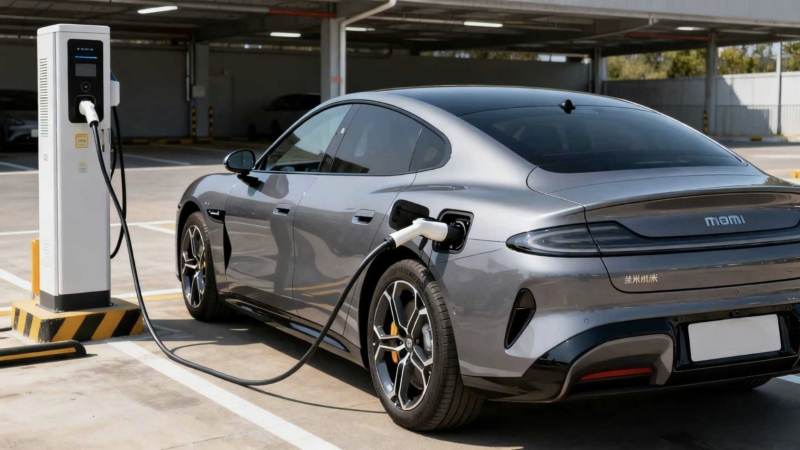
Recent studies, including one by Germany’s ADAC, confirm what many already suspected: EVs generally produce very low levels of electromagnetic radiation. These figures are not just low; they are often on par with, or even lower than, what you’d find in traditional internal combustion engine cars. During tests on a mix of pure electric cars, plug-in hybrids, and even a gasoline car, the highest radiation readings were, interestingly, near the footwells. Crucially, these levels were well under international safety limits, leaving the head and torso virtually undisturbed. What about charging? Neither AC nor DC charging significantly bumped up the radiation levels. In fact, fast DC charging sometimes even showed lower readings than its slower AC counterpart.
China Leads the Charge in EV Safety Confidence
Chinese automakers are really stepping up their game here, showcasing impressive results in electromagnetic safety. The China Automotive Technology & Research Centre (CATARC) New Energy Vehicle Testing Centre has been at the forefront, conducting over 300 electric safety evaluations since early 2025. Their goal is straightforward: to identify and mitigate risks during the development phase, arming automakers with the data needed to build safer, higher-quality vehicles.
NESTA’s Seal of Approval: Six-Dimensional Safety
The industry has a tough, comprehensive standard called NESTA, or New Energy Safety Technical Assessment. This system scrutinizes vehicles across six key areas: charging safety, electromagnetic safety, functional safety, high-voltage safety, battery safety, and fire safety. It’s a holistic approach to ensuring EVs are not just efficient and fun to drive, but also incredibly safe. We’re talking about a rigorous testing regime that some of the top models have aced. For instance, the second round of certifications alone saw models like the Aito M7, Jetour Zongheng G700, Onvo L90, Li Auto i8, M-Hero M817, Fulwin A9L, and Xiaomi YU7 earning their stripes. Earlier models to pass include the Galaxy E8, Exeed Exlantix ES, Exeed Exlantix ET, JAC Refine RF8, Jiyue 07, Aito M9, GAC Hypertec HT, Geely Galaxy Starship 7 EM-i, iCar V23, Aito M8, BYD Han L, Leapmotor B10, and the Lynk & Co 900.
When we break it down by safety dimension, some notable mentions from 2025 include the BYD Han L, Lynk & Co 900, and Hyundai Elexio leading in charging safety. For electromagnetic safety, the Mercedes-Benz CLA, Li Auto i8, Zeekr 9X, and Geely Galaxy M9 were top performers. Functional safety saw the Onvo L90, Xiaomi YU7, Galaxy Starship 7 EM-i, and Exeed Exlantix ET at the forefront. High-voltage safety kudos went to the Leapmotor B10, Fulwin A9L, and Wuling Xingguang 730. In battery safety, the Jetour Zongheng G700, Aito M7, M-Hero 817, and Toyota bZ3X shone brightly. Finally, in fire safety, the Saic H5, Aito M8, Onvo L60, and iCar V23 were recognized.
The Numbers Don’t Lie: Exceptionally Low Radiation
Real-world tests truly underscore how well Chinese EVs manage electromagnetic radiation. Inside the cabin, you are looking at levels between 0.8 to 1.0 μT in the front and a mere 0.3 to 0.5 μT in the back. To put that in perspective, this is barely 1% to 1.3% of China’s national safety standard of 100 μT. Most of the minimal peaks occur around the electric drive units and wiring, usually near your feet. Your head and torso? Practically untouched. Even when you’re juicing up, whether it’s AC or DC fast charging, those radiation numbers stay incredibly low. Believe it or not, DC fast charging can actually yield lower readings compared to slower AC charging. Contrast this with everyday items like electric blankets, which can emit 10 to 50 μT, and you start to see just how well-contained EV radiation truly is. These findings clearly show that Chinese electric vehicles are operating well within both national and international safety guidelines, offering peace of mind to drivers and passengers alike.