
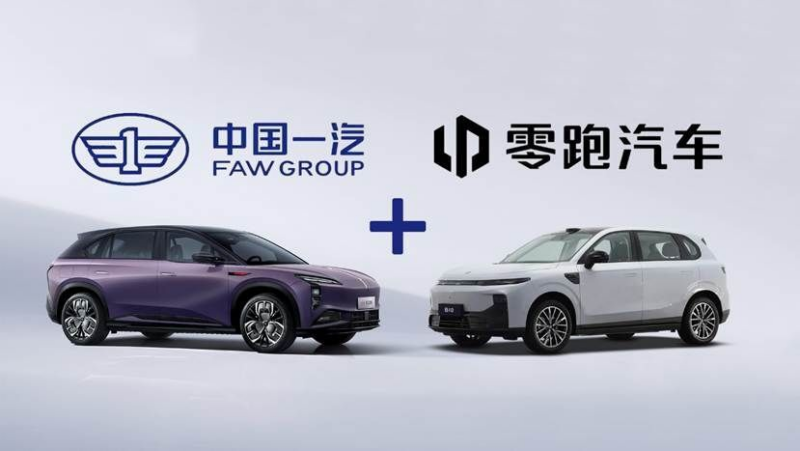
China FAW Group is reportedly finalizing a significant equity investment in Leapmotor, with a signing anticipated later this year. This move signals a pivotal moment for both companies within China’s competitive EV market. Leapmotor’s founder, chairman, and CEO, Zhu Jiangming, confirmed ongoing discussions, emphasizing that the company will retain actual control, a crucial point as Stellantis Group currently holds the largest single share at around 21.26%.
A Strategic Partnership Takes Shape
This news builds on a strategic cooperation memorandum signed in March between FAW and Leapmotor. While initial reports hinted at FAW acquiring approximately 10% of Leapmotor, current sources suggest an initial stake of around 5%. This refined approach indicates FAW’s intention to be a strategic financial investor rather than a dominant stakeholder. Zhu Jiangming reiterated that while other automakers might invest in Leapmotor, their role will be that of a “relative investor,” ensuring the founding team’s control.
Leapmotor’s Strong Financial Footing
Unlike many startups, Leapmotor doesn’t appear to be scrambling for capital. The company posted an impressive third-quarter 2025 revenue of 19.45 billion yuan, roughly 2.72 billion USD. That’s a whopping 97.3% year-on-year surge and a healthy 36.7% bump from the second quarter. Leapmotor Vice President Li Tengfei anticipates fourth-quarter profitability will mirror the third, projecting an impressive 5 billion yuan or 700 million USD in net profit for next year. This robust financial performance gives them considerable leverage in partnership discussions.
FAW’s Push for NEV Transformation
For China FAW Group, this investment is a critical step in accelerating its new energy vehicle (NEV) transformation. Despite an assertive “All in NEV” strategy, FAW’s NEV sales currently only make up about 10% of its total vehicle sales. In November, FAW moved 306,000 vehicles, with its own brand NEVs contributing 35,500 units. This is a stark contrast to peers like Changan Auto, which saw NEV sales reach 125,000 units in November, marking a 23% year-on-year increase. The push for electrification is undeniable, and FAW is looking to catch up.
Collaborative Innovation and Global Ambitions
Technical collaboration between FAW and Leapmotor is already in motion. Their strategic partnership led to the launch of the first joint project in April: an overseas model for FAW’s Hongqi brand. This model is slated for mass production and international market release in the latter half of next year. Such collaborations highlight China’s evolving automotive landscape, where established giants are increasingly teaming up with agile, tech-forward startups to drive innovation and expand their global footprint.
This investment underscores the dynamic nature of the Chinese EV sector, where partnerships and strategic investments are becoming key to navigating rapid technological advancements and intense market competition. As China’s EV market continues to expand, these alliances will be crucial for securing long-term success and shaping the future of electric mobility. Moreover, it exemplifies how Chinese brands are pushing boundaries, as seen with companies like Zeekr with its 912 hp 001 model and Huawei-backed ventures like AITO’s new M7.