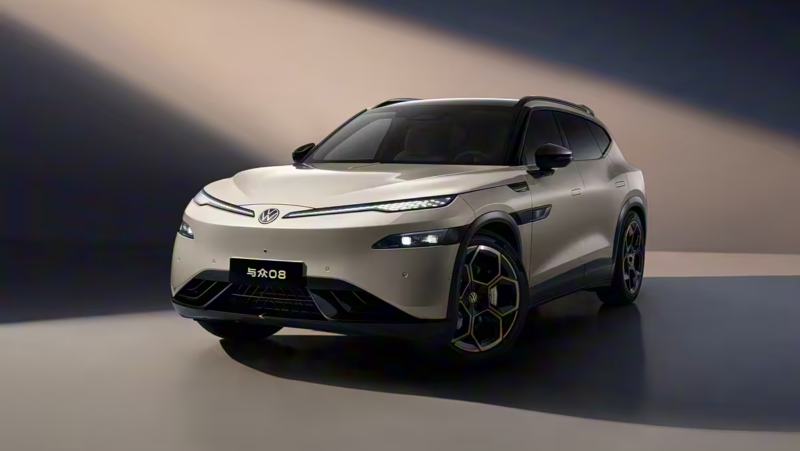

Guangzhou, China The skies are getting a little more crowded, and a lot more exciting, as GAC Govy, the innovative flying car brand under the GAC Group, gears up for trial production of its Govy Aircab (GAC-A6) next month, January 2026. This isn’t just another prototype rolling off the line – it’s a significant leap towards making personal aerial mobility a reality, potentially reshaping urban transportation as we know it.
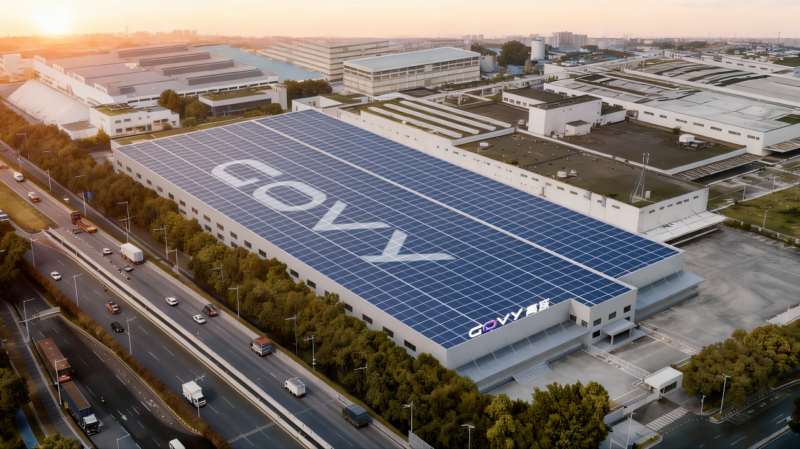
The new Guangzhou factory, brimming with advanced workshops dedicated to general assembly, sub-assembly, composite material manufacturing, and painting, is poised to be the nerve center for this ambitious project. It’s here that the Govy Aircab will undergo pilot production and PC certification processes, crucial steps for any vehicle, let alone one designed to fly.
The Govy Aircab: A Closer Look at the Future of Flight
Even before a single Aircab takes regular flight, market interest is soaring. GAC Govy has already secured a staggering nearly 2,000 customer orders, signaling a strong appetite for this futuristic mode of transport. The GAC-A6 is currently undergoing an extensive airworthiness review, with certification expected to conclude by the end of 2026. This timeline paves the way for initial customer deliveries shortly thereafter, with a guide price that aims to be surprisingly accessible for such advanced technology – not exceeding 1.68 million yuan (approximately 233,000 USD).
Funding has been robust, with GAC Govy closing a substantial 200 million yuan (27.7 million USD) Pre-A financing round in November. This brings their total funding for 2025 to an impressive 500 million yuan (69.3 million USD), demonstrating significant investor confidence in the future of flying cars.
The Govy Aircab isn’t just a concept. It made its grand debut in Hong Kong in June 2025, where it immediately captured attention, racking up almost 1,000 intent orders. Following this successful unveiling, GAC Govy held a delivery ceremony for the first Govy Aircab prototype in Hong Kong in July 2025, marking another key milestone in its journey towards mass production.
Under the Hood: Cutting-Edge Technology and Comfort
What exactly makes the Govy Aircab so compelling? Its specifications reveal a vehicle packed with advanced technology prioritizing both performance and safety.
With a range of 30 km, the Aircab is designed for efficient urban commutes and short-distance travel. Powering this impressive machine are high-density, large cylindrical batteries that boast rapid charging capabilities: a full charge in just 25 minutes, and a 50% to 100% top-up in a mere 15 minutes. That means less downtime and more time in the air. For those interested in the broader landscape of Chinese EV charging infrastructure, the rapid advancement of battery technology is a consistent trend.
The cabin experience promises to be as sophisticated as the flight itself. Passengers can expect 5G network connectivity, an intelligent assistant for seamless control, fragrance selection to personalize the environment, precise temperature control, and music switching for an enjoyable journey. This focus on interior comfort and technology mirrors trends seen in conventional EVs with advanced cockpit technology.
Safety is paramount, and the Govy Aircab integrates a redundant flight control and navigation system, ensuring multiple layers of protection. Continuous system monitoring and cloud-based self-inspection further enhance reliability. One of the most innovative safety features is the separable design of the flight cabin and chassis, which guarantees safe operation even in the unlikely event of a power unit malfunction.
The Aircab also leverages advanced materials, with over 90% of its structural components made from aviation-grade carbon fiber composite materials. This extensive use of composites contributes to a weight reduction of over 30%, directly impacting efficiency and performance. Lightweight materials are often key in achieving impressive performance metrics, as seen in various high-performance vehicles.
Intelligent driving is another cornerstone of the Govy Aircab, featuring an L4 intelligent driving system with computing power exceeding 500 TOPS and a maximum detection range of over 300 meters. This sophisticated system allows for high-precision positioning, synchronization, and precise control over power and flight attitude, achieving a remarkable heading accuracy of ±0.1 degrees. The push for advanced autonomous driving systems is a major theme across the Chinese automotive industry.
As GAC Govy embarks on this exciting phase of trial production, the dream of flying cars moves closer to reality, promising a future of streamlined, innovative personal transportation.