
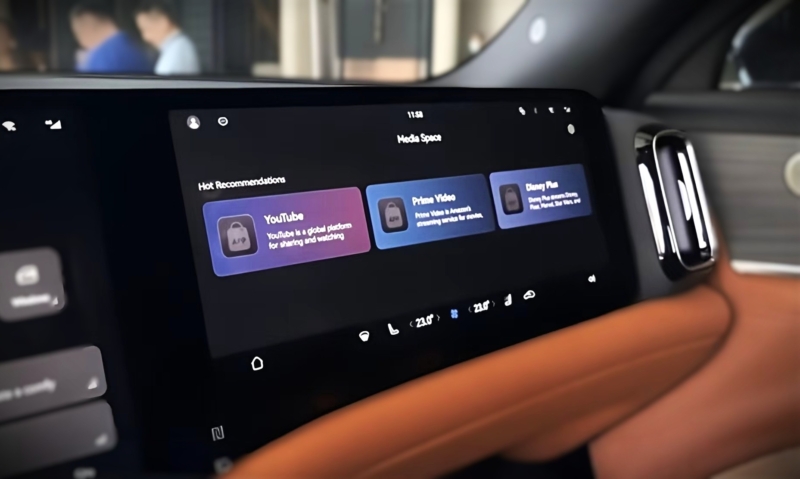
The Aito M9 is gearing up for its international debut, and Huawei’s infotainment system is along for the ride. Recently, spied images of the global version of the Aito M9’s digital cockpit have surfaced, showcasing how Huawei is tailoring its tech for markets beyond China. It’s clear they’re putting in the work to ensure a seamless experience for global drivers.
Globalized Infotainment on Display
These screenshots reveal a fully localized system. We are talking overseas map services replacing the usual Chinese providers, the integrated Huawei ADS advanced driving assistance suite, and a whole suite of global apps designed just for non-Chinese users. As part of Huawei’s Harmony Intelligent Mobility Alliance (HIMA), all Aito vehicles come packed with the HarmonyOS intelligent cockpit system, and the M9 is no exception.
For navigation, Huawei ripped out the old Chinese map services and brought in international providers. You’ll see English labels and routing formats that are spot on for overseas markets. This means they’ve practically rebuilt the navigation stack to handle different regional mapping data, licensing needs, and search databases outside of China.
The Huawei ADS interface also got a serious makeover for driving conditions abroad. While the basic look is still familiar, things like lane markings, speed limit indicators, and environmental cues now follow North American and European standards, rather than Chinese ones. This isn’t just a cosmetic change; it means the ADS software is getting tweaked to meet international regulatory and operational standards. If you’re curious about what else Huawei is up to, check out how Huawei-backed brands are boosting collaboration in China’s EV market.
Beyond navigation and driving assistance, the rest of the cabin’s software received a localization treatment. System menus, settings, voice-assistant onboarding, and media controls are all in English. The formatting and iconography have been adjusted for international familiarity. The screenshots display a structure that aligns with common overseas user interface standards, making sure everything is super intuitive without any Chinese-language conventions cluttering things up.
Power and Presence: The Aito M9’s Serious Specs
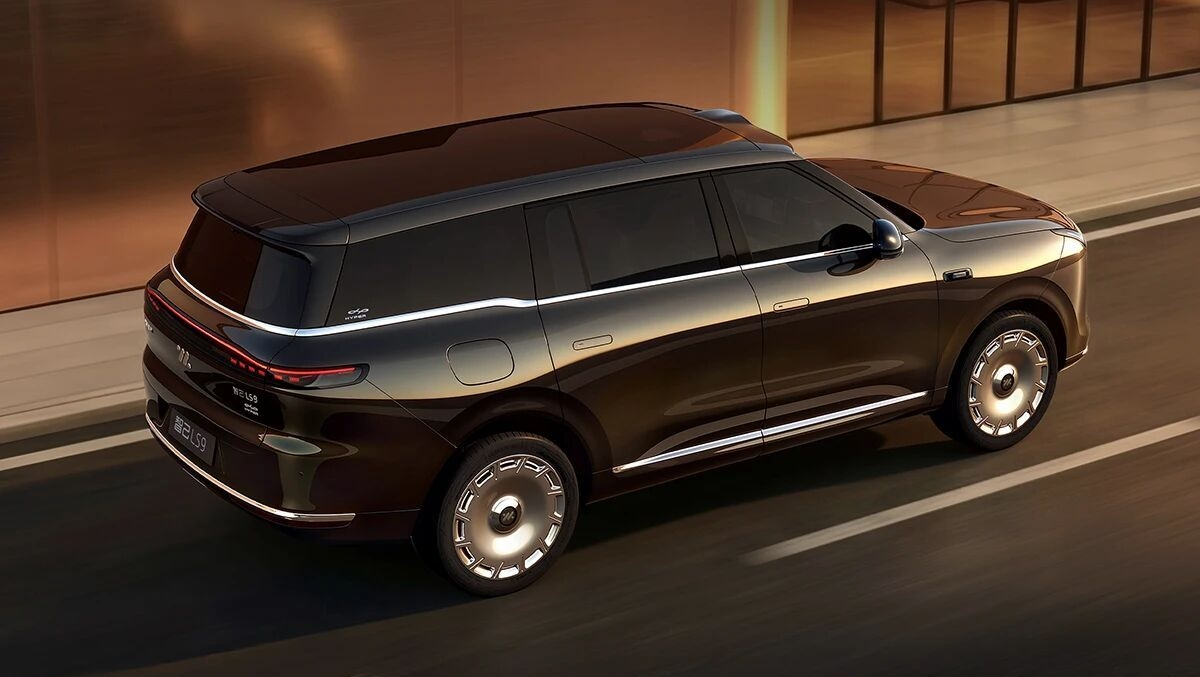
Let’s talk about the hardware that backs all this tech. The Aito M9 is a proper full-size SUV. It measures 5230 mm long, 1999 mm wide, and 1800 mm tall, with a generous 3110 mm wheelbase. You can grab it in either a five-seat or six-seat setup, and it comes in both pure electric (EV) and range-extended electric (EREV) versions.
The EV model packs a punch with 390 kW (523 hp) and 673 Nm of torque. It’ll give you a CLTC range of 605 km and can sprint from 0-100 km/h in a swift 4.7 seconds. For comparison, some other impressive EVs in the market, like the 912 hp Zeekr 001, show just how competitive the EV landscape is getting.
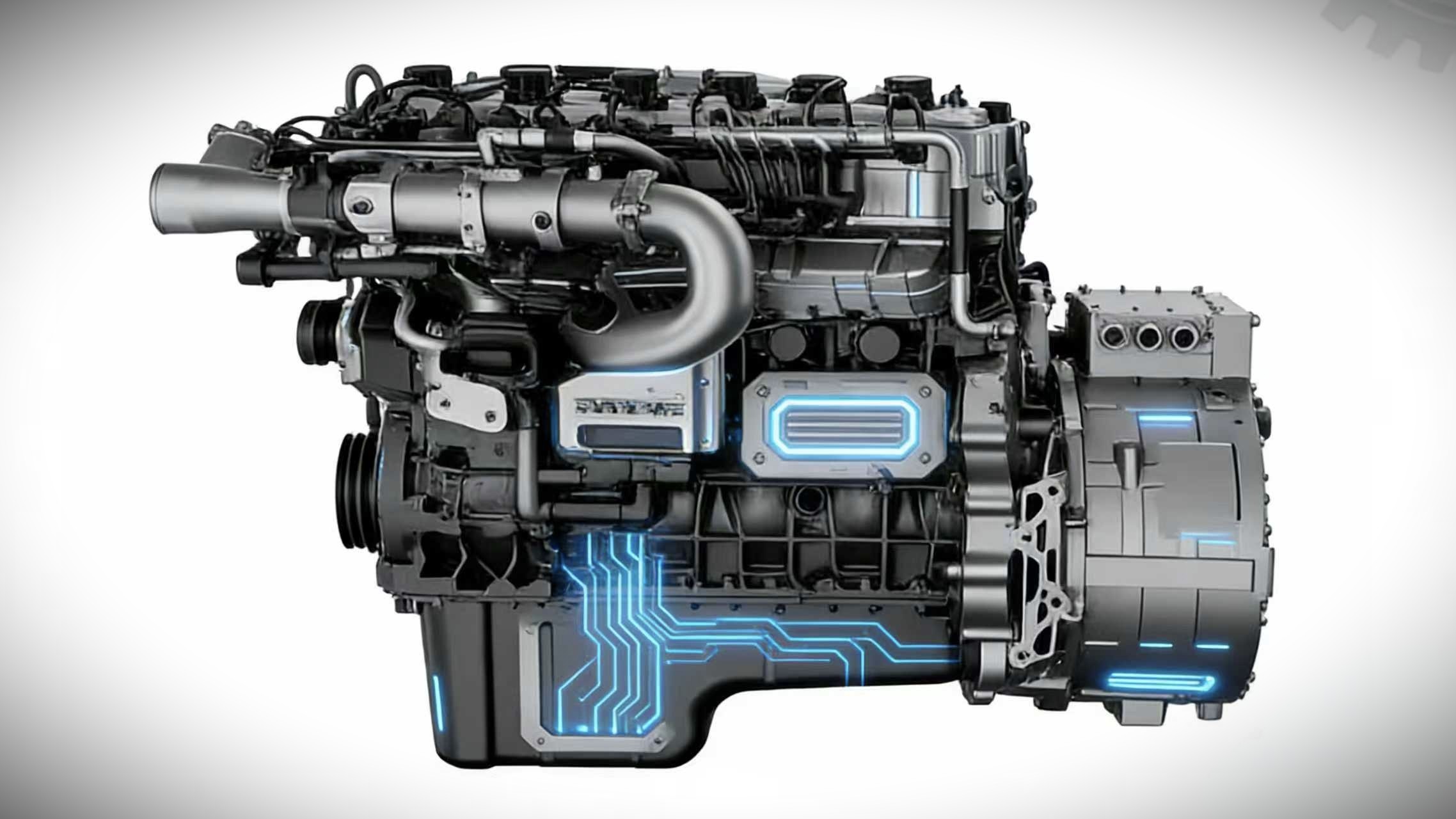
If you prefer the EREV route, you get a 1.5-liter turbocharged petrol engine acting as a generator, paired with dual electric motors. This combo delivers 365 kW (489 hp) and 675 Nm of torque, boasting a combined CLTC range of up to 1,417 km – truly impressive! Both versions come with all-wheel drive, sleek 21-inch wheels, and four LiDAR units to support Huawei’s advanced driving assistance system. Weight-wise, the EV checks in at around 2,655 kg, while the EREV is a touch heavier at 2,690 kg.
What’s Next for the Aito M9?
While these pictures don’t spill the beans on a precise overseas launch date, they make it clear that Huawei isn’t just testing the waters. They’re diving headfirst into preparing their infotainment system for international markets. This means extensive adaptation for navigation, driver-assistance, and digital services. It’s a huge undertaking to get a China-developed vehicle ready for export, but Huawei seems well on its way. This also signals the global ambitions of Chinese EV makers, a trend we’ve been following closely, including BYD’s expansion into Europe.