
A Dive into Li Auto’s Livis Smart Glasses
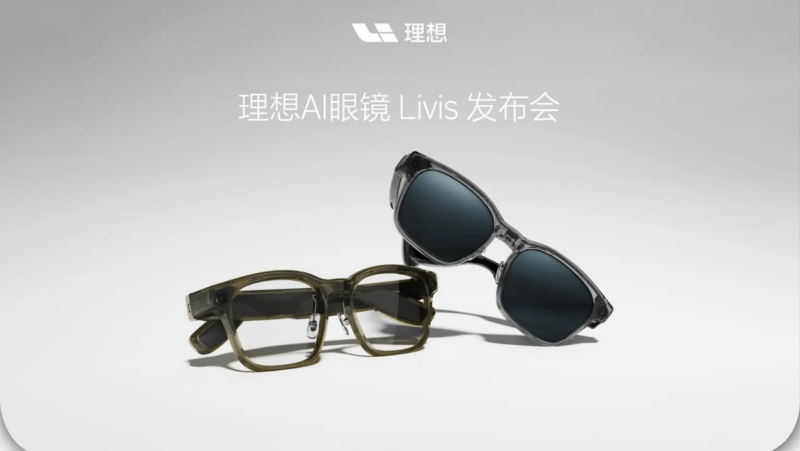
In the ever-evolving Chinese auto market, automakers are constantly looking for the next big thing to lock customers into their ecosystem. We’ve seen it with Xiaomi blurring the lines between tech and cars, and now Li Auto is jumping into the wearables game. The company just launched Livis, its first pair of AI smart glasses, priced at a competitive 1999 yuan (about $280 USD). The name itself, a mix of “Li Auto” and “Jarvis” from Iron Man, tells you exactly what they’re aiming for: a futuristic, seamlessly integrated experience.
But does it hit the mark, or is it a gadget in search of a purpose? Let’s break it down.
Sleek Design Meets Smart Tech
On the surface, the Livis glasses look pretty sharp. They sport a classic Wellington frame and are impressively light at just 36 grams, which Li Auto says is 20% lighter than most competitors. You can get them in classic black, tech grey, or olive green, with either a glossy or matte finish. It’s a stylish piece of kit that doesn’t scream “tech gadget” at first glance.
Li Auto didn’t skimp on the lenses, partnering with Zeiss to provide high-quality optics as standard. They support online prescription services and are designed to work perfectly with Head-Up Displays (HUDs) and Face ID. For added practicality, you can also get photochromic lenses that adapt to changing light conditions. With a claimed usage time of 18.8 hours and a nifty wireless charging case similar to what you’d get with AirPods, the day-to-day usability seems well thought out. There’s even a dedicated slot in Li Auto vehicles for wireless charging on the go.
The “Smart” Features
Inside, the glasses are powered by a Hengxuan BES2800 chip and a separate imaging chip. This runs a SONY IMX681 camera capable of snapping 12-megapixel photos and shooting 4K video, complete with electronic image stabilization. It’s a decent little camera to have sitting on your face, ready to capture moments hands-free.
But the main event here is the integration with Li Auto vehicles. Using Bluetooth and 5G, the glasses connect directly to your car’s infotainment system. This lets you use voice commands from up to 100 meters away to control things like the electric sliding doors, pre-heat the seats and cabin, or check your remaining range and charging status. It’s the kind of feature that sounds incredibly cool on paper.
A Solution in Search of a Problem?
This is where I find myself scratching my head. The core function, voice control, is something you can already do from inside the car without needing a $280 accessory. While the idea of commanding your car like a sci-fi hero is appealing, the practical value feels a bit thin. Why wear glasses to issue voice commands when the car’s built-in microphone is already listening?
The other major selling point, controlling the car from 100 meters away, also feels redundant. Your smartphone can already do all of that, and typically from a much greater distance without the range limitations of Bluetooth. It feels like a feature that duplicates existing functionality rather than introducing something truly new.
It’s hard to escape the feeling that the Livis glasses are more of a lifestyle statement for die-hard Li Auto fans than a must-have accessory for the average driver. While the push to create a connected ecosystem is a popular strategy, seen in different forms from brands like Nio, this particular execution feels a bit perplexing. The technology is neat, but the problem it claims to solve doesn’t really seem to exist. For now, it’s a cool piece of tech that shows Li Auto’s ambition, but I’m not convinced it’s the future of human-vehicle interaction.