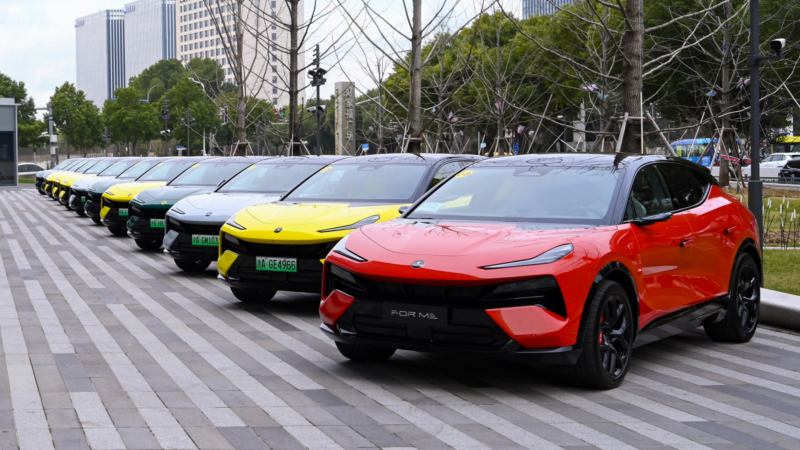

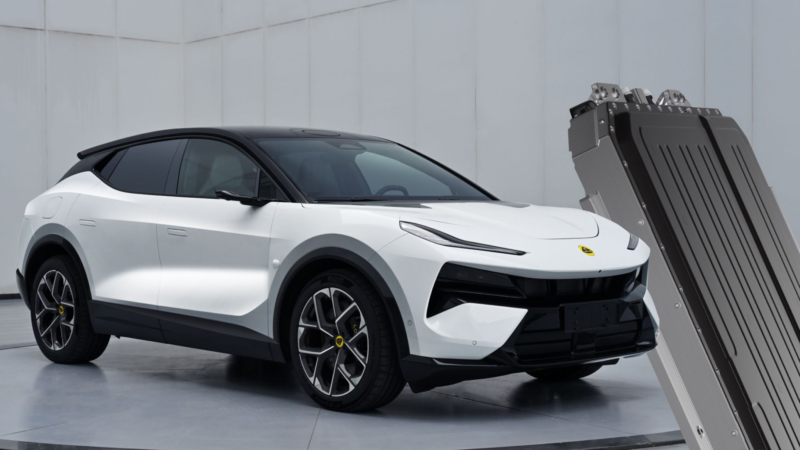
Lotus, the brand synonymous with lightweight sports cars, is making a bold and heavy pivot. Facing a 40% slide in sales, the company is diving headfirst into the plug-in hybrid market with a monster of an SUV. Dubbed the “For Me” in China, the upcoming Lotus Eletre PHEV is a 1,381-horsepower behemoth with a 70 kWh battery, aiming to redefine the brand’s future.
This isn’t just another SUV. It’s a strategic gamble, blending extreme performance with surprising efficiency, all wrapped in a package that weighs nearly three tons. Let’s break down what makes this machine tick.
| Metric | Value | Unit | Notes |
|---|---|---|---|
| Peak Power | 1,030 | kW | 1,381 hp combined output (ICE + Electric) |
| 0–100 km/h (0–62 mph) | < 3 | s | Estimated, based on shared powertrain |
| Top Speed | 230 | km/h | Electronically limited |
| EV Range (CLTC) | 345 – 355 | km | Pure electric range, varies with trim |
| Battery Capacity | 70 | kWh | NMC chemistry; supplied by CATL-Geely JV |
| Max DC Fast-Charge Rate | ~420 (6C) | kW | 20-80% in ~8.5 mins via 900V system |
| Fuel Consumption (PHEV Mode) | 0.06 – 0.07 | L/100 km | WLTC, with charged battery |
| Fuel Consumption (Hybrid Mode) | 5.98 – 6.10 | L/100 km | WLTC, with depleted battery |
| Curb Weight | 2,575 – 2,625 | kg | Varies by trim and options |
| Towing Capacity | 2,275 | kg | Braked trailer |
Geely’s Power Play Under the Hood
The heart of the Lotus Eletre PHEV showcases the power of parent company Geely’s supply chain. The powertrain is expected to be a direct transplant from the extreme Zeekr 9X SUV, another wild creation from the Geely universe. This setup combines a 2.0-liter turbocharged engine (275 hp) with three electric motors to unleash a staggering 1,381 horsepower. That’s enough to launch this luxury SUV to 100 km/h in under three seconds, putting it squarely in supercar territory.
The 70 kWh battery, a product of the CATL-Geely joint venture, is just as impressive. It uses advanced ternary NMC chemistry and a 900V architecture, allowing for mind-bending 6C charging speeds. In simple terms, you can juice the battery from 20% to 80% in about eight and a half minutes. For daily driving, its 355 km of pure electric range means you can run errands all day without using any gasoline. When the battery is low, the engine can act as a generator to recharge it, even while cruising at highway speeds.
More Than Just Muscle
Beyond the raw power, the Eletre PHEV is a showcase of modern automotive technology. Its exterior design remains sleek and aerodynamic, with active elements like a rear spoiler that generates 90 kg of downforce. It also features a retractable LiDAR system for advanced driver-assistance features, signaling its place as a tech-forward vehicle.
This move by Lotus isn’t happening in a vacuum. After struggling with sales, the brand is leveraging Geely’s expertise in the Chinese EV and hybrid market to reinvent itself. By 2028, Lotus plans for its entire lineup to feature PHEV variants, a transformation kicked off by this very Eletre. The strategy is clear: combine Lotus’s legendary brand cachet with the cutting-edge, high-volume technology that defines the Chinese auto industry. It’s a similar story for other brands under the Geely umbrella, which are all pushing the boundaries of performance and tech.
While some may scoff at a nearly 6,000-pound Lotus, this hybrid SUV is a calculated response to market demands. It offers the blistering acceleration that defines modern EVs, but with the flexibility and range of a gasoline engine. It’s a compelling package, especially when other brands like Voyah are also pushing powerful hybrids with enormous range.
The Lotus “For Me” is set to debut in China in January 2026, with sales beginning in the first quarter. A European launch is planned for the first half of 2026. Whether this high-powered, high-tech hybrid can successfully reboot the iconic brand remains to be seen, but one thing is certain: Lotus is no longer just about adding lightness.