
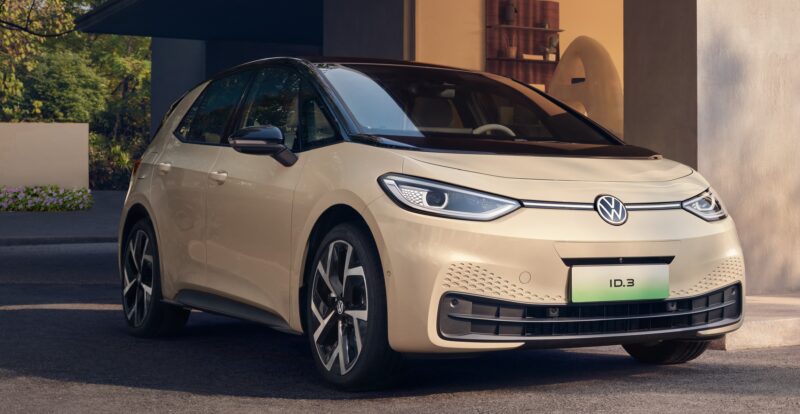
Volkswagen is shaking things up in the competitive Chinese EV market with an updated ID.3, now featuring an LFP battery and a bigger, more vibrant screen. This 2025 model hits the streets with a tempting price tag, starting at a mere 119,900 yuan, or about 16,500 USD, and topping out at 136,900 yuan (18,800 USD). It’s a strategic move by VW to capture a larger slice of the pie in its biggest market.
Battery and Performance
For the first time, the Volkswagen ID.3 offers a lithium iron phosphate (LFP) battery option. Sourced from CATL, this new battery boasts a respectable 53.6 kWh capacity, providing a 451 km range on the CLTC cycle. When you need to juice up, it can DC charge from 30% to 80% in around 48 minutes. While previous ID.3 models exclusively used NMC ternary batteries, this LFP option provides a compelling alternative, especially at this price point.
Under the hood, or rather, at the rear axle, you will find the same 125 kW motor as before, delivering a healthy 310 Nm of peak torque. This powertrain sips electricity at an efficient 13.4 kWh/100km, making it a frugal choice for daily commutes and city driving.
Volkswagen isn’t entirely abandoning its roots, though. The NMC battery version of the ID.3 is still available at the same starting price. It comes with a slightly smaller 52.8 kWh battery, offering a comparable 450 km range, but with the advantage of faster charging, hitting 30-80% in a quicker 42 minutes. However, AC charging does take a bit longer for the LFP version, at 9.5 hours compared to the NMC’s 8.5 hours.
Exterior and Interior Refresh
On the outside, the 2025 ID.3 maintains largely the same familiar design, which is a testament to its enduring appeal. You still get the choice of 18-inch and 20-inch wheels, keeping that sporty stance. A subtle but noticeable change is the A-pillar, now partly painted black, adding a touch of modern flair. Volkswagen also introduces two fresh colors: a sophisticated beige and a calming light blue.
The real upgrades, however, are found inside the cabin. The central control screen has significantly expanded, growing from a 10-inch unit to a more expansive 12.9-inch display. This larger screen features slimmer bezels and sheds the old bottom-mounted physical buttons for a cleaner look. The instrument panel remains a 5.3-inch LCD, providing essential driving information. The central tunnel receives a welcome redesign, now incorporating a convenient wireless charging pad and two cupholders, enhancing both practicality and comfort. These thoughtful updates contribute to a more premium and user-friendly interior ambiance.
Facing China’s EV Challenges
Despite the ID.3 being Volkswagen’s best-selling EV in China, the German automaker has faced some headwinds in this crucial market. January saw ID.3 sales at 2,623 units, a significant drop of 65.5% year-over-year. While 2024 finished strong with 93,816 units sold, Chinese consumers have increasingly gravitated towards domestic brands that often offer superior connectivity, digital user experience, and advanced driver-assistance systems (ADAS) at competitive prices. Volkswagen’s struggles are evident across its lineup, with models like the ID.7 sedan selling only nine units in January.
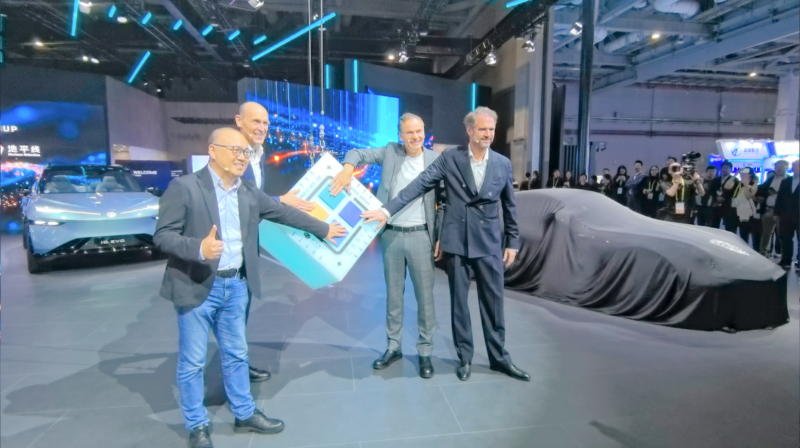
In response, Volkswagen is doubling down on its “In China, for China” strategy. This involves deeper collaborations with local players. Last August, VW made a substantial 700 million USD investment in EV startup Xpeng, with plans to introduce two new EVs based on Xpeng’s electric platform. Furthermore, Volkswagen intends to launch new electric Audi models leveraging SAIC’s IM architecture, showcasing a clear shift towards localized development and technology integration. These partnerships are critical for Volkswagen to regain its footing and innovate at the rapid pace demanded by the Chinese EV market. It’s an exciting time to see how this strategy unfolds and if the updated ID.3 can electrify sales once more.