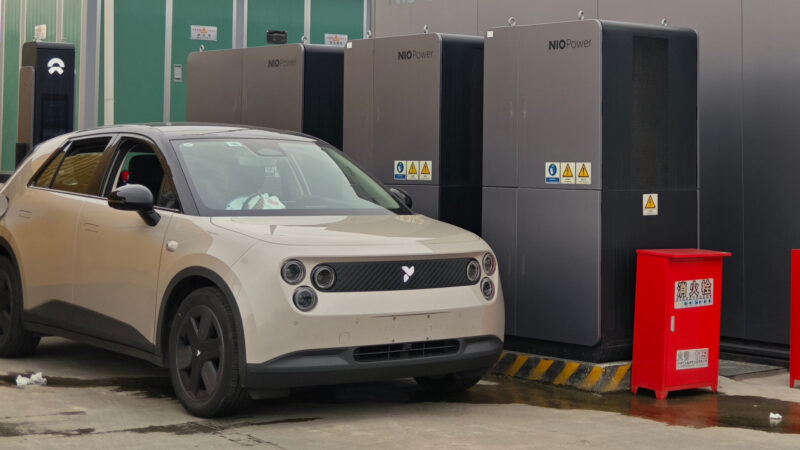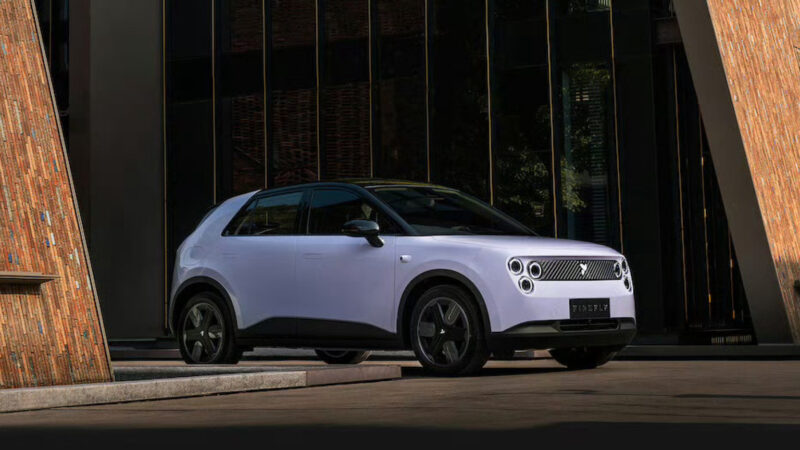


Nio is bringing its Firefly electric hatchback to Europe, with deliveries kicking off in Norway and the Netherlands on August 14. This move marks a significant step for the brand, as it pushes its funky compact EV beyond the hyper-competitive Chinese market. While the Firefly has seen early success at home thanks to aggressive pricing, its European debut comes with a much steeper price tag, leaving many to wonder if it can win over hearts and wallets on a new continent.
| Metric | Value | Unit | Notes |
|---|---|---|---|
| 0–100 km/h (0–62 mph) | 8.2 | s | Single electric motor |
| Peak power | 105 (141) | kW (hp) | Front-wheel drive |
| Range (CLTC) | 420 | km | Real-world range will likely be lower |
| Battery capacity | 42.1 | kWh | Onboard charger specs not yet released |
| Dimensions (L/W/H) | 4003/1781/1557 | mm | Wheelbase: 2,615 mm |
| Starting price (Norway) | 279,900 | NOK | Approx. 27,280 USD or 23,570 EUR |
| Starting price (China) | 119,800 | CNY | Approx. 16,610 USD. Drops to 79,800 CNY with BaaS |
A Tale of Two Prices
In China, the Firefly made a splash with its accessible pricing, starting at just 119,800 yuan (about $16,610). Nio sweetened the deal further with its signature Battery-as-a-Service (BaaS) plan, which dropped the initial cost to a remarkable 79,800 yuan ($11,065). This strategy worked, and the company quickly hit a 10,000-unit delivery milestone. It’s a classic example of how aggressive pricing can ignite a market segment.
However, European customers will be digging deeper into their pockets. In Norway, the Firefly is pegged at 279,900 NOK, which translates to around $27,280. That’s a hefty 64% premium over its Chinese sticker price. There’s been no official word yet on whether the BaaS subscription model will be offered in Europe. Without it, the Firefly loses one of its key competitive advantages and wades into a crowded market where rivals like the MG4 EV already have a strong foothold.
Following its launch in Norway and the Netherlands, the Firefly is slated to enter Austria, Belgium, the Czech Republic, Hungary, Luxembourg, Poland, and Romania. While it’s a clear signal of Nio’s global ambitions, the brand’s success will depend heavily on whether European buyers feel the car’s unique character justifies its cost.
What is the Firefly EV?
The Firefly is a compact electric hatchback designed for the cut and thrust of urban life. Its design is memorable, with unique triple-round headlights, a blacked-out roof, and clean, modern lines. It’s slightly longer than a Mini Cooper, giving it a bit more presence and interior space. Power comes from a 105 kW (141 hp) electric motor driving the front wheels, which is enough to get the car from 0 to 100 km/h in a respectable 8.2 seconds. It’s not going to snap your neck back, but it’s more than zippy enough for city driving and highway merging.
The 42.1 kWh battery provides a CLTC range of 420 km. It’s important to take that number with a grain of salt, as the CLTC cycle is known for being optimistic. Real-world range will likely be closer to 300-320 km, which is still plenty for daily commuting and weekend trips.
Inside, the cabin is clean and tech-forward. A 13.2-inch floating center screen handles infotainment duties, while a smaller 6-inch panel serves as the digital instrument cluster. Nio didn’t skimp on features either, packing in 9 airbags, 14 speakers, a fragrance system, and ambient lighting. It’s a well-equipped package that feels a step above many other small cars, which may help justify the European price tag.
The Bigger Picture
Nio’s European push with the Firefly is part of a broader trend of Chinese automakers expanding their global reach. The export race is heating up, and brands are eager to prove their vehicles can compete on the world stage. The Firefly is a charming and capable city car, but its success in Europe will ultimately come down to pricing and positioning. Can it carve out a niche for itself as a premium compact EV, or will the steep markup send potential buyers looking elsewhere?