
Shen Fei, Senior Vice President and CEO of Nio’s Onvo brand, recently stirred the pot in Chinese media by declaring that large capacity range extender electric vehicle (EREV) batteries are a waste of resources. His reasoning? China’s charging infrastructure is rapidly maturing, making huge batteries in EREVs increasingly unnecessary.
He argued that these oversized battery systems eat into valuable cabin space. Plus, the extra cost of the range extender unit, which can add around 15,000 yuan (about 2,100 USD), burdens both manufacturers and consumers with an unnecessary expense. Shen’s comments certainly go against the grain of the industry’s push for ever-larger batteries in EREVs.
Onvo’s Ambitious Battery Swap Expansion
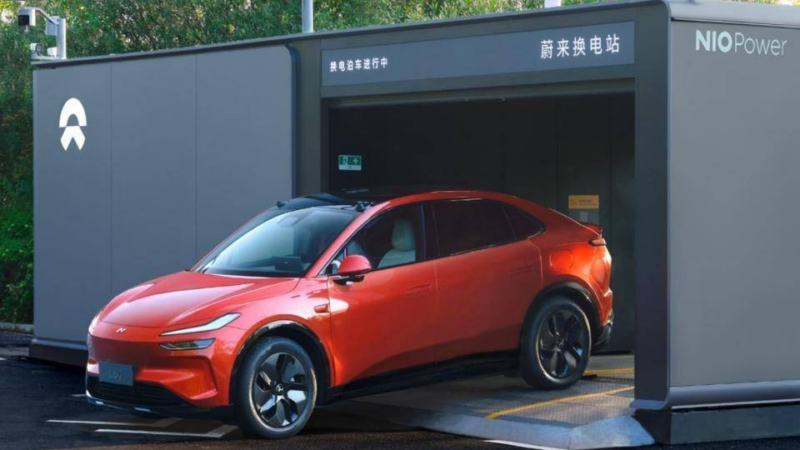
Onvo is not just talking the talk; they’re walking the walk. The brand recently unveiled ambitious plans to supercharge its battery swap network capacity. They aim to add over 8,000 new battery packs to their nationwide system by mid-January 2026. This move will more than double their current inventory of approximately 7,000 battery packs spread across 2,300 swap stations.
Now, you might wonder about the financial sense of such a massive investment for Nio, especially as they’re eyeing a break-even point in Q4. Shen offered a compelling economic justification. He explained that the company plans to cash in on the fluctuating peak-valley electricity prices, potentially raking in substantial profits from each battery.
“In areas like Zhejiang, each battery in our swap stations can pull in around 1.2 yuan (0.17 USD) per kilowatt-hour from price differences,” Shen detailed. “Considering an average usable capacity of 50 kWh per battery, that translates to a neat 60 yuan (8.4 USD) daily, or roughly 20,000 yuan (2,800 USD) in annual profit per battery, under reasonable conditions.” He pointed out that nationwide, the average figure hovers between 12,000 to 13,000 yuan (1,680 to 1,820 USD), solidifying the investment’s profitability over a battery’s lifetime.
Consumers Opting for Smaller Batteries
Here’s where things get really interesting: Shen divulged that about 40% of Onvo L90 owners, whose vehicles come standard with an 85 kWh battery, are voluntarily downgrading to 60 kWh batteries. This happens through the company’s Battery-as-a-Service (BaaS) program. Not only does this save customers 3,600 yuan (504 USD) in annual rental fees, but it also clearly signals a decline in range anxiety as charging infrastructure steadily improves.
This trend in customer behavior stands in stark contrast to the broader industry’s obsession with slapping increasingly larger batteries into extended-range electric vehicles. Shen didn’t hold back, criticizing this approach as inefficient given the advancements in charging options.
“Just adding bigger batteries and fuel tanks is merely incremental innovation,” Shen asserted. “Battery swapping, on the other hand, is a systemic innovation that demands comprehensive solutions beyond just single technological fixes.”
Currently, there are approximately 120,000 Onvo vehicles on the road, with 2,300 swap stations available. This gives a vehicle-to-station ratio of 60:1, already surpassing typical industry benchmarks. However, Shen believes the sweet spot lies in each station maintaining between 4 to 7 battery packs. This, he feels, would perfectly cater to customer needs across various range requirements.
The EREV vs. BEV Debate: A Deeper Look
Nio’s battery swap stations often proudly display a slogan: “Hybrids culminate in pure electric vehicles, and pure electric vehicles culminate in battery swapping.” This motto highlights a core philosophy. From a user’s perspective, range extenders often fall short of pure electric motors when it comes to power delivery and noise levels.
Moreover, with significantly lower electricity prices in China compared to gasoline, many owners of hybrid and range-extended vehicles are understandably reluctant to fire up their internal combustion engines. Yet, the smaller battery capacities in these vehicles mean frequent charging, which can significantly detract from the overall user experience.
Automakers have recognized this predicament and are now outfitting their hybrid vehicles with increasingly larger batteries. A prime example is the upcoming Leapmotor D19 range-extended model, which boasts an 80 kWh battery. That’s a capacity that actually exceeds many pure electric vehicles. Consider the all-electric L90, which offers an 85 kWh battery, yet as we’ve seen, 40% of its owners actively choose to downgrade to a 60 kWh option. This just goes to show how consumer preferences are evolving, driven by practical considerations and an expanding charging network.