
Quick Specs & Metrics
Estimated gray market battery recycling: 75% of total
Average profit per vehicle: ~10,000 yuan (~1,400 USD)
Legitimate recycling capacity utilization: Less than 18%
Expected battery retirements by 2025: 820,000 tons
The Rise of the Gray Market
China’s electric vehicle (EV) boom has brought with it a less visible but equally impactful trend: a thriving gray market for battery recycling. Unlicensed workshops now handle an estimated 75% of retired EV battery packs, generating profits of around 10,000 yuan (~1,400 USD) per vehicle. While lucrative, this underground industry raises significant environmental, safety, and regulatory concerns.
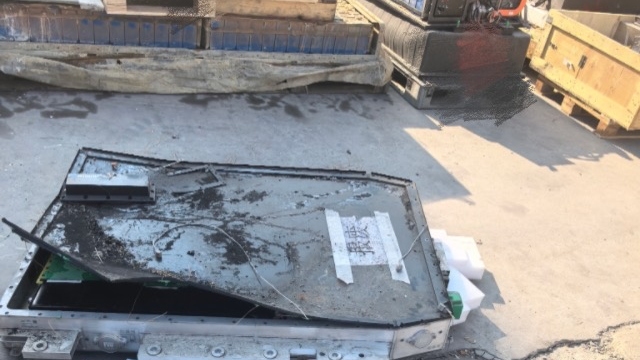
These workshops operate in the shadows, often hidden in industrial parks or rural areas. A recent investigation by Yicai uncovered one such facility near the Qingcaowo Industrial Park in Huizhou, Guangdong. Inside, over 100 disassembled battery packs lay scattered across the floor, with workers testing cells, dismantling packs, and repackaging them for resale.
How the Gray Market Works
The process is straightforward but highly profitable. Workshops acquire used EV battery packs from sources like insurance companies, auction houses, and ride-hailing firms. These packs are disassembled into individual cells, tested for quality, and sorted. High-quality cells, retaining over 50% of their original capacity, are resold to manufacturers of two-wheelers, power banks, and energy storage systems. Lower-quality cells are broken down to extract valuable metals like nickel, cobalt, and lithium.
Wu Lei (a pseudonym), a workshop manager, shared that his team processes nearly 1,000 battery packs daily. Small workshops can buy cells for 0.5-0.6 yuan (~8 cents) per Ah and resell them for 1 RMB/Ah, yielding a profit of around 10,000 yuan (~1,400 USD) per vehicle. This financial incentive allows them to outbid legitimate recyclers, effectively monopolizing the supply chain.
Environmental and Safety Risks
The lack of regulation in these workshops poses serious risks. Workers often operate without protective gear, and hazardous materials are handled carelessly. Unlike legitimate recyclers such as CATL, which achieve lithium recovery rates exceeding 90%, gray market operations can only perform basic disassembly. Their inefficient methods lead to resource waste and environmental pollution.
Traceability is another major issue. Wu Lei admitted to substituting cells of different capacities when inventory was low, raising concerns about the safety and reliability of these refurbished products. Without proper oversight, these practices could lead to catastrophic failures in the devices or vehicles that use these batteries.
The Regulatory Response
China is bracing for a massive wave of EV battery retirements, with 820,000 tons expected by 2025 and over 1 million tons by 2030. In response, the government has introduced new regulations, the “Interim Measures for the Management of Recycling and Comprehensive Utilization of Waste Power Batteries for New Energy Vehicles,” set to take effect this April. These measures aim to strengthen traceability, recycling management, and industry collaboration.
However, many workshop owners remain confident in their ability to secure supplies, driven by the “highest bidder wins” market dynamic. Experts argue that a multi-pronged approach is needed to combat the gray market, including stricter enforcement, technological upgrades, and incentives for legitimate recyclers.
The Path Forward
Legitimate recyclers, despite significant investments, struggle to compete with the gray market. Companies like Green Recycling (Grimm) anticipate processing 50,000 tons by 2025, representing about 10% of the legitimate market. They hope the new regulations will level the playing field.
Experts recommend accelerating the implementation of these policies, clarifying criminal liabilities for illegal recycling, and establishing a “red/yellow card” system to penalize non-compliant recyclers. Additionally, linking battery recycling to personal credit and vehicle registration could help channel retired batteries to legitimate channels.
The Ministry of Ecology and Environment has already conducted over 8,300 inspections on waste battery dismantling and processing units. They emphasize that proper recycling is crucial for safety and environmental protection, urging consumers to support the new regulations and avoid unregulated channels.
As China continues to lead the global EV market, addressing the challenges of battery recycling will be essential for sustainable growth. The stakes are high, but with the right policies and public awareness, the country can pave the way for a greener future.