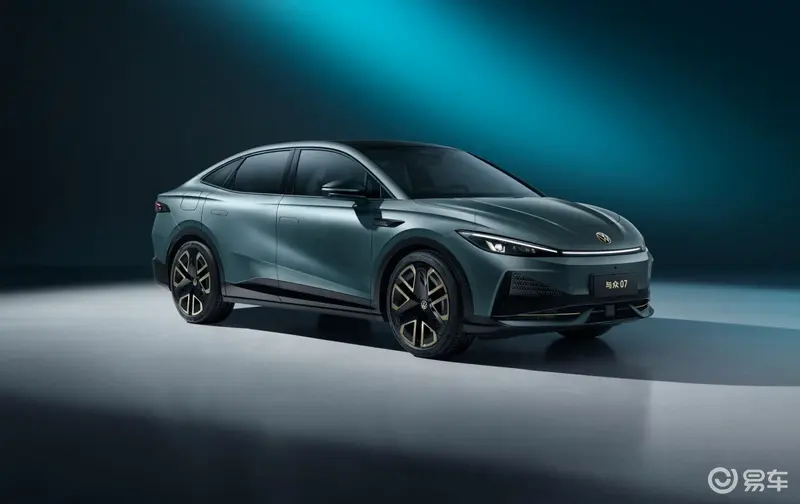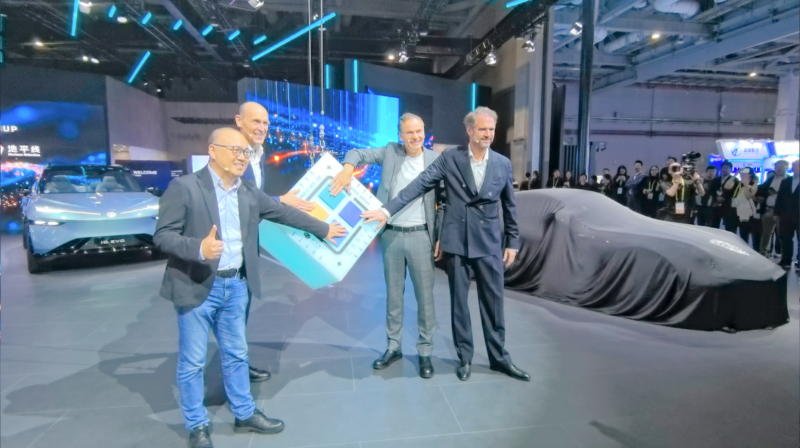

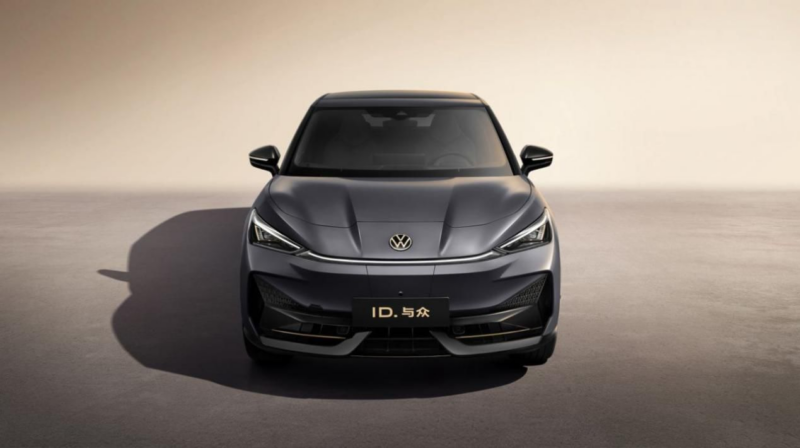
Volkswagen is gearing up to start production of its first vehicle built on the China Electrical Architecture (CEA). You heard that right, the ID.Unyx 07 will be rolling off the lines at Volkswagen Anhui on December 31, a serious game-changer for the German brand’s China plan. What’s truly remarkable is this car. developed primarily by a Chinese team, went from electrical architecture to full vehicle integration in just 18 months. That’s a blistering pace when you consider how long these things usually take in Europe.
Han Sanchu, Executive Vice President of Volkswagen Group China and CEO of Cariad China, recently spilled the beans on the CEA architecture, a joint effort with Xpeng. It’s got a clear roadmap too. After CEA 1.0 drops this year, expect version 2.0 in 2027, ready to handle various powertrain types. Then, by 2029, CEA 3.0 will arrive, diving deeper into SOC chip development. We are looking at a two-year upgrade cycle, keeping things fresh.
Volkswagen and Xpeng kicked off their partnership in July 2023 with a cool 700 million USD investment from VW, securing a 4.99% stake in Xpeng. This collaboration quickly grew beyond the China-focused Compact Main Platform (CMP), extending to Volkswagen’s global Modular Electric Drive Matrix (MEB).
April 2024 saw the formal announcement of their joint CEA architecture development, with agreements inked in July. This architecture is pretty clever, using regional control and a quasi-central computing design. It cuts down in-vehicle controllers by 30%, slashes system costs, and allows for over-the-air updates for things like autonomous driving and smart cockpit features. It is clear that Volkswagen is serious about its electric future in China.
Volkswagen isn’t putting all its eggs in one basket. They are nurturing established relationships with partners like SAIC, FAW, and JAC, while also forging new alliances with tech powerhouses like Xpeng and Horizon Robotics. Speaking of Xpeng, their CEO He Xiaopeng announced at Xpeng’s Technology Day in November that Volkswagen would be using Xpeng’s self-developed Turing AI chip. That’s a big nod of confidence!
The partnership with Horizon Robotics is also heating up. At the 2025 Horizon Technology Ecosystem Conference on December 8, Han Hongming, CEO of the Volkswagen-Horizon joint venture Carizon, revealed that Volkswagen’s own chip will be based on Horizon’s latest BPU architecture. This bad boy will deliver 500-700 TOPS of computing power, ready to support advanced vision systems and large language models. The best part? It will be completely compatible with the CEA architecture developed with Xpeng, enabling L2+ advanced driver assistance and L3/L4 autonomous driving. This kind of advanced tech shows where the market is heading.
Volkswagen has been busy over the last three years, giving its business model and R&D system a complete overhaul. Their Volkswagen China Technology Company (VCTC) in Hefei, fully operational since January 2024, is now their biggest R&D center outside Germany. Talk about commitment! This new R&D powerhouse underscores their dedication to the Chinese market.
The future looks bright and electrified. Starting in 2026, we’ll see the first batch of vehicles with the CEA architecture and advanced driver assistance rolling out. By 2027, over 20 electrified smart models are slated for launch. And by 2030, Volkswagen plans to have around 30 pure electric smart vehicles covering pretty much every market segment. Volkswagen is going all in, and we can’t wait to see what else they bring to the table.