
A New Contender Enters the Arena
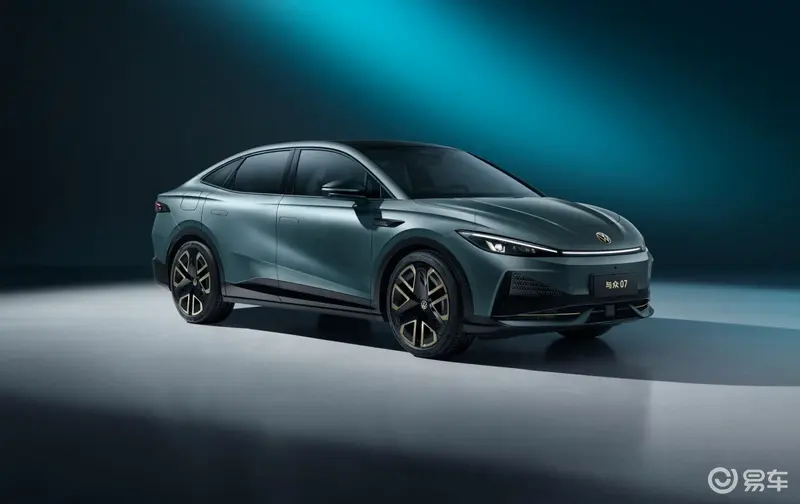
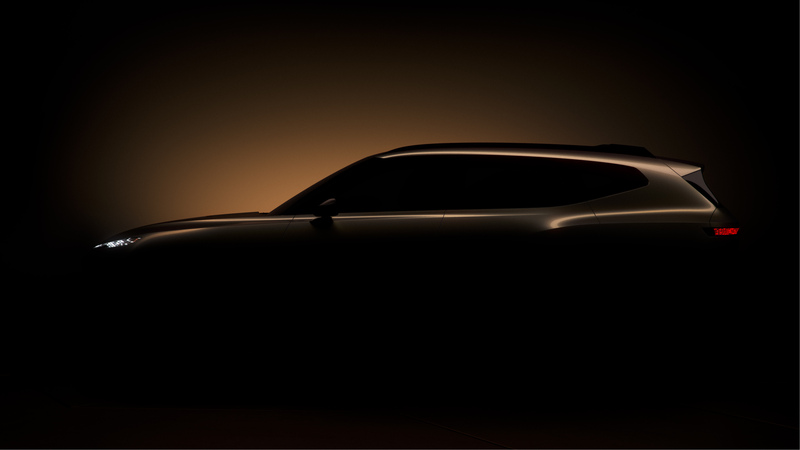
Volkswagen is getting serious about competing in China’s red-hot EV market. The German automaker just rolled the first pre-production Volkswagen ID.Evo off the line at its factory in Anhui. This isn’t just another electric SUV. it’s a full-size contender built with deep collaboration from Chinese EV star, Xpeng. Set for a 2026 launch, the ID.Evo has its sights set on dethroning local titans like the Aito M9 and Li Auto L9.
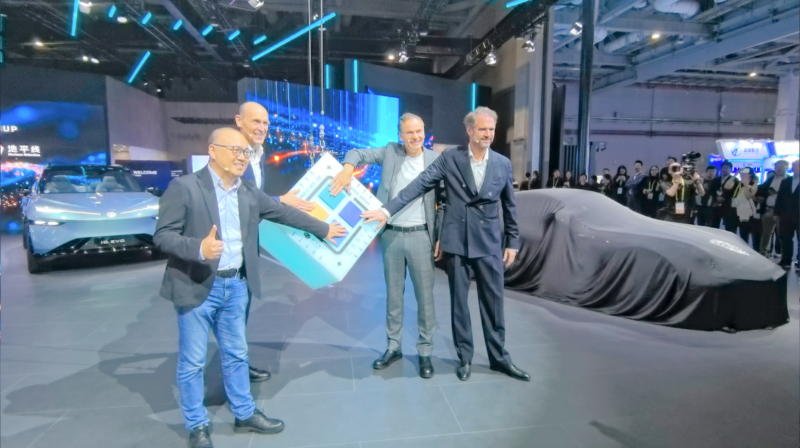
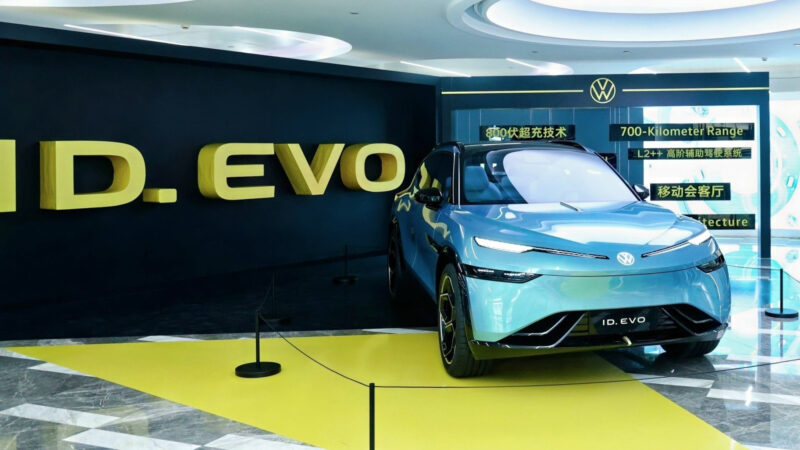
The journey to this point hasn’t been easy for Volkswagen’s Anhui division, which it runs with JAC. The plant has been losing money, and this new SUV represents a high-stakes effort to turn things around. The ID.Evo was first shown as a futuristic concept at the Shanghai Auto Show in April 2025, and now, seeing the production-intent model, codenamed MM01, is a big step toward its 2026 market debut. Although the vehicle was draped in a red cloth, hiding its final design, the message is clear: VW is adapting to win.
Xpeng’s Brains in a VW Body
What makes the ID.Evo so different is what’s under the skin. The SUV is a product of a significant partnership where Volkswagen taps Xpeng for its advanced technology. The ID.Evo will likely use Xpeng’s sophisticated E/E architecture, the same electrical skeleton found in popular models like the Xpeng G9 and G6.
For the driver, this translates to features that young Chinese buyers demand. We’re talking about an 800V high-voltage system that enables ultra-fast charging, a clever AI voice assistant that actually understands you, and an L2++ driver’s assistance system for a smoother, safer commute. To top it off, it’s expected to deliver a CLTC range of over 700 km, putting it right in line with the competition. This China-only model shows VW is confident it can capture enough domestic demand without needing to export it.
A Second Chance for Volkswagen Anhui
Volkswagen’s recent history in China has been a tough lesson. The Anhui joint venture, initially formed with JAC in 2017, stumbled with its first offering, the Sol E20X hatchback, which sold poorly. After VW took a majority stake and rebranded the venture to Volkswagen Anhui, it launched its next project, the ID.Unyx.
Based on the stylish Cupra Tavascan, the Unyx seemed promising. However, it hit the market with a starting price of 209,000 yuan (29,000 USD), which potential customers immediately called overpriced. The sales numbers tell the story, with only 4,438 units sold between July 2024 and March 2025. These slow sales contributed to a staggering loss of 1.35 billion yuan (186 million USD) for Volkswagen Anhui in 2024.
With the ID.Evo, it feels like Volkswagen fires back with a new strategy. By integrating technology from a proven local innovator like Xpeng, the German automaker is showing it understands that winning in China’s EV market requires more than just a strong brand name. It requires the right tech, the right features, and the right price. The ID.Evo is carrying the weight of VW’s ambitions on its shoulders, and its success could finally put the Anhui plant on a path to profitability. The entire industry will be watching closely when it officially launches in 2026.