
Originality in the Hot Seat
Xiaomi’s latest electric SUV, the YU7, is stirring up a familiar conversation on Chinese social media about design originality, an issue that also followed its SU7 sedan. The debate was kicked off by a Weibo post from Ai Tiecheng, the former head of Nio’s sub-brand Onvo, who wrote, “Entrepreneurs and consumers should support originality.” Although Ai later clarified his comment wasn’t aimed at the auto industry, many interpreted it as a direct shot at Xiaomi’s design playbook.
Ai has been championing homegrown innovation, recently stating that “companies built on imitation won’t achieve longevity.” His past praise for Nio’s design work and these recent comments have fueled speculation that he was taking a jab at Xiaomi’s vehicles, which are often compared to high-end European models.
From “Porsche Mi” to “Ferrari Mi”
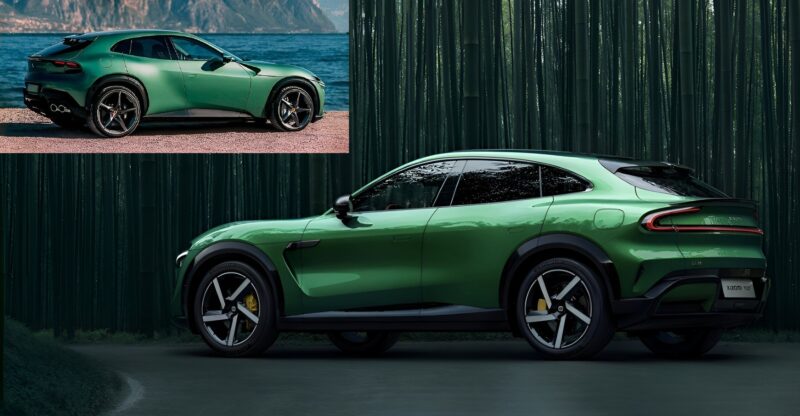
The drama escalated when Ferrari China posted its Purosangue SUV in Verde Dora green, a classic color chosen by Enzo Ferrari decades ago. Just as this happened, Xiaomi revealed its YU7 in a strikingly similar emerald green. Xiaomi’s CEO, Lei Jun, explained the color was inspired by Colombian emeralds, but netizens were quick to dub the YU7 the “Ferrari Mi.” This nickname is a clear callback to the SU7 sedan, which was cheekily nicknamed the “Porsche Mi.”
The visual parallels have led to a lot of humor online. Some users jokingly thanked Lei Jun for “bringing Ferrari to the masses.” The controversy has also unexpectedly boosted Ferrari’s profile in China. The Purosangue has gone viral, trailing only the Xiaomi YU7, Deepal S09, and Xiaomi SU7 in online popularity.
A Widespread Trend?
This isn’t just a Xiaomi story. Some Chinese netizens have pointed out that the Ferrari Purosangue itself shares design cues with the 2016 Mazda CX-4. Additionally, Toyota’s Crown Sport is often called the “Japanese Ferrari” for its styling. These observations have led to playful online debates about whether Mazda is the unintentional trendsetter for today’s sporty EV designs.
Xiaomi has faced this before. When the SU7 was compared to Porsche’s Taycan, the CEO of Porsche China diplomatically remarked that great minds think alike. Lei Jun has consistently defended his company’s work, stating that every design element on Xiaomi’s cars is carefully considered and original.
Despite the noise, the SU7 has been a sales success, outperforming the Tesla Model 3 and BYD Han in China’s premium EV market. At a recent event, Lei Jun announced that Xiaomi has already delivered over 258,000 units of the SU7. Now, all eyes are on the YU7. It remains to be seen if the “Ferrari Mi” label will give it a boost or complicate its journey in the competitive market. While Nio, a key rival, is also making moves with its own sub-brand, Onvo, the market is watching to see if Xiaomi’s strategy will continue to pay off.