
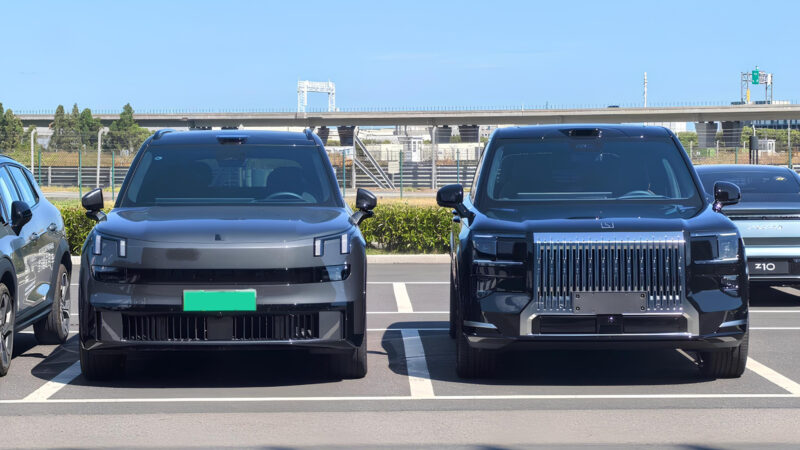
This year, Geely Group flooded the Chinese market with three new full-size plug-in hybrid crossovers. While the affordably positioned Geely Galaxy M9 carves out its own niche, two other models from its subsidiary, Zeekr Technology, seem to be on a collision course. The Lynk & Co 900 and the Zeekr 9X are so closely matched in mission yet so differently equipped, it begs the question: are they destined to cannibalize each other?
It’s a fascinating case of internal competition. The Lynk & Co 900, which hit the market in April 2025, has already seen respectable deliveries of 27,844 units. Then came September, bringing both the Geely Galaxy M9 and the Zeekr 9X. Together, this trio covers a massive price spectrum from 183,800 to 599,900 yuan ($25,820 – $84,260), but the real drama is between the two premium offerings.
The Sensible Choice: Geely Galaxy M9
Let’s get the Galaxy M9 out of the way first. It’s the entry point to Geely’s big SUV lineup, offering a sensible front-wheel-drive powertrain with 402 hp and a modest 18.4 kWh battery. You can option it up to an 858 hp all-wheel-drive beast with a 41.5 kWh pack, but its main purpose is value. Priced between 183,800 and 248,800 yuan ($25,820 – $39,950), it’s built to compete with practical rivals like the Leapmotor C16 and Deepal S09. Its design is utilitarian, and while packed with tech like a 30-inch screen and optional air suspension, it’s not trying to be a luxury statement. For that, you have to look at its siblings.
A Complicated Family History
To understand the Lynk & Co and Zeekr dynamic, you need a quick history lesson. Lynk & Co was born in 2017 as a Geely and Volvo joint venture, focusing on stylish PHEV and gas-powered cars. In 2021, it unveiled the “Zero” concept, an all-electric model that eventually launched as the Zeekr 001, the first car from Geely’s new premium EV brand.
For a while, the two brands operated in parallel, sometimes creating internal overlap. The 2025 restructuring, where Volvo stepped back and Zeekr Technology took a majority stake in Lynk & Co, was meant to clarify their roles. Yet, with the launch of their flagship PHEV SUVs, things seem as tangled as ever.
| Metric | Lynk & Co 900 | Zeekr 9X | Notes |
|---|---|---|---|
| Price Range (USD) | 43,530 – 58,560 | 65,440 – 84,260 | Zeekr commands a significant premium |
| Combined Power (kW) | 530 – 650 | 660 – 1,030 | Top-trim Zeekr’s power is immense (1,381 hp) |
| 0-100 km/h (s) | 4.3 – 4.8 | 3.1 – 3.9 | Both are incredibly quick for their size |
| Battery Capacity (kWh) | 44.8 – 52.4 | 55 – 70 | Zeekr offers larger battery options |
| BEV Range (CLTC) | 220 – 280 km | 288 – 380 km | Zeekr holds the advantage in pure electric driving |
| Main Screen | 30-inch | Dual 16-inch | Lynk & Co’s single screen is more striking |
| Rear Screen | 30-inch ceiling-mounted | 17-inch ceiling-mounted | A surprisingly large difference |
| HUD Size | 95-inch | 47-inch | Lynk & Co prioritizes driver immersion |
| Rotatable 2nd Row | Standard | Optional | A key luxury feature is extra on the Zeekr |
The Sibling Rivalry: Specs and Vibe
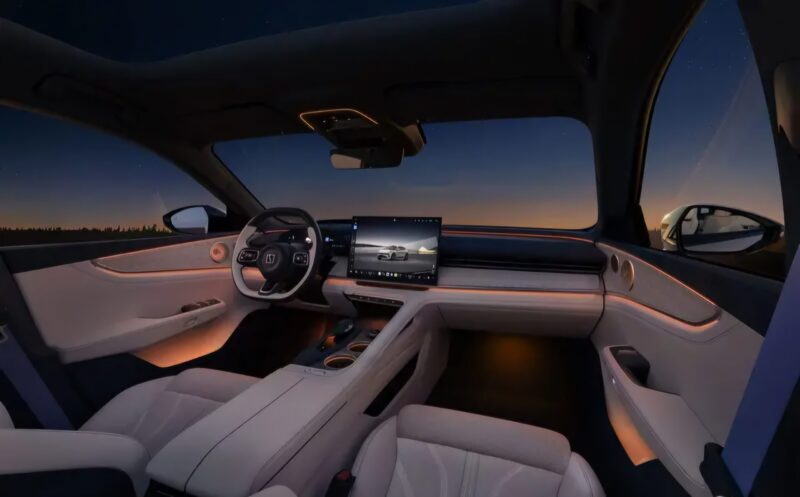
The Lynk & Co 900 pitches itself as a tech-laden family hauler. Even the base model pumps out a massive 711 hp, with the top trim reaching 872 hp. It hits 100 km/h in a blistering 4.3 seconds. Inside, it’s a tech lover’s dream, dominated by a 30-inch center screen, a wild 30-inch ceiling-mounted screen for rear passengers, and a massive 95-inch augmented reality HUD. Every one of its six seats gets heating and massage, and the second-row seats rotate, a feature that screams luxury. Its only noticeable compromise is in the cabin materials, which feel good but not truly high-end.
Then there’s the Zeekr 9X. It enters the ring with even more grunt, starting at 885 hp and topping out at an absurd 1,381 hp, which catapults it to 100 km/h in just 3.1 seconds. It also offers bigger batteries for more electric range, up to 380 km. The interior is dripping with opulence, featuring wood, aluminum, and a 32-speaker Naim sound system.
But here’s where it gets confusing. The more expensive 9X swaps the 900’s giant single monitor for two smaller 16-inch screens. Its rear screen and HUD are both significantly smaller than what you get in the cheaper Lynk & Co. Those slick rotating second-row seats? They’re an optional extra on the 9X. Both SUVs ride on a sophisticated dual-chamber air suspension, but only the top-tier Zeekr 9X gets a 48V active anti-roll bar for superior stability in corners.
Market Confusion and the Cannibalization Risk
So, who are these cars for? The Zeekr 9X is an opulent monster with a powertrain built for bragging rights. However, in the congested urban sprawls of China, its performance advantage is mostly academic. The Lynk & Co 900, while less powerful, is still incredibly quick and delivers a far more impressive in-car tech experience, which many daily drivers will value more.
This is a puzzling proposition for buyers. An experienced driver might appreciate the finer materials in the 9X, but most consumers will be drawn to the dazzling screens and standard luxury features of the 900, especially given its lower price. Both brands are young and lack the established prestige of a legacy automaker like Mercedes or BMW, so brand power isn’t a deciding factor.
Initial demand for the Zeekr 9X was explosive, racking up 10,000 orders in just 13 minutes, compared to an hour for the Lynk & Co 900. The hype is real. But in the long run, a significant slice of customers might find the Lynk & Co 900 offers a smarter, more compelling package for their money. By launching two such capable but confusingly positioned SUVs, Zeekr Technology may have inadvertently created a family feud that could see its own products battling for the same customers. It’s a high-stakes strategy that will be fascinating to watch unfold in China’s hyper-competitive auto market, which is also being contested by other players like AITO M9.