
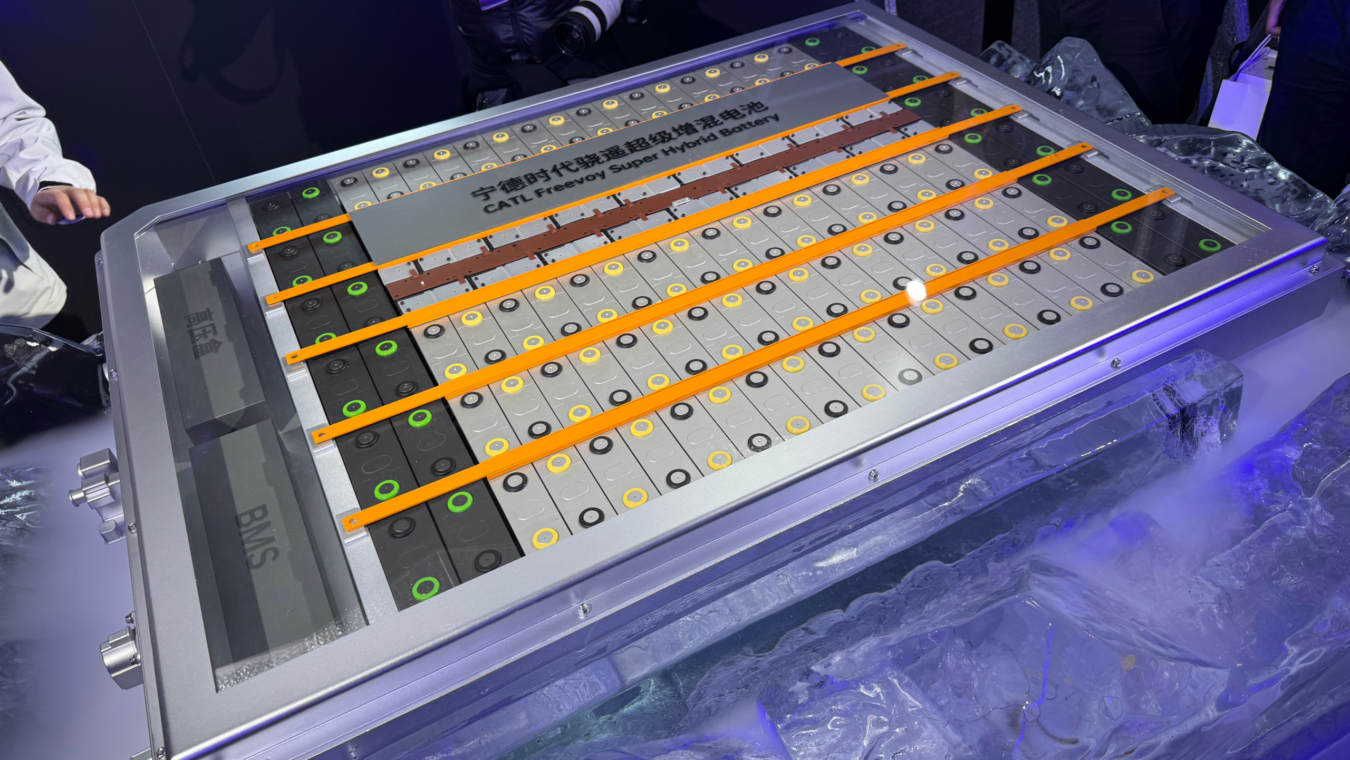
CATL officially launched its second-generation Freevoy Super Hybrid Battery at CATL Tech Day today, introducing a comprehensive solution for the extended-range vehicle segment.
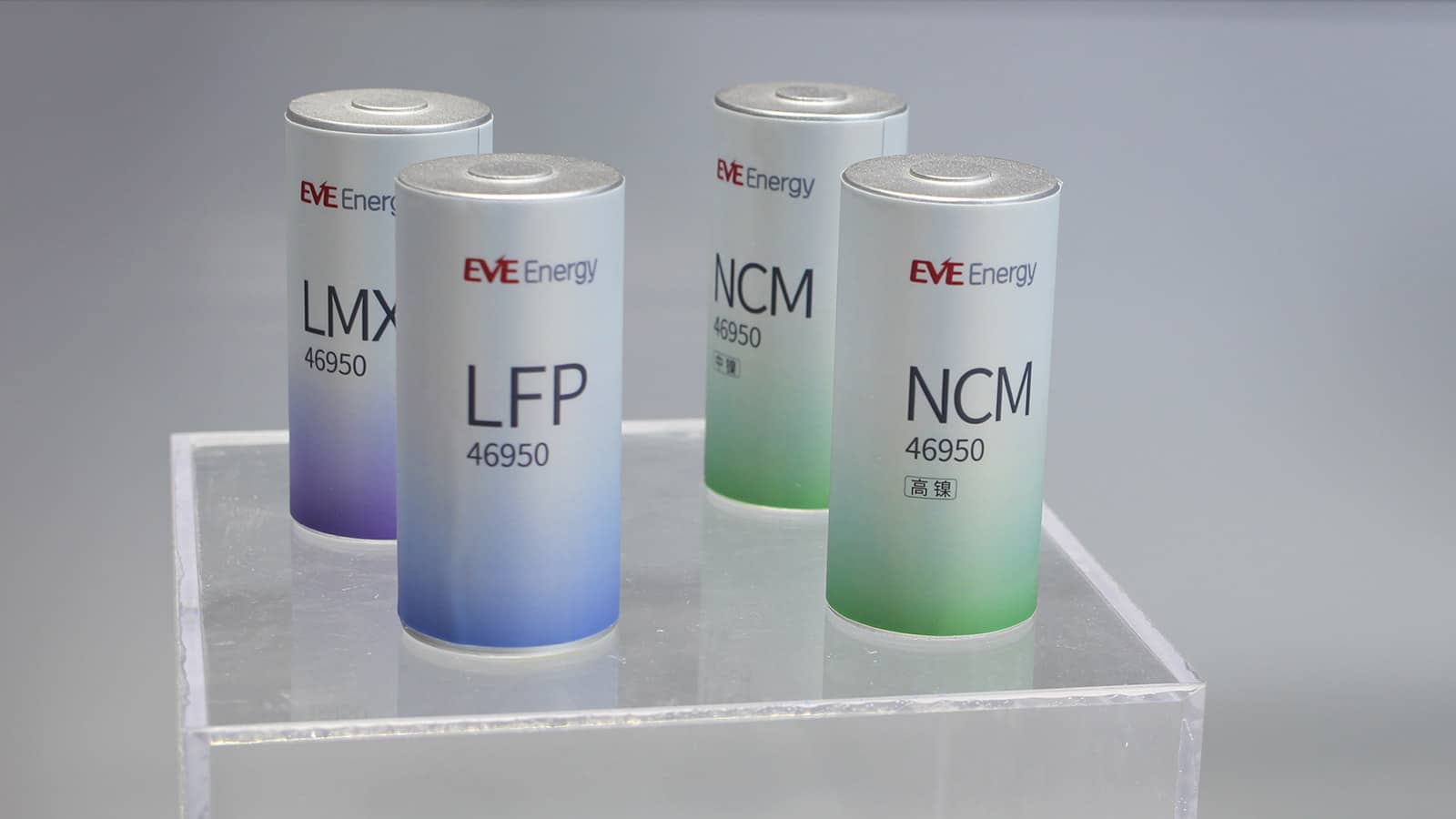
CATL said the new battery will be offered in three versions: lithium iron phosphate (LFP), a hybrid chemistry combining LFP and NMC, and ternary lithium, claimed pure electric range is 500 to 600 km depending on versions. All variants come standard with 4C charging capability.
CATL stated directly at the launch event that 400 km of pure electric range is merely the passing line for extended-range vehicles, while 600 km represents the new competitive benchmark.
Targeting mainstream family users, the LFP system achieves 500 km of pure electric range, combined with 4C supercharging capability, meeting the needs of once-a-week charging for daily commuting.
CATL introduced a “Super-Hybrid Technology”, which mixes LFP and NCM materials at the powder particle level.
The specific solution uses the olivine crystal structure of lithium iron phosphate as the core framework, achieving gradient uniform mixing of LFP and NCM materials at the powder particle level. The “Super-Hybrid System” achieves an energy density of 230 Wh/kg, increasing range by 15% to 20% compared to single LFP batteries while maintaining the same battery pack weight.
Above the super-hybrid system, CATL has fully integrated the high-end ternary technology from its third-generation Qilin battery into the second-generation Freevoy, pushing pure electric range beyond 600 km.
This figure brings not just quantitative change in range, but qualitative transformation in user experience. Data provided by CATL shows that for extended-range vehicles with pure electric range below 400 km, the range extender activation rate reaches 15%.
When the range increases to 600 km, the range extender usage probability drops below 1%, meaning daily commuting hardly requires starting the range extender. Combined with the range extender, the total range can exceed 2,000 km.
Regarding power output, the second-generation Freevoy can stably deliver 1.2 MW even at 20% SOC low-charge state, with instantaneous power exceeding 1.5 MW at full charge.
In terms of safety protection, the second-generation Freevoy adopts two core technologies. The bottom coating can withstand 1,500 joules of impact energy – ten times the national standard of 150 joules, equivalent to the shooting power of a standard rifle.
The sealing and waterproof capability reaches over 200 hours of continuous immersion in 2-meter water depth, far exceeding the national standard requirement of 30 minutes of immersion in 1-meter water depth. Even if the entire vehicle is submerged, the battery pack remains watertight with uninterrupted power delivery.
Looking back at CATL’s first-generation Freevoy battery, it led extended-range vehicles into the large-capacity era with 400 km pure electric range and 4C supercharging. CATL statistics show that in 2025, over 95% of extended-range vehicles sold with pure electric range exceeding 300 km were equipped with CATL Freevoy batteries. The launch of the second-generation Freevoy battery further raises the ceiling for pure electric range in the extended-range segment to 600 km.
Editor’s comment
Again, something BYD doesn’t have.
Writer
Liu Miao covers NEVs and batteries at CNC to contribute to the energy transition, in spare time he loves driving his EV around.