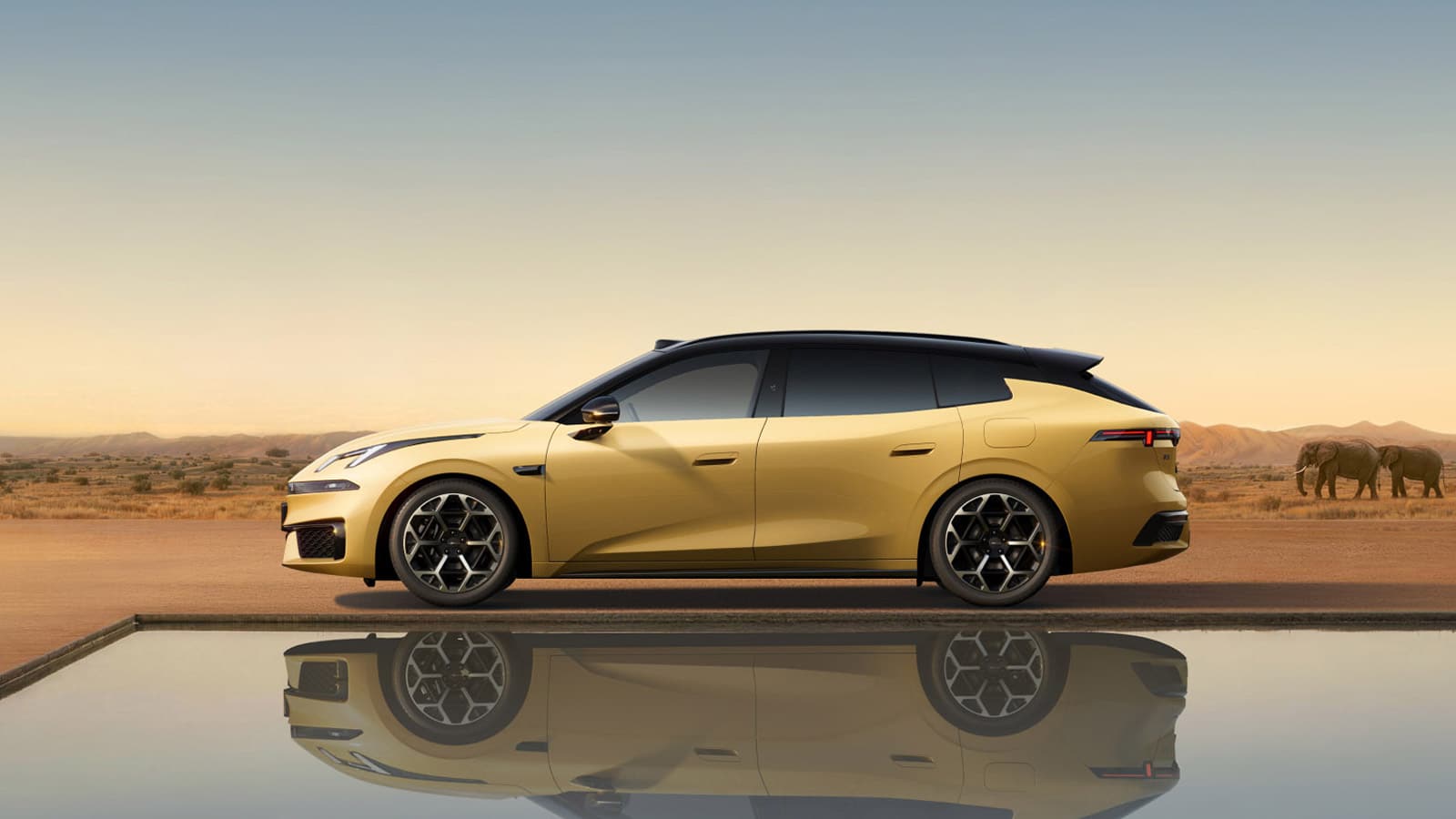


Here’s a head-turner: the Geely Emgrand i-HEV has achieved a thermal efficiency of 48.41%. That’s not just impressive for a family sedan; it’s a number engineers once thought was nearly unachievable for mass-produced vehicles. In a world where most gasoline engines barely scrape by at 30% to 40%, Geely’s latest offering is turning heads, even among the giants like Toyota and Honda.
What does this mean for everyday drivers? It means that this unassuming sedan is packing some serious tech under the hood, and it could save you a lot at the pump. This car just recorded a real-world fuel economy of 2.22 liters per 100 kilometers—or about 106 miles per gallon. Remember when that number felt like science fiction? Well, here we are, and the Emgrand i-HEV is making it a reality.
But before you rush to your nearest Geely dealer, let’s talk about the price. The Emgrand i-HEV starts at around 87,900 yuan, or roughly $13,010. That positions it squarely as an entry-level family sedan, not a high-end luxury model. Geely isn’t showcasing a one-off experiment here; they’re putting groundbreaking hybrid technology into a car that most buyers can actually afford.
Understanding Thermal Efficiency
So what exactly is thermal efficiency? At its core, it’s about how much of the fuel’s energy is converted into actual movement. A 48.41% efficiency means nearly half of the energy stored in the fuel is turning the wheels, while the rest gets lost as heat. For context, conventional gasoline engines usually hit around 25% to 35%, and even top-tier hybrids struggle to exceed 40%. Geely’s achievement isn’t just a number; it’s a statement that they’re pushing the boundaries of what’s possible in hybrid tech.
Higher thermal efficiency leads to lower fuel consumption, reduced emissions, and more bang for your buck at the gas station. This isn’t just about marketing hype; it reflects real-world benefits for drivers. Plus, with less wasted heat, the engine runs cooler, which could boost long-term reliability. This isn’t a marketing footnote; it’s a genuine engineering milestone.
| Metric | Value | Notes |
|---|---|---|
| Thermal Efficiency | 48.41% | Highest for mass-produced engines |
| Real-World Fuel Consumption | 2.22 L/100 km | Equivalent to 106 mpg |
| Starting Price | 87,900 yuan | ~$13,010 |
Geely’s i-HEV hybrid technology is built around a P1+P3 dual-motor system, which sounds complicated but is pretty clever. One motor (P1) is near the engine, helping with starting and smoothing power delivery. The other (P3) is more powerful and closer to the wheels, handling most of the propulsion. This setup is smart; it lets the engine and motors work together or independently based on the driving situation.
What does this mean for drivers? It offers three modes: pure electric for city driving, hybrid for when you need more power, and direct drive for highway cruising. With a peak output of about 230 kW, the electric motor is roughly 1.72 times more powerful than what you’d find in many Japanese hybrids. This muscle lets the Emgrand use electric power more effectively, reducing how often the gasoline engine kicks in.
Under testing, the electric system managed over 80% of typical driving scenarios, cutting engine operating time by about 27% compared to conventional hybrids. And yes, it can run purely on electric power at speeds up to 66 km/h—perfect for city commutes.
Now, let’s talk about the proof. Geely’s claims are backed up by independent verification. The 48.41% thermal efficiency isn’t just a number they tossed around; it was certified by the China Automotive Technology and Research Center. And the Guinness World Record for fuel economy? That was verified too, making it official and not just marketing fluff.
What sets this engine apart? It combines an efficient combustion engine with a robust electric system, allowing the Emgrand to minimize reliance on the gasoline engine. Geely’s powertrain has undergone 15,000 hours of testing, equivalent to about 4.8 million kilometers of real-world driving. It’s not just a lab experiment; it’s built to last.
Real-World vs. Rated Fuel Economy
Let’s break down the numbers. The Emgrand’s official rated fuel consumption is 3.83 liters per 100 kilometers in mixed driving. That’s what most buyers can expect in everyday conditions. But the impressive 2.22 L/100km? That’s a best-case scenario, achieved during a highway loop test under optimal conditions. While you might not hit that figure every day, the technology that makes it possible is present in every Emgrand i-HEV rolling off the production line.
How does Geely’s hybrid stack up against Toyota, the longstanding hybrid king? According to Geely, their model shows more than 12% lower fuel consumption than a Prius tested under similar conditions. But let’s not kid ourselves: Toyota has decades of proven reliability. Geely’s edge comes from a more powerful electric motor and a smart AI energy management system that’s designed to adapt on the fly.
So, what’s the takeaway? With the Emgrand i-HEV, you’re looking at a hybrid that’s not just about fancy numbers. It’s about real-world savings, efficiency, and accessibility. For just over $13,000, you’re getting a car that challenges the status quo in hybrid technology. Whether you’re an eco-conscious driver or just someone who wants to spend less on gas, this car deserves a spot on your radar.
Want to learn more about what Geely is doing? Check out our articles onGeely Monjaro i-HEVandGeely Galaxy M7to see how the brand is evolving.