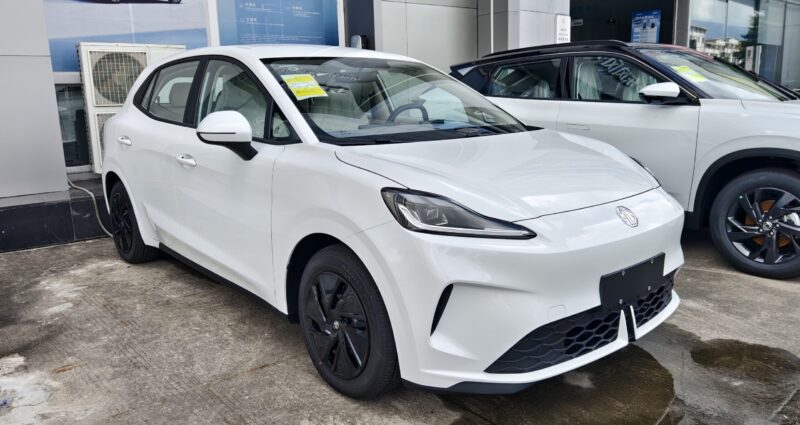

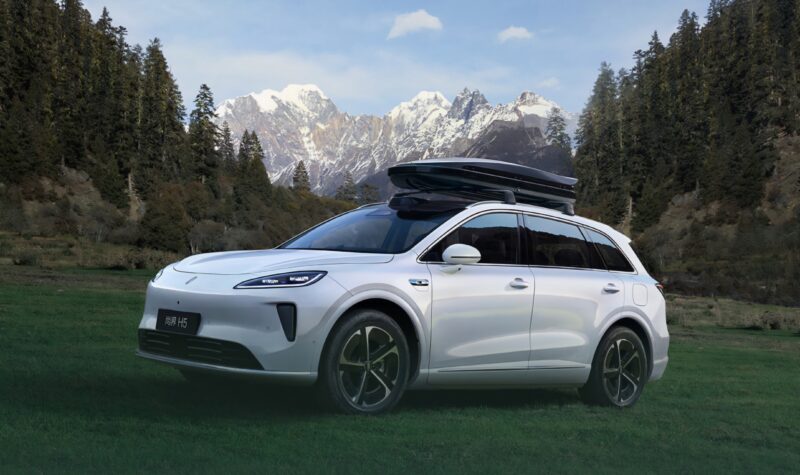
Get ready, because Huawei just dropped its most affordable electric vehicle yet, the Saic H5, hitting the market with a starting price of just $22,500. This isn’t just another EV, it’s a statement, packing Huawei’s HarmonyOS cockpit system and advanced Qiankun ADS.
Power and Range for Every Driver
The Saic H5 comes in both EREV (Extended Range Electric Vehicle) and BEV (Battery Electric Vehicle) flavors, giving you options no matter how you like to drive.
The EREV models kick off with the Pro EREV at 159,800 yuan ($22,500), offering a 32.6 kWh battery and a remarkable 1,360 km combined range. The Max EREV bumps the price slightly to 179,800 yuan ($25,300), but keeps that impressive range and battery size. With a 72 kW (97 hp) 1.5L engine acting as a range extender and a 150 kW (201 hp) electric motor, this setup gives you a pure electric range of 235 km, perfect for daily commutes, and that massive 1,360 km combined range for those longer adventures.
If you are all about pure electric driving, the BEV variants start strong with the Pro EV at 165,800 yuan ($23,300). It features a 64.6 kWh battery and a 535 km range. Need to go further? The Pro Long Range EV, priced at 179,800 yuan ($25,300), steps up with an 80 kWh battery, taking you a solid 655 km on a single charge. For top-tier BEV performance, the Max EV (185,800 yuan, or $26,100) provides 525 km of range with a 64.6 kWh battery, while the Max Long Range EV (199,800 yuan, or $28,100) delivers 640 km with its 80 kWh pack and a punchier 180 kW (241 hp) electric motor.
| Metric | Value | Unit | Notes |
|---|---|---|---|
| Pro EREV Price | 22,500 | USD | 159,800 yuan |
| Max EREV Price | 25,300 | USD | 179,800 yuan |
| Pro EV Price | 23,300 | USD | 165,800 yuan |
| Pro Long Range EV Price | 25,300 | USD | 179,800 yuan |
| Max EV Price | 26,100 | USD | 185,800 yuan |
| Max Long Range EV Price | 28,100 | USD | 199,800 yuan |
| EREV Battery Capacity | 32.6 | kWh | ForAll EREV trims |
| EREV Combined Range (CLTC) | 1,360 | km | |
| BEV Battery Capacity | 64.6 / 80 | kWh | Depending on trim |
| BEV Range (CLTC) | 525-655 | km | Depending on battery and motor |
| EREV Electric Motor Power | 150 (201 hp) | kW | |
| BEV Electric Motor Power | 150 / 180 (241 hp) | kW | Depending on trim |
A Joint Venture with a Vision
Saic, known as Shangjie in its home market, is a dynamic joint venture between SAIC and Huawei. It falls under the Harmony Intelligent Mobility Alliance (HIMA), marking Huawei’s fifth such collaboration, following high-profile brands like Aito, Stelato, Luxeed, and Maextro. The Saic H5 is built on SAIC’s Roewe ES39 platform, measuring in at 4780mm long, 1910mm wide, and 1664mm tall, with a generous 2840mm wheelbase that promises a spacious ride.
Practicality Meets Intelligent Design
The Saic H5 isn’t just about the drive, it’s about making life easier. It comes with a 124L front trunk, perfect for stashing charging cables or smaller bags, and a substantial 601L rear trunk. That rear cargo space is big enough to swallow a 28-inch suitcase, a 26-inch suitcase, two 20-inch suitcases, a couple of tote bags, and even a full camping gear set. Talk about versatile!
Cutting-Edge Autonomous Driving
High-end versions of the Saic H5 are packing some serious tech for autonomous driving. We’re talking about a 192-line roof-mounted lidar unit, three 4D millimeter-wave radars, 12 ultrasonic radars, and 11 high-definition cameras. All of this hardware powers Huawei’s Qiankun ADS 4.0, which they claim is “the only end-to-end navigation assistance system in its class.” This means it features advanced capabilities like forward, rear, and side collision avoidance, taking a big step towards safer and more relaxed driving. You can learn more about its progress here: Huawei Qiankun ADS targets 2027 for widespread L3 autonomous driving.
Inside the Cabin: Tech and Comfort
Step inside the Saic H5 and you will find a sophisticated cockpit centered around a crisp 15.6-inch control screen. The D-shaped steering wheel frames a rectangular instrument panel, giving the driver a clear view of essential information. For your devices, there is 50W mobile phone wireless fast charging, and ambient lighting sets a nice mood for any journey.
Comfort for passengers hasn’t been forgotten either. The panoramic sunroof spans a massive 2.3 square meters, flooding the cabin with light. Plus, the rear seats offer two adjustable backrest angles, 27 degrees and 32 degrees, ensuring everyone can find their sweet spot on longer trips. This focus on passenger comfort is a growing trend in the Chinese EV market, as seen in models like the Xpeng X9 EREV and the Geely Galaxy V900 MPV.
Huawei’s aggressive push into the automotive sector with partners like SAIC highlights the dynamic and competitive nature of China’s EV market. With its enticing price point, diverse powertrain options, and impressive technology, the Saic H5 looks set to make waves and offer a compelling choice for consumers looking for an affordable, yet feature-packed electric vehicle. The rapid pace of innovation by Chinese automakers signals an exciting future for electric mobility globally, with companies like Huawei playing an increasingly central role in shaping that landscape. You can expect other exciting Huawei collaborations like the Luxeed V9 MPV to debut in Spring 2026.