
BYD is hiring more than 9,000 people at its Shenshan base. That’s not a small expansion. It’s the sort of number you throw at a plant when demand is running ahead of your current capacity and you want more cars out the door, faster.
Shenshan hiring drive for BYD production
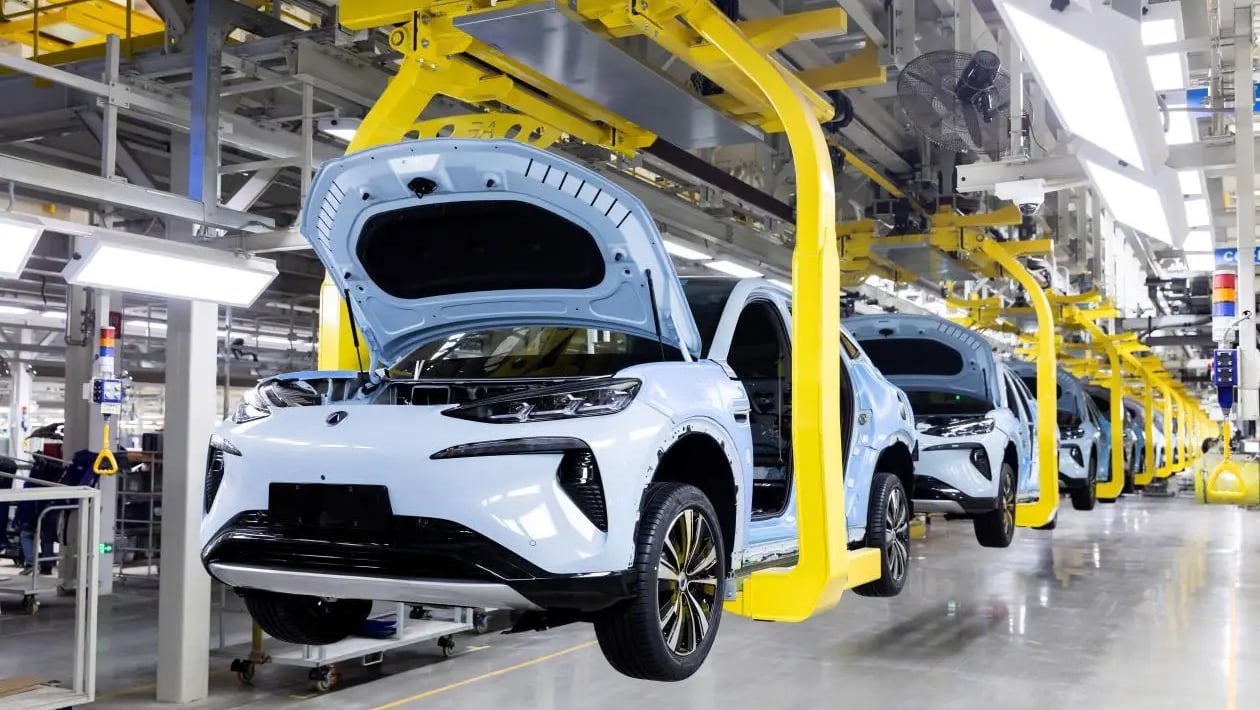
The jobs are spread across BYD’s Ebu components plant and the Xiaomo vehicle manufacturing facility in the Shenshan, or Shenzhen-Shantou, Special Cooperation Zone, according to Jiemian News. The openings cover operators, technical staff, quality inspectors, and management roles. In plain terms, this isn’t one department bulking up. It’s the whole production chain.
That matters because BYD’s export push has gone from a nice add-on to a real business pillar. Until April this year, its sales had fallen year-on-year for eight straight months. Then overseas demand started doing the heavy lifting. The decline stopped in May, and June sales rose 5.2% year-on-year. That’s a sharp turn for a company that has spent much of the last two years being treated as the face of China’s EV export surge.
| Metric | Value | Notes |
|---|---|---|
| Jobs open at Shenshan base | Over 9,000 | Across components and vehicle manufacturing |
| Sales decline streak | 8 months | Year-on-year falls until April |
| June sales growth | 5.2% | Compared with the previous year |
| 2025 overseas sales | 1.05 million units | Passenger vehicles and pickup trucks |
| 2025 overseas sales growth | 145% | Year-on-year increase |
| H1 2026 overseas sales | About 789,400 units | Up 70% year-on-year |
| 2026 overseas sales target | 1.5 million units | Full-year goal |
| 2024 Shenshan output | Over 300,000 vehicles | From the industrial park last year |
| Projected annual output value | 220 billion yuan | About 32.4 billion USD |
| China vehicle exports | Over 1 million in June | More than 5 million in H1 2026, up 65.3% |
Why the Shenshan factory matters
The Shenshan BYD Automotive Industrial Park is one of those sites that explains a lot about how Chinese carmakers work when they’re moving fast. It produces mid to high-end models like the Fang Cheng Bao Tai 7, along with export-focused cars such as the Song Plus and Song Pro. Last year, the facility built more than 300,000 vehicles. Once it’s fully ramped up, the park is projected to generate 220 billion yuan, or 32.4 billion USD, in annual output value.
That’s a serious number, but the bigger point is simpler. BYD isn’t hiring like a company defending a market share slide. It’s hiring like one that expects a lot more volume, and soon. When a plant needs this many workers, it usually means the bottleneck isn’t one robot or one line. It’s the full system, from parts supply to final assembly.
What this means for Chinese EV buyers
For buyers, this kind of scale usually shows up in three places. First, more supply. Second, faster localisation for export markets. Third, better pricing pressure on rivals, especially in regions where BYD is fighting Tesla, local OEMs, and other Chinese brands at the same time.
It also says something about BYD’s strategy. The company has leaned hard on its own battery and supply chain base for years, which gives it more control over cost and timing than brands that buy more from outside suppliers. That advantage matters even more abroad, where shipping, homologation, and local assembly can complicate everything.
There’s a broader industry signal here too. According to the China Association of Automobile Manufacturers, China exported more than 1 million vehicles in June alone, and more than 5 million in the first half of 2026, up 65.3% year-on-year. The list of big exporters is familiar now: Chery, BYD, SAIC, Geely, and Changan. BYD’s hiring spree fits that picture. It’s a company preparing for more volume in more markets, not one waiting to see if demand shows up.
Should buyers wait? If you’re looking at a BYD export model, the answer depends on where you live. In markets where the dealer network is still thin, service coverage and resale values can be the weak spots. If your local market already has parts support and a stable importer, the fast build-out at Shenshan is a good sign. It means BYD is planning for more cars, not fewer.