
China has started issuing Robotaxi permits again, and that tells you the pause was a reset, not a dead end.
For this part of the market, permits matter more than press releases. They decide who can test, where they can test, and how close a fleet gets to paid service.
Robotaxi permits start moving again
After several months of suspended approvals, autonomous driving firms can move ahead again with testing and early commercial steps.
The freeze followed a rough moment for the sector. In late March, Baidu’s Apollo Go service suffered a large-scale shutdown in Wuhan, Hubei province, leaving multiple passengers stuck inside vehicles and causing traffic trouble nearby. Regulators stopped new Robotaxi permits and began a nationwide safety review.
| Metric | Value | Notes |
|---|---|---|
| Apollo Go shutdown in Wuhan | Late March | Trigger for the permit pause |
| Nationwide safety review | End of June | People familiar with the matter said it was mostly done by then |
| Momenta Shenzhen permit | July 21 | Intelligent connected vehicle road-testing permit |
| Apollo Go vehicles seen back on the road | Early July | Some vehicles were operating with safety drivers onboard |
| Permit restart reported | July 23 | Several cities had begun resuming approvals |
Momenta gets a Shenzhen permit
One of the first new permits went to Momenta, which can now run Robotaxi road testing in Shenzhen. The company said on July 21 that it had obtained an intelligent connected vehicle road-testing permit there.
Shenzhen has become another city in Momenta’s China rollout, alongside Shanghai, Suzhou and Wuxi. The city has also revised its rules for intelligent connected vehicles, which gives Robotaxi operators a cleaner path to testing and later deployment.
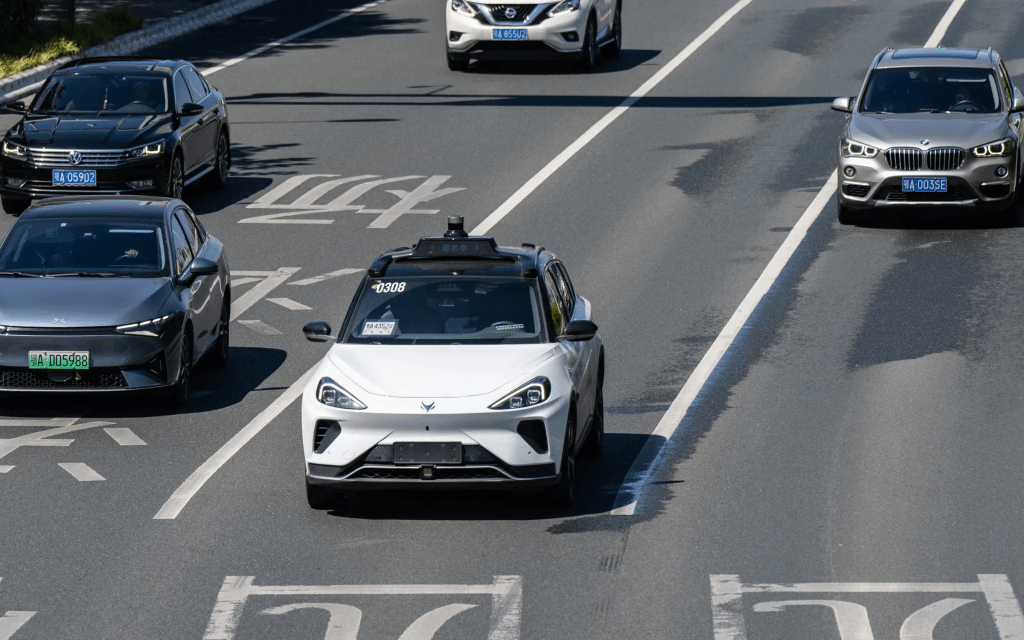
Baidu’s Apollo Go seems to be moving again too. Since early July, local residents have posted photos and videos showing Apollo Go vehicles back on the road in Wuhan, with some of them running with safety drivers onboard. Neither Baidu nor regulators have explained the March shutdown, and people in the industry still talk about a built-in safety self-check as one possible trigger.
What the Robotaxi restart means for China
Beijing is also drafting new rules for advanced autonomous driving. The plan is to spell out what’s expected from the vehicles, the onboard AI system and day-to-day safety management.
This is still a tough business. Robotaxi is one of the most competitive corners of autonomy, and Chinese players like Baidu, Momenta, Pony.ai and WeRide are all chasing the same prize as Waymo. WeRide’s Spain robotaxi move shows how far some of these companies want to go outside China, while XPeng’s Guangzhou robotaxi break-even plan makes the other point: density matters more than the hype.
For buyers, this won’t change the EV shortlist tomorrow. For anyone watching Chinese autonomy, it matters a lot more. The permit tap is open again, and the next round will be decided city by city. If you want a look at the right-hand-drive angle, WeRide’s Hong Kong robotaxi plans show where the industry may head next.