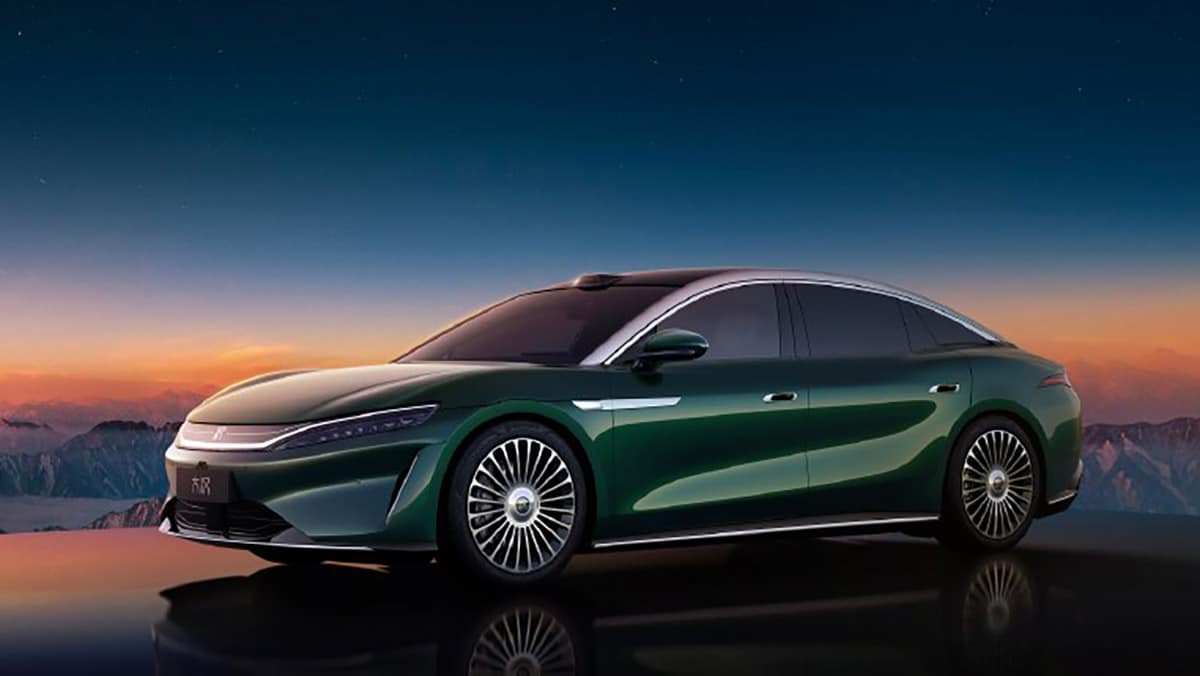

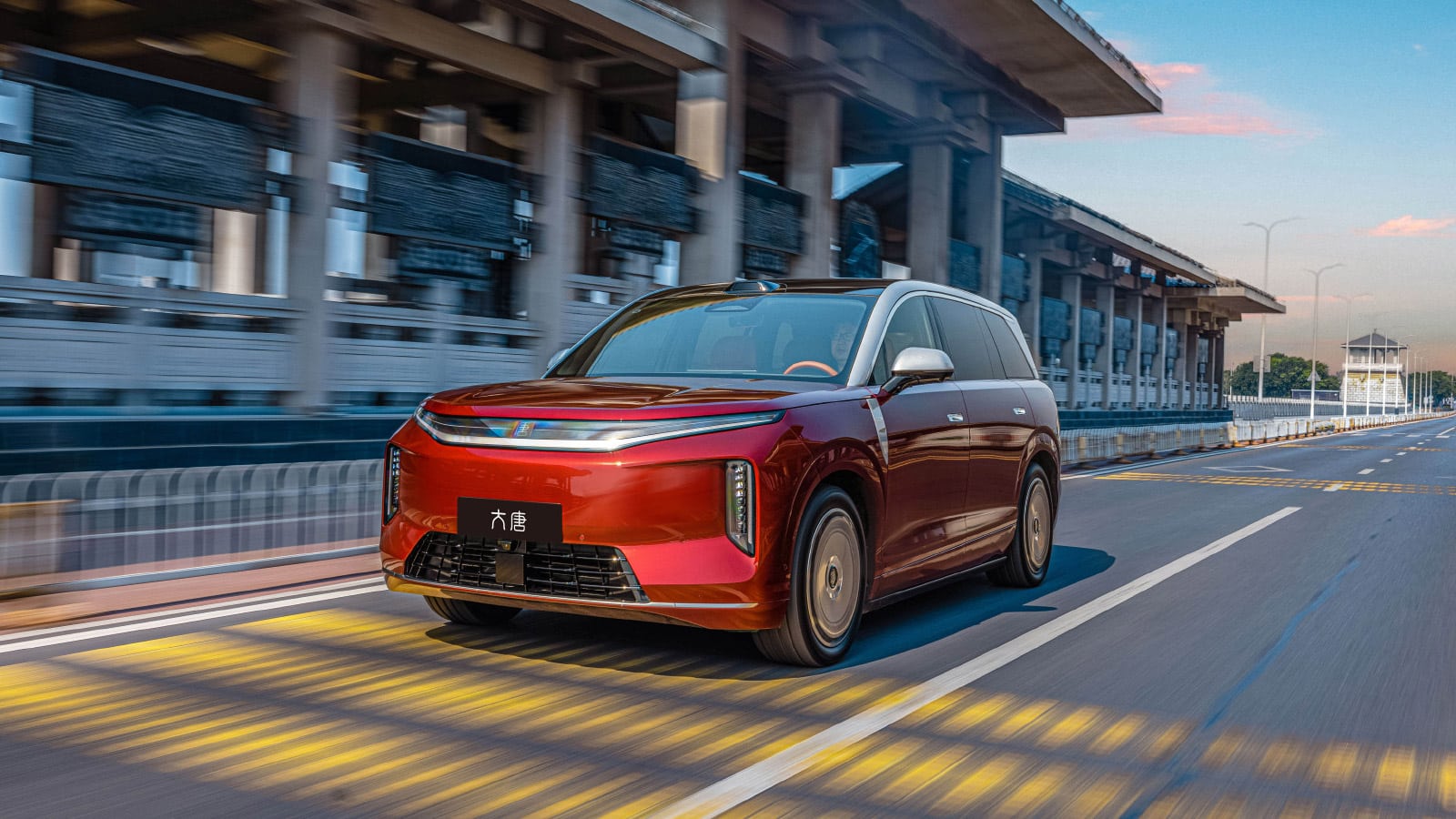
BYD Da Tang EV deliveries hit 10,000 fast
Ten thousand deliveries in roughly a month is a strong start for any full-size electric SUV. For BYD, it matters even more because the Da Tang EV is trying to push the Dynasty family into a price band where Chinese buyers expect more than a big battery and a familiar badge.
BYD handed over the 10,000th Da Tang EV on Thursday in Koktokay, Xinjiang, at a large ceremony. The owner was Dong Lu, the well-known Chinese football commentator and founder of the grassroots youth program Chinese Football Boy. BYD knows how to stage these moments. It also knows this SUV needs to look like a proper flagship, not just another Tang with a bigger body.
The Da Tang EV launched in China on June 17 with four versions priced between 239,900 yuan, about $35,330, and 309,900 yuan. It is the first D-class flagship SUV in BYD’s Dynasty lineup, and it arrived with plenty of noise after opening for pre-sales on April 24 at the 2026 Beijing Auto Show. BYD said it had more than 150,000 pre-orders by launch day.
That pre-order figure is the headline grabber, but deliveries are the number to watch. Chinese EV brands have become very good at collecting deposits, especially around auto shows. Turning those reservations into registered vehicles is harder, particularly in the 300,000-yuan bracket where buyers cross-shop aggressively and expect luxury-brand polish.
BYD Da Tang EV range, charging and size
The battery story is where BYD has a real advantage. The Da Tang EV uses the company’s second-generation Blade Battery and claims up to 950 kilometers of pure electric range. BYD says that makes it the longest-range full-size SUV in the world. Treat the 950 km figure as a lab number, because Chinese CLTC ratings are usually generous, but even a large haircut would still leave this thing with serious long-trip ability.
Charging is the bigger flex. The Da Tang EV sits on a 1,000-volt electrical system and supports BYD flash charging, with a claimed 10% to 97% charge in nine minutes. In plain English, that means the car can accept very high power for a short window. The catch is familiar: you need the right charger, the right battery temperature, and a station that’s actually delivering the promised output. On a slower public charger, it will behave like any other big EV.
| Metric | Value | Notes |
|---|---|---|
| China launch date | June 17 | Pre-sales opened April 24 at the 2026 Beijing Auto Show |
| Price range | 239,900 to 309,900 yuan | About $35,330 at the lower end |
| Pre-orders at launch | More than 150,000 | BYD’s stated figure |
| Claimed EV range | Up to 950 km | Second-generation Blade Battery |
| Fast charging claim | 10% to 97% in 9 minutes | Requires suitable high-power charging hardware |
| Electrical architecture | 1,000 volts | Built for very high charge rates |
| Size | 5,263 x 1,999 x 1,790 mm | Length, width and height |
| Wheelbase | 3,130 mm | Supports a 2+2+3 seven-seat layout |
Size-wise, this is a big bus: 5,263 mm long, 1,999 mm wide and 1,790 mm tall, with a 3,130 mm wheelbase. The cabin uses a 2+2+3 seven-seat layout, so BYD is going after families who want captain’s chairs in the second row without giving up a usable third row.
Every Da Tang EV gets roof-mounted LiDAR for BYD’s God’s Eye 5.0 driver-assistance system, covering assisted driving on city roads and highways. That’s now table stakes in China’s upper EV market. The buyer question is less about sensor count and more about how confidently the software handles messy lane markings, scooters, roadworks and the daily chaos of Chinese urban traffic.
Why the 300,000-yuan SUV segment matters for BYD
The Da Tang EV fills a hole in BYD’s lineup around 300,000 yuan. Below that, BYD already owns huge chunks of the market. Above that, the fight gets nastier. Leapmotor’s D19 and Onvo’s L90, from Nio, are both aimed at buyers who want space, tech and value without paying German luxury money. Nio also has more experience selling big family EVs, as seen in the Nio ES8 delivery milestone.
BYD’s counterpunch is vertical integration. It builds its own batteries, controls more of its supply chain than most rivals, and can price hard when it wants to. The earlier BYD Great Tang launch details already made clear what the company wanted to sell: range, charging speed and flagship presence at a price that makes premium rivals uncomfortable.
This is also why the BYD Da Tang EV premium SUV pitch is worth watching. If BYD can make a 300,000-yuan SUV feel genuinely upmarket, it gets a higher-margin family car without relying only on Denza, Fang Cheng Bao or Yangwang for brand lift.
BYD sales pressure has not gone away
The timing is good, but BYD isn’t cruising. The company sold 403,472 new energy vehicles wholesale in June, up 5.46% year-on-year, marking a second straight month of year-on-year growth. Domestic sales were weaker: 228,123 units in June, down 22.02% year-on-year. For the first half of the year, BYD’s global sales reached 1,808,511 units, down 15.72% year-on-year.
That mixed picture explains why the Da Tang EV matters. BYD needs more expensive models that can hold price and attract buyers who might otherwise wander into a Nio, Li Auto, Onvo or Leapmotor showroom. It can’t live forever on volume alone.
Should you buy one? In China, the Da Tang EV looks tempting if you need seven seats, home charging, frequent highway range and access to fast chargers that can actually use its 1,000-volt hardware. I’d wait for owner data before treating the nine-minute charging claim as normal daily reality. Outside China, the answer is colder: wait unless BYD sells it officially in your market with proper service, parts support and warranty backing. A grey-import flagship SUV with advanced driver-assistance sensors and a huge battery can become expensive very quickly when something goes wrong.
The 10,000-delivery number proves demand is real. The next test is tougher: keeping buyers happy after the launch party ends.
($1 = 6.7906 yuan)