
Quick Specs & Metrics
China’s automotive industry is accelerating toward a future dominated by Electronic Mechanical Braking (EMB) systems, with mass production targeted for 2026. This fully electronic brake-by-wire technology eliminates traditional hydraulic circuits, relying instead on actuators and control systems. Let’s dive into what this means for EVs, drivers, and the global market.
What Makes EMB a Game-Changer?
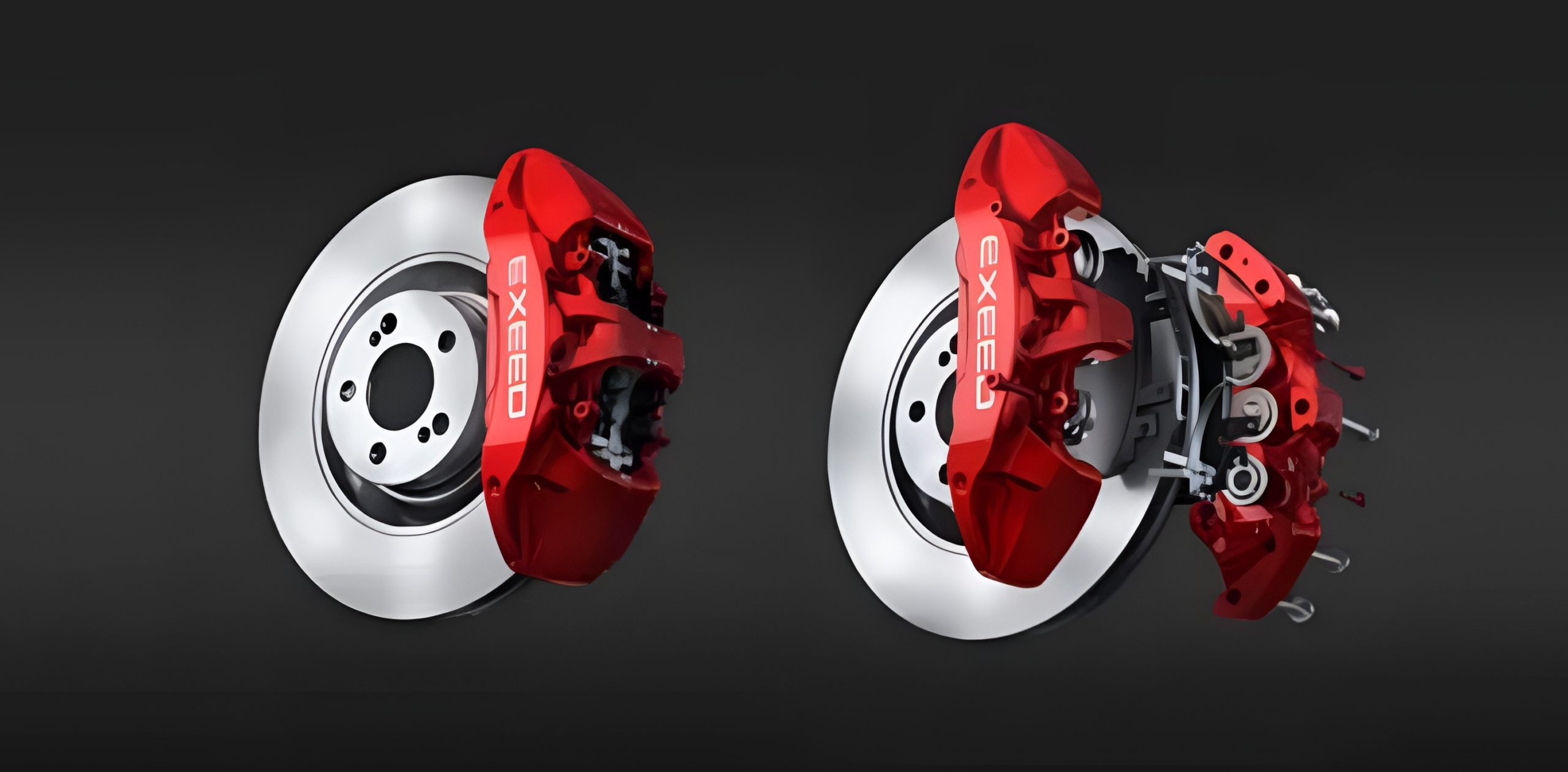
Imagine a car where braking is smoother, faster, and entirely controlled by software. That’s EMB in a nutshell. Unlike conventional hydraulic brakes, EMB systems use electric actuators to translate driver input into stopping power. This not only reduces complexity but also enhances precision, making it a perfect match for electric vehicles (EVs) and their software-driven architectures.
China’s leadership in this space is no accident. With the new GB21670‑2025 standard, effective January 2026, the country has set clear guidelines for Electrical Transmission Braking Systems (ETBS). These rules ensure EMB systems meet stringent safety, redundancy, and reliability benchmarks, paving the way for widespread adoption.
Who’s Leading the Charge?
Chinese suppliers are racing to bring EMB to market. Companies like Orient‑Motion Technology have already partnered with major automakers like Dongfeng Liuzhou Motor and Geely’s Farizon to integrate EMB into multiple platforms. Jiongyi Electronic Technology has completed durability testing and ISO26262 certification, while Motion Technology and Watson Rally are in the final stages of production validation.
Chery’s Exeed EX7 is poised to be the first mass-produced vehicle with EMB, but it’s far from the only one. The Chery ET Series EVs have passed EMB testing under the new standard, hinting at more EMB-equipped models on the horizon. Even subsidiaries like Kaiyi Automobile and U Power are collaborating with Beijing West Industries to develop EMB systems for future vehicles.
Global Players Join the Race
While China is at the forefront, international suppliers aren’t far behind. Beijing West Industries, for instance, has announced dual‑motor EMB systems for integration into Kaiyi and U Power platforms by 2026. These systems promise four‑wheel independent control, eliminating hydraulics entirely. Meanwhile, global firms are exploring hybrid and fully electronic solutions to enhance autonomous driving and software-defined vehicle capabilities.
Challenges Ahead
Despite the excitement, EMB isn’t without its hurdles. Actuator performance, system redundancy, and cost control remain significant challenges. These factors will determine how quickly EMB moves from prototypes to everyday vehicles. But with China’s rapid innovation cycle and competitive pricing strategies, the transition could happen faster than expected.
What Does This Mean for Drivers?
For everyday drivers, EMB promises a smoother, more responsive braking experience. It’s also lighter and more compact than traditional systems, freeing up space for other components. Plus, its integration with advanced driver-assistance systems (ADAS) could enhance safety features like automatic emergency braking.
From a cost perspective, EMB systems may initially come at a premium, but economies of scale and China’s aggressive pricing strategies could make them affordable sooner than anticipated. For EV owners, the benefits of reduced maintenance and improved efficiency could offset the upfront costs.
The Bigger Picture
China’s push into EMB is part of a broader shift toward electrified and software-integrated vehicles. With companies like BYD and XPeng leading the charge, the country is setting new benchmarks for EV innovation. This momentum isn’t just reshaping China’s automotive landscape—it’s influencing global trends.
As EMB systems roll out, they’ll likely become a standard feature in high-end EVs, much like regenerative braking is today. For drivers, this means safer, more efficient vehicles. For automakers, it’s a chance to redefine what’s possible in automotive design.
So, buckle up. The future of braking is electric, and China is driving it forward.