
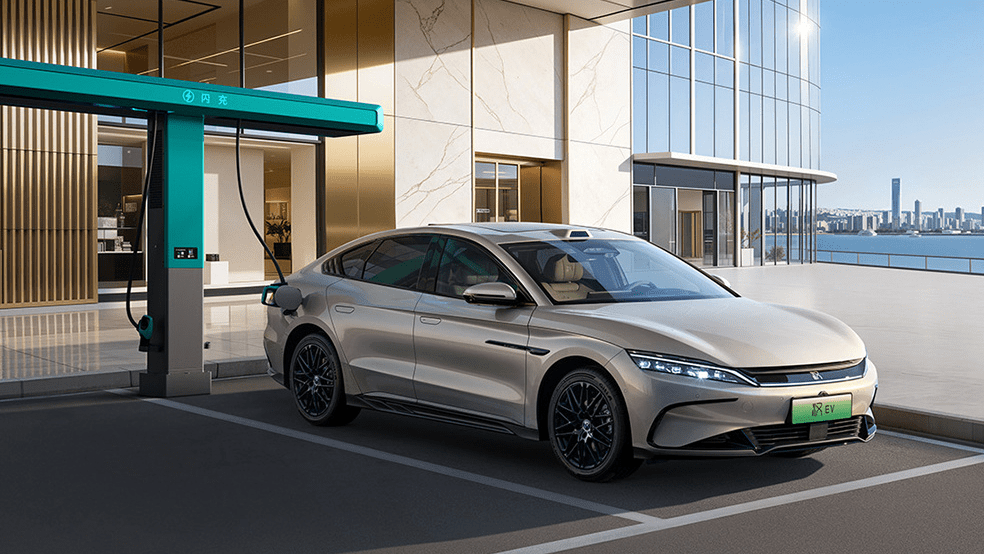
An automotive blogger recently took delivery of a Fangchengbao Leopard 3 with BYD’s 2nd-gen Blade Battery and conducted a real-world charging test to monitor battery temperatures during Megawatt Flash Charge.
The recorded peak battery temperature reached 76.42°C during a fast-charging session, surpassing the national safety standard of ≤ 65°C for LFP cells.
Addressing the controversy, Yang Yueqing, former engineering project director at HiPhi, shared his insights. He noted that in typical scenarios, cell temperatures stay within the 20–30°C range. Once they cross 60°C, most vehicles trigger overheating alerts to signal a potential abnormality.
He further explained the role of the SEI (Solid Electrolyte Interphase) film. This layer insulates the electrolyte from the anode while allowing lithium ions to shuttle back and forth. However, the SEI film begins to decompose at temperatures above 70°C. Constant exposure to such heat compromises battery lifespan and creates underlying safety risks.
Battery temperature and longevity are two ends of a seesaw; as charging rates climb, heat is inevitable. This raises a critical question: Is BYD sacrificing battery health for its Megawatt Flash Charge performance?
Looking back at the launch of the second-generation Blade Battery, Wang Chuanfu took a clear stance. The warranty capacity standard was raised by 2.5% over the first generation, coupled with a lifetime warranty on cells. The message was intended to reassure the market that fast charging wouldn’t lead to significant degradation.
The event also featured an extreme safety demo where four cells were intentionally short-circuited. After sitting for 24 hours without fire or explosion, the battery pack’s safety foundation was considered proven.
Beyond BYD, industry leaders like CATL and Sunwoda are also doubling down on ultra-fast charging, with C-rates hitting 10C or even 15C—speeds that arguably outpace BYD.
The difference lies in execution. For suppliers like CATL, these high-rate batteries often serve as technical benchmarks; the final decision on implementation rests with the automakers. In contrast, BYD’s second-generation Blade Battery saw immediate large-scale deployment across multiple new models almost immediately after launch.
The 76.4°C test result inevitably creates PR friction for BYD. Li Yunfei, BYD’s PR director, responded on Weibo with a tongue-in-cheek suggestion for users to experience Megawatt Flash Charge firsthand in the scorching summer heat of Turpan, Xinjiang.
While the validity of the blogger’s test methodology remains debatable, the industry tension between ultra-fast charging speeds and battery longevity is far from settled.
Subscribe to get the latest posts sent to your email.