
Independent testing of BYD’s new megawatt flash-charging system has sparked debate in China after a livestreamed charging session showed battery surface temperatures exceeding 76°C during ultra-high-rate charging.
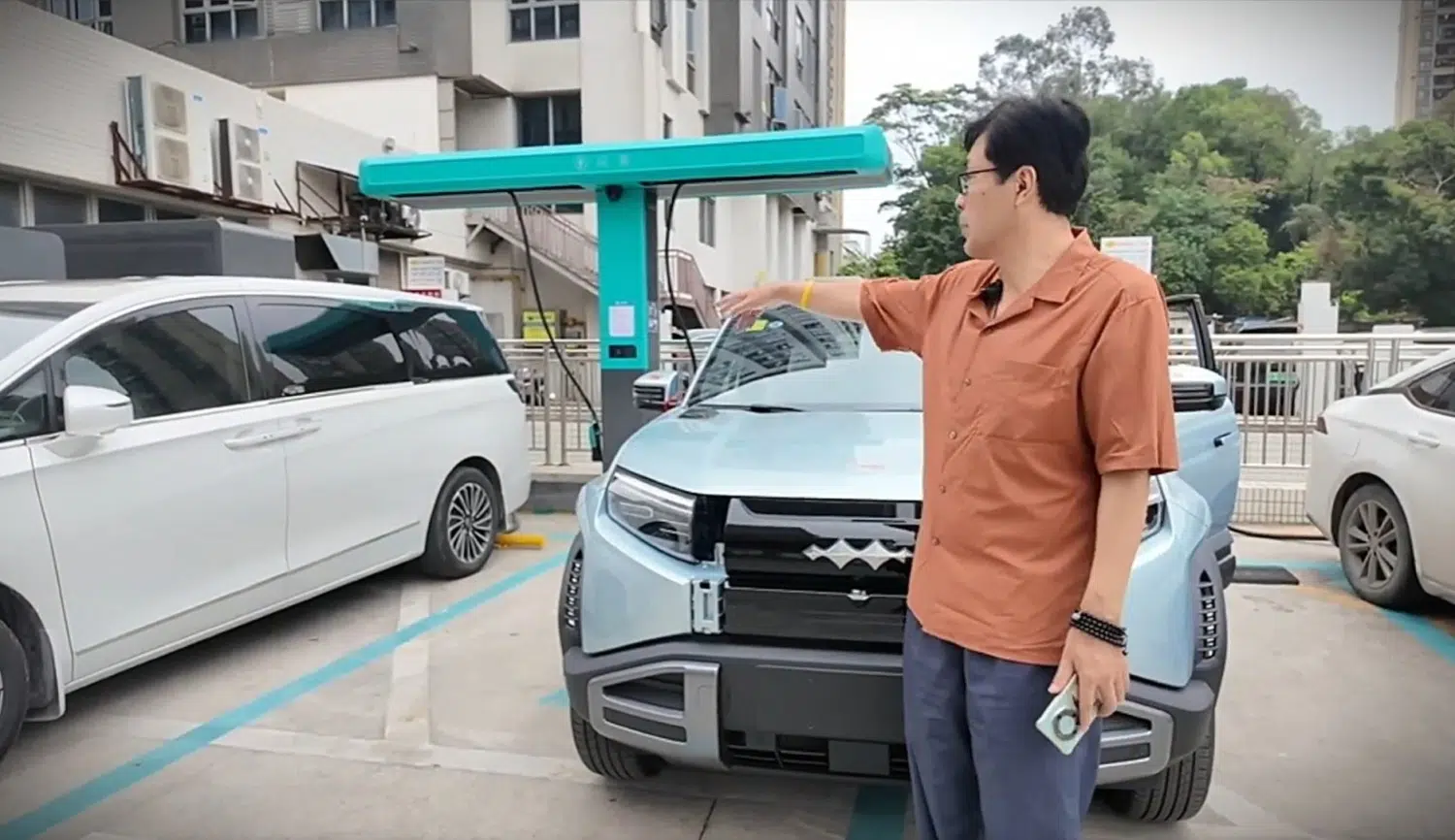
Chinese automotive blogger James Yu, known online as “Caishendao,” conducted a livestream test charging a FCB Tai 3 from 8% to 97% state of charge. According to published data, an externally mounted temperature sensor installed near the bottom centre of the battery pack, away from the liquid-cooling pipes, recorded a peak reading of 76.42°C. Vehicle diagnostic data reportedly showed a peak pole temperature of around 71°C.
Following the online debate, Caishendao later issued additional clarifications stating the tested vehicle had been legally purchased from an official BYD 4S dealership and remained unregistered at the time of testing.
The blogger also rejected online claims that the battery pack had been drilled or structurally modified, stating that five temperature sensors had been simply attached to the surface of the battery cells. According to the clarification, the liquid-cooling system remained operational throughout the test and charging would not proceed if the cooling system failed.
The test used two measurement methods: vehicle-reported battery data via the car’s maintenance diagnostic interface and independently installed temperature sensors at multiple locations on the battery pack.
According to the published measurements, the difference between the hottest and coolest sensor locations reached 6.5°C during charging. The report also noted that temperature readings from the external sensors began diverging more noticeably from the vehicle-reported temperatures after the battery exceeded roughly 70% SOC.
Caishendao later clarified that no final conclusion had yet been reached regarding battery degradation or safety impacts, adding that additional cell-level testing is still planned. The blogger also requested that outside commentary not selectively quote the livestream or attribute interpretations directly to the testing team.
The discussion quickly expanded across Chinese social media platforms, with some commentators questioning whether such temperatures could accelerate battery degradation or increase long-term safety risks during repeated ultra-fast charging cycles.
The original commentary referenced China’s GB/T 44500-2024 standard appendix, which includes a recommended participation threshold of 65°C for lithium iron phosphate battery temperatures, although the standard has not yet entered mandatory implementation.
The article also cited several academic studies discussing thermal runaway mechanisms and SEI layer decomposition in lithium-ion batteries. According to the referenced papers, decomposition and reconstruction of the SEI layer are generally discussed within approximately the 80°C to 120°C range, depending on battery chemistry and test conditions.
The commentary emphasised that the measured temperature reflected the battery surface rather than the cells’ internal core temperature. No independently verified internal cell temperature data from the tested vehicle was published.
BYD has not publicly announced any change to its charging specifications following the online debate.
The discussion comes shortly after BYD expanded promotion of its flash-charging infrastructure in China. Earlier this month, the company demonstrated its megawatt charging technology at a remote desert test site and said its domestic charging network had exceeded 5,715 stations. The charging system is part of BYD’s second-generation Blade Battery rollout.
According to China EV DataTracker for April 2026, BYD remained the world’s largest EV group by sales with 314,100 vehicles delivered globally during the month. That figure was up 6.2% month-on-month but down 15.7% year-on-year. SAIC ranked second with 142,487 EV sales, followed by Geely Auto with 135,591 units.
Writer
Adrian, an Electrical and Computer Engineering graduate with a love for cars, brings expertise and enthusiasm to every test at CarNewsChina. He also enjoys audio, photography, and staying active.