
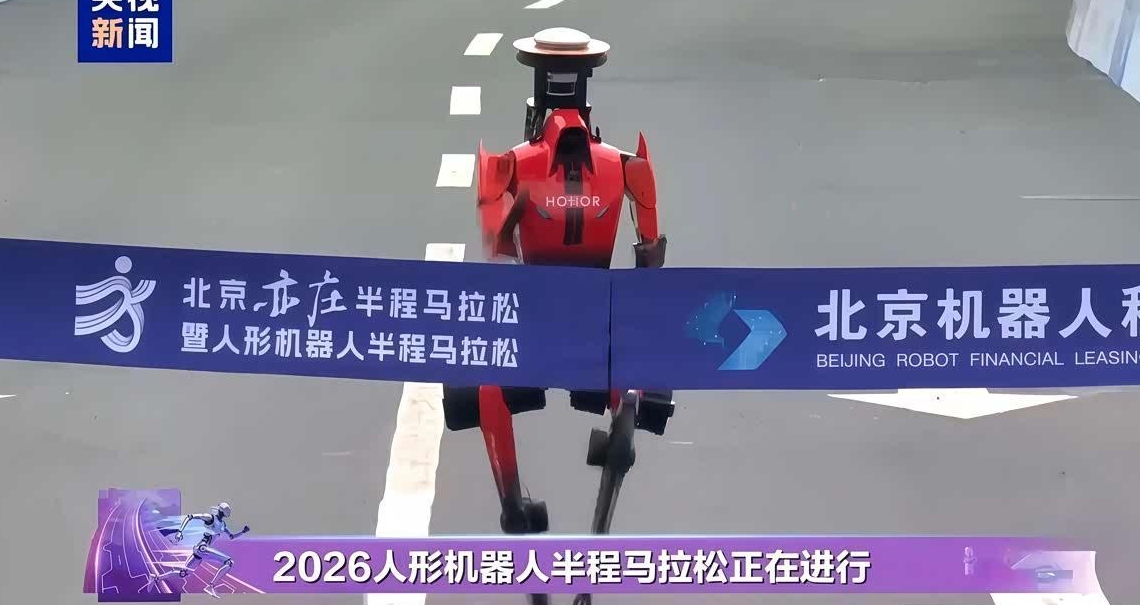
At the 2026 Beijing Yizhuang Humanoid Robot Half Marathon, the Honor-developed humanoid robot “Lightning” not only secured the championship but also shattered the human world record with a net time of 50 minutes and 26 seconds.
The success of “Lightning” is largely attributed to the rotating sensor atop its head—the JT128 series LiDAR from Hesai Technology. This same sensor was also featured on the Unitree robots that performed during the Spring Festival Gala. While Hesai is widely recognized for its automotive LiDAR solutions, these recent achievements highlight the company’s expanding footprint in the robotics sector.
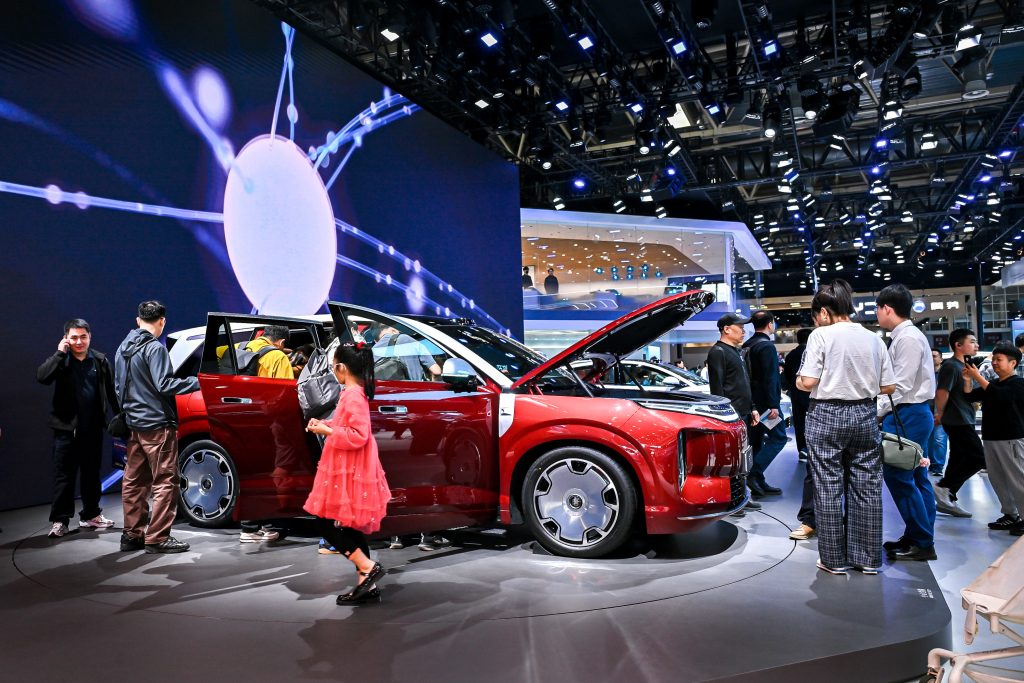
Currently, the automotive industry remains the primary volume driver for Hesai. To date, the company has secured mass production contracts with 40 global automotive brands across more than 160 models, covering all of China’s top ten best-selling brands. At the 2026 Beijing Auto Show, 56 models from 24 different brands were equipped with Hesai products, leading the industry in both brand and product count.
Despite its dominant position in the automotive market, Hesai views LiDAR as having significant untapped potential in vehicles. With flagship models like the Stelato S800 and Li Auto L9 Livis adopting multi-LiDAR configurations, the market for blind-spot detection LiDAR is poised for a resurgence. Furthermore, with LiDAR penetration in the Chinese market at only about 8% and a mere 3% globally, there is substantial room for growth.
In mid-April, Hesai unveiled the world’s first 6D full-color LiDAR ultra-sensitive chip, the “Picasso SPAD-SoC.” This chip integrates RGB (color) and XYZ (position) data, providing “semantic” depth to point clouds. The upcoming Hesai ETX series, scheduled for mass production in the second half of 2026, will be the first to feature this chip, supporting up to 4320-line 4K ultra-high-definition perception.
Hesai product lead Yang Jin emphasizes that while line count is important, it is not the sole performance metric; ranging capability is equally critical. He suggests that 6D full-color LiDAR could eventually replace certain automotive cameras, as it solves synchronization issues by fusing color and depth information at the chip level. This not only enhances autonomous driving perception but could also provide “emotional value,” such as scanning landscapes for 3D printing or displaying 3D road conditions via HUDs.
Beyond automotive, robotics represents a massive growth opportunity. Morgan Stanley projects that the robotics market’s demand for LiDAR could eventually be six times that of the automotive sector. Hesai has already established partnerships with nearly all top-tier players in the robotics industry. For instance, in 2026, nearly all robots and robot dogs shipped by Unitree Robotics utilized Hesai LiDAR.
Hesai expects its shipments in the broader robotics market to reach 1 million units in 2026, with total company shipments projected to exceed 3 million units. As AI continues to integrate into physical environments, LiDAR is evolving from a niche automotive safety component into a foundational technology for the era of physical AI.
Your daily pit stop for Chinese EV news, tech, and trends.