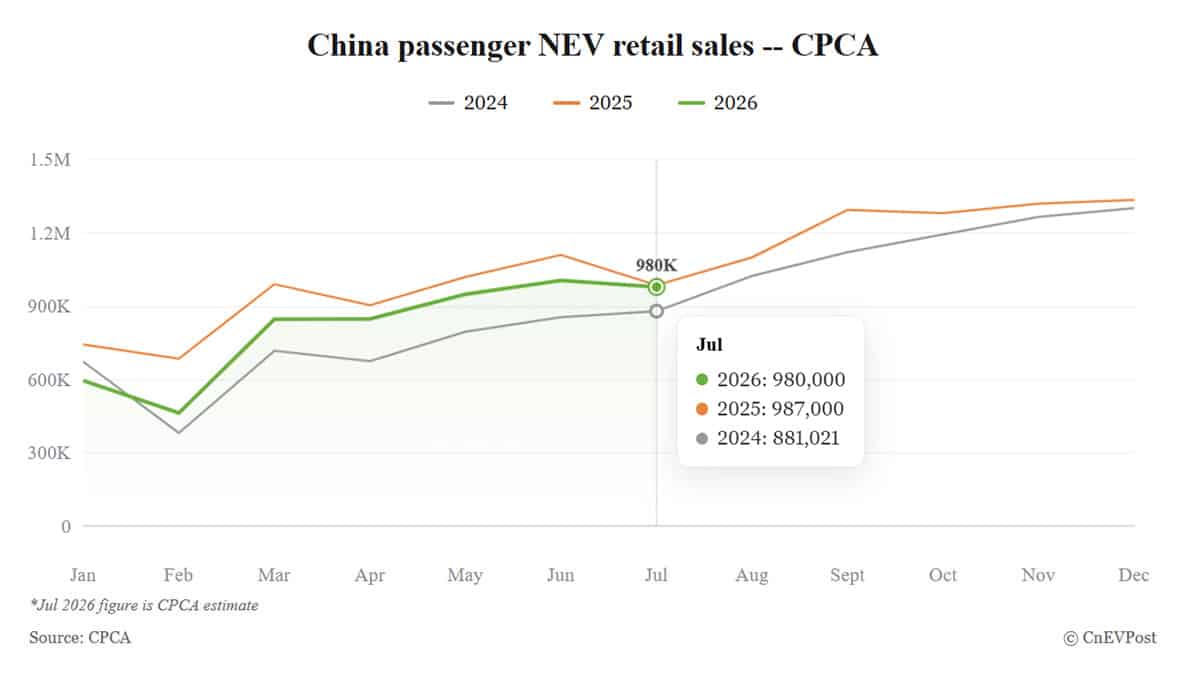

Did you know that the average price of new energy vehicles (NEVs) in China dropped to around RMB 221,000 ($32,550) in June 2026? That’s a cut of about RMB 12,000 ($1,768), or 5.6% off the sticker price. But hold on—this isn’t the steep discount frenzy we’ve come to expect.
While the average price cut in the broader passenger vehicle market was a hefty 12.6% for the first half of the year, NEVs are taking a more cautious approach. Only seven models saw price reductions in June, which is quite a shift from last year when we had a wider variety of discounts.
So, what models are we talking about? The list includes four battery electric vehicles (BEVs), one plug-in hybrid (PHEV), one extended-range EV (EREV), and surprisingly, one internal combustion engine (ICE) model. This narrowing down of discounts tells us that even though prices are falling, the competition isn’t as fierce as before.
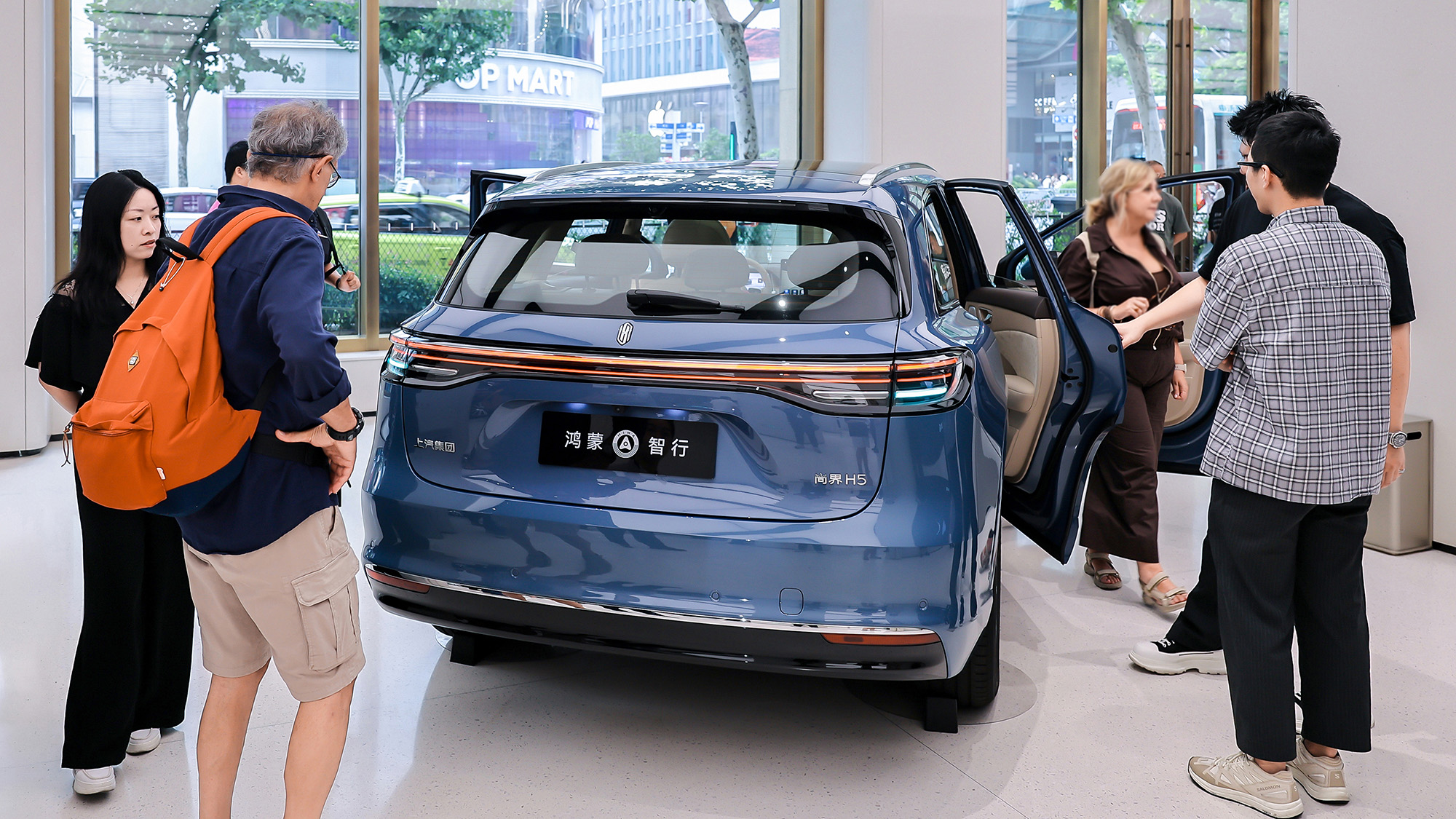
From January to June, 83 models had price cuts—12 less than last year. It seems the frequency of these adjustments is on the decline. BEVs are still at the forefront of these price changes, with notable reductions seen in the Leapmotor C11, Leapmotor C16, AITO M6, and ONVO L60. The AITO M6, in particular, slashed its price by 18%, dropping from RMB 279,800 ($41,215) to RMB 229,800 ($33,850). That’s a considerable shift for a model that had held its price steady for nearly three years.
| Metric | Value | Notes |
|---|---|---|
| Average NEV Price (June 2026) | RMB 221,000 ($32,550) | 5.6% discount |
| Total Models with Price Cuts (2026) | 83 | 12 fewer than last year |
| Largest Price Cut (AITO M6) | 18% | From RMB 279,800 to RMB 229,800 |
| Promotional Incentives (June) | 9.1% | Stable year-on-year |
| Average Discount for ICE Vehicles | 0.3% | Effectively flat |
Comparatively, the Leapmotor C11, C16, and ONVO L60 had more modest cuts, with reductions between RMB 6,000 ($884) and RMB 14,100 ($2,077). This translates to discounts of around 4% to 7%. Even PHEV and EREV models saw smaller adjustments, such as the Dongfeng M-Hero M817 PHEV and Leapmotor C11 EREV, which only dropped about 1% and 3%, respectively. These changes seem to be more about trim updates rather than any major price strategy.
As discounts slow down, the overall promotional intensity for NEVs held steady at 9.1%—no change from last year but down 0.5 percentage points from May. This tells us that while the market remains competitive, automakers are opting for a more measured approach, focusing on new product launches rather than slashing prices.
Looking at the powertrains, the ICE vehicles are feeling the pinch. Average discounts for gasoline-powered cars fell to a meager 0.3% in June, which is virtually unchanged. NEVs, while still adjusting, are doing so at a much smaller scale compared to earlier this year.
Promotional strategies continue to differ across brands. European brands are leading with the deepest discounts at around 38%, followed closely by Korean brands at 30.3%. Joint-venture brands hover around 22%, while Chinese domestic brands offer the smallest average discounts at about 19.5%.
So, should you consider buying an NEV now or wait? If you’re eyeing models like the AITO M6, the recent price cut makes it a more attractive option than before. But keep in mind that the overall market is shifting, and the deals might not be as good as they once were. If you’re patient, you might find even better options as new models launch and competition heats up. Stay tuned for what’s next in the evolving Chinese EV landscape.